Courts, crimes, marriage, food, dress and a day in Hrodvald
Law
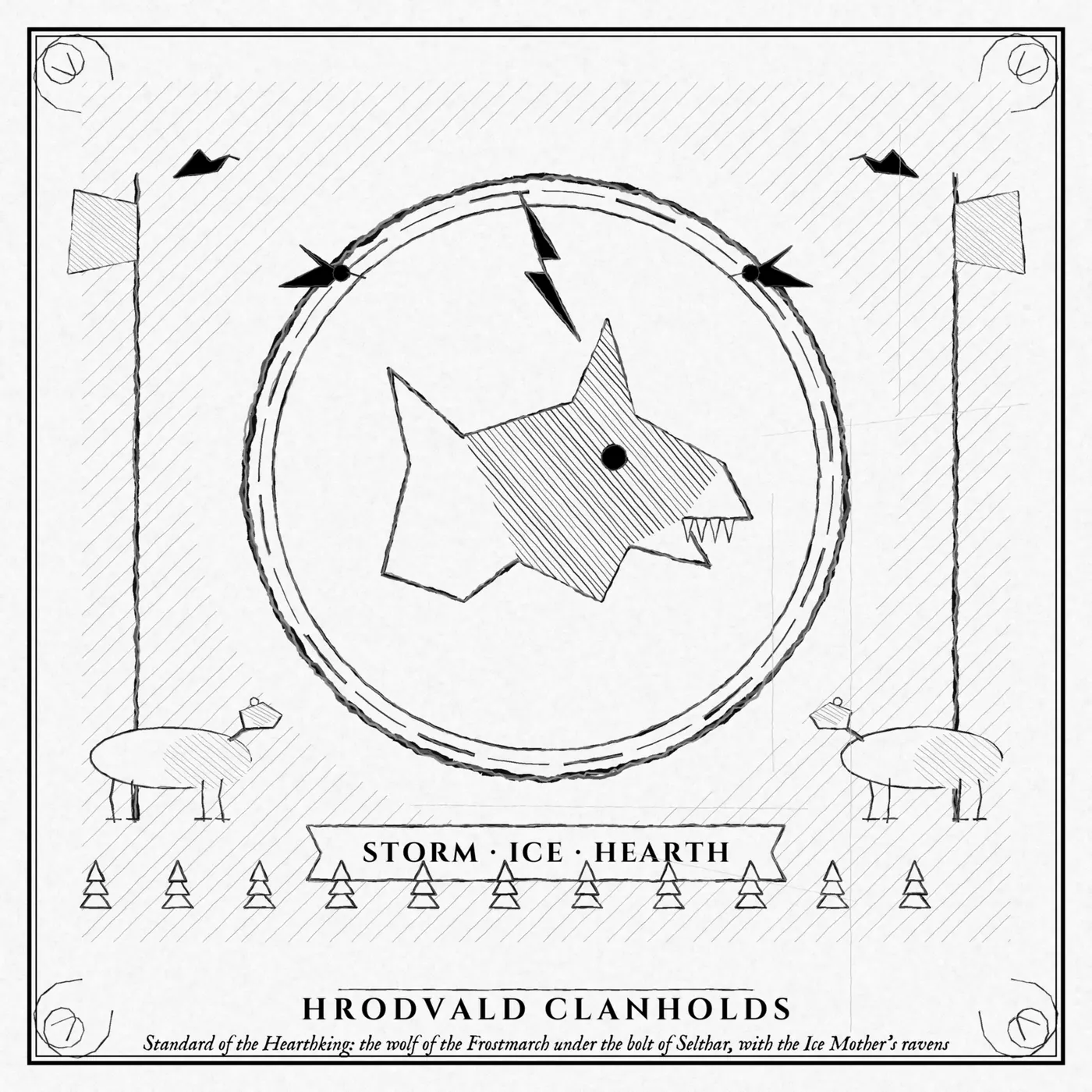
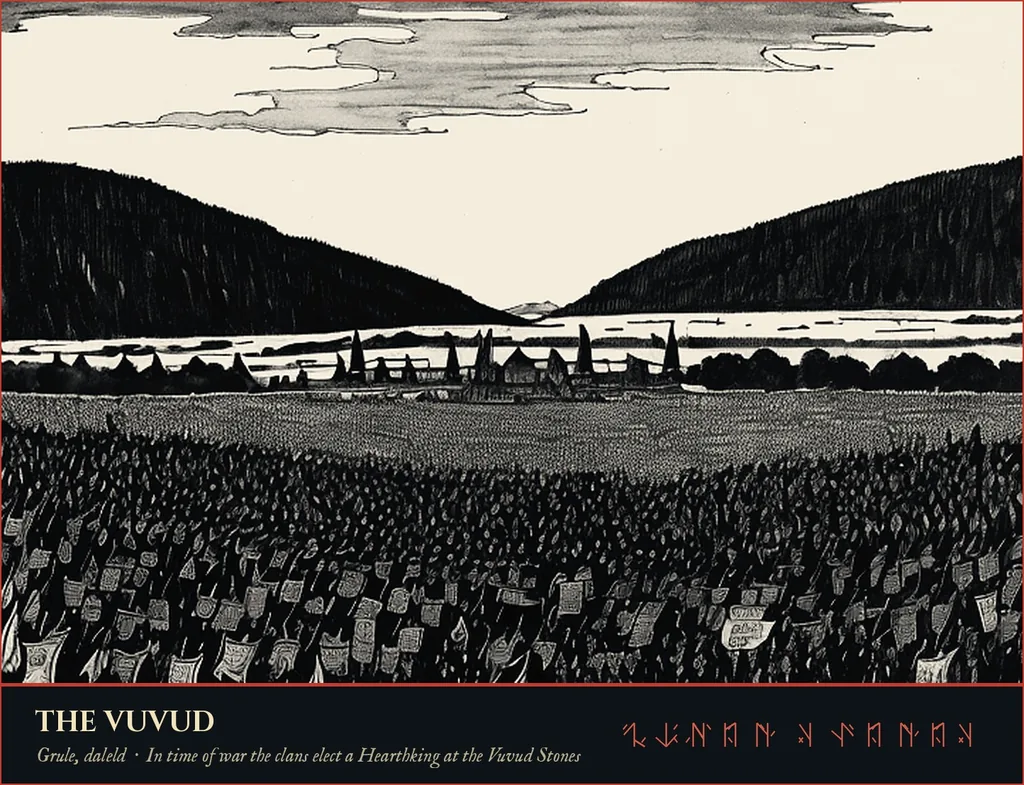
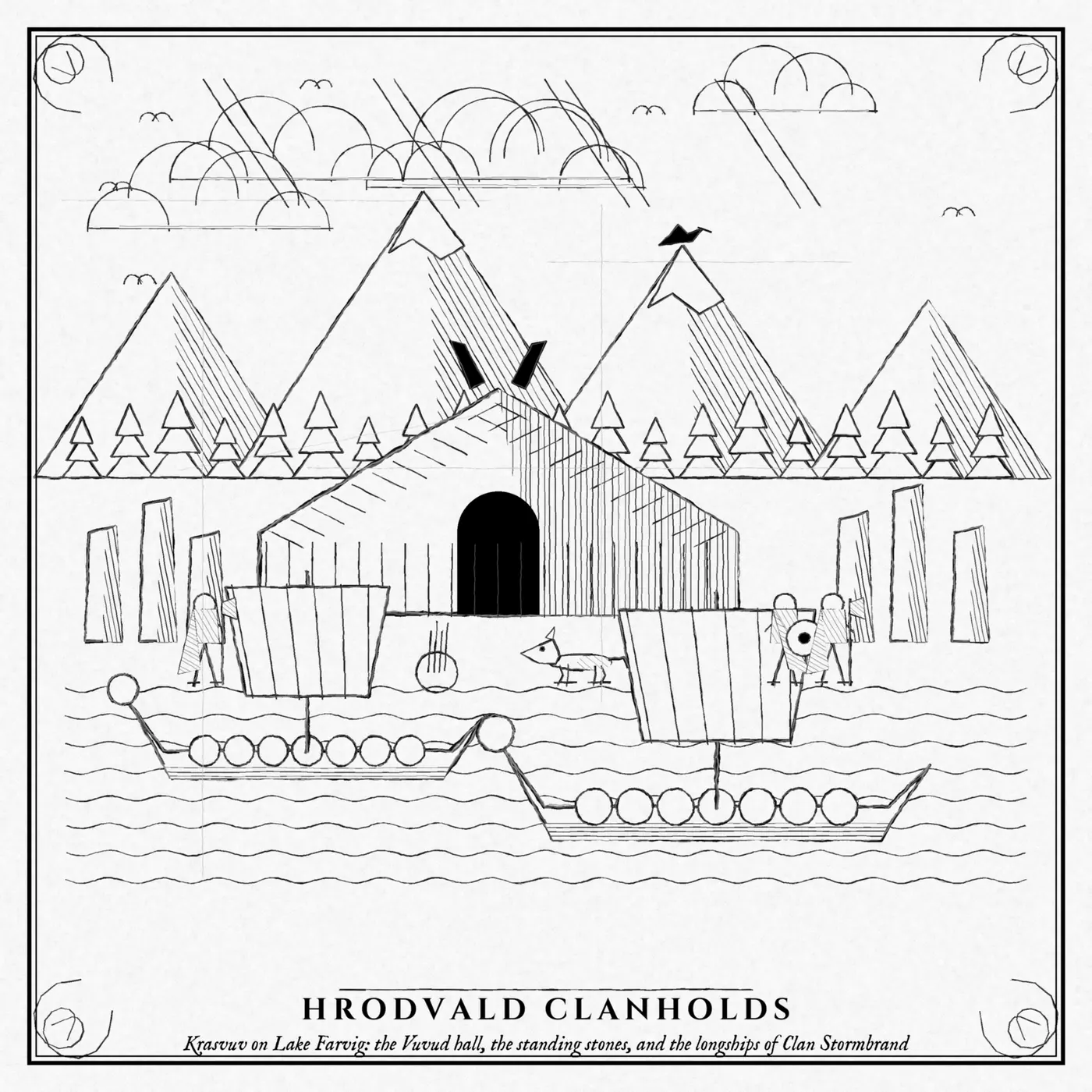
The Hrodvald have no written law and no king who makes law. Each clan rules itself through its reldith, where every free clansman may speak, and its stelest, the war chieftain. Since the Frostmarch Concord of 877, all the clans have agreed that blood feuds are settled by drolak, the blood-price, paid in silver before the clans rather than in blood at night. It is honored about half the time. The hrinduk recite the code at each Vuvud. The Vuvud settles feuds between clans, hears drolak too large for any reldith and, in time of war or famine, elects a Hearthking. Nobody keeps a watch. The halls keep order among their own, and the hounds keep it everywhere else.
| Wrong |
Drolak or penalty (in hacksilver, by weight against an Aldmere mark) |
| Killing a free clansman |
100 marks' weight, paid to his kin |
| Killing a stelest or a storm priest |
300 marks' weight |
| A wound that cripples |
30 marks' weight |
| A wound that heals |
5 marks' weight |
| Theft |
The goods returned twice over |
| Stealing a hound |
The hound returned, and a pup besides |
| Passing lead-cored hacksilver |
The bar cut in half on the scales and the silver owed twice |
| A false hrind |
By old clan law, the tongue |
| Breaking the Vuvud's peace |
Made golest by every clan at once |
| Refusing drolak |
Made golest by his own clan |
Outlawry. An outlaw, a golest, has no clan, no hall and no drolak. Anyone may kill him and owe nothing. Since 877 the clans' outlaws, oath-breakers and drolak-refusers have gathered in the taiga of the Wolfmarch, where Golen No-Clan leads them and raids the clans that cast them out.
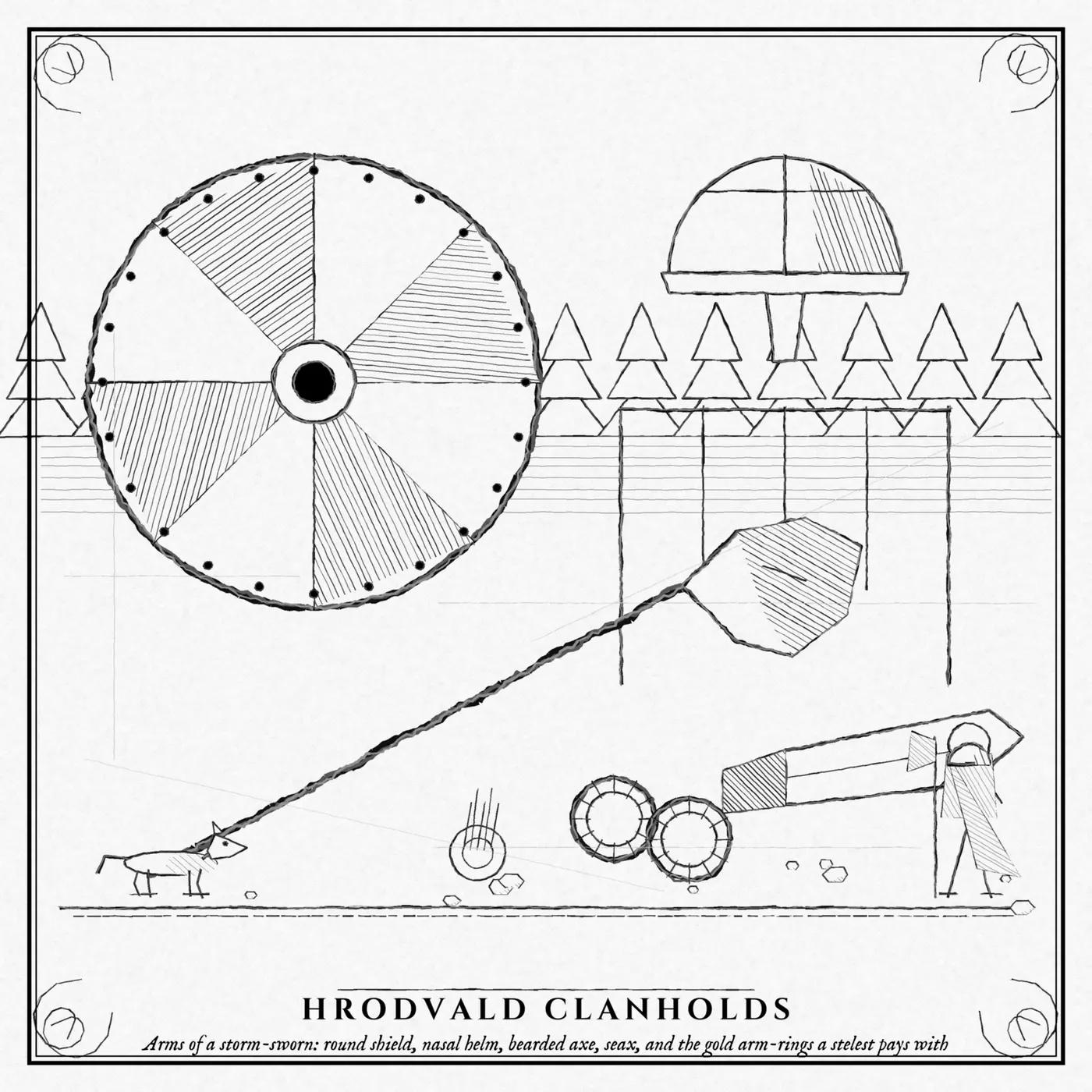
Debt. Everything is weighed. Hacksilver is chopped from brooches, bowls and bars and weighed against an Aldmere mark, and gold arm-rings are wealth that nobody sells except in a very bad winter. Debts between clans are settled at the Vuvud. A hall's guest eats free, and a stelest who feeds all comers, as Selra does, ends up owing the House of Farisel.
Family
Marriage and divorce. Marriages are made between clans to end feuds and seal trade. The groom's kin give arm-rings, the bride's kin give a hound or a cow, and the couple swear before the Hearth-Stone of the groom's hall. Either may end a marriage by declaring it ended three times before witnesses at the hearth, and the wife takes back what she brought, the hound's pups included.
Inheritance. Children inherit equally, and whoever keeps the hearth keeps the longhouse. A stelest is chosen by the reldith, most often from the old stelest's kin, and that is why Kruman Ironjaw's lack of a living son is a grave matter for his clan. The Hearthking's title is never inherited. When a clan splits, its Hearth-Stone is broken.
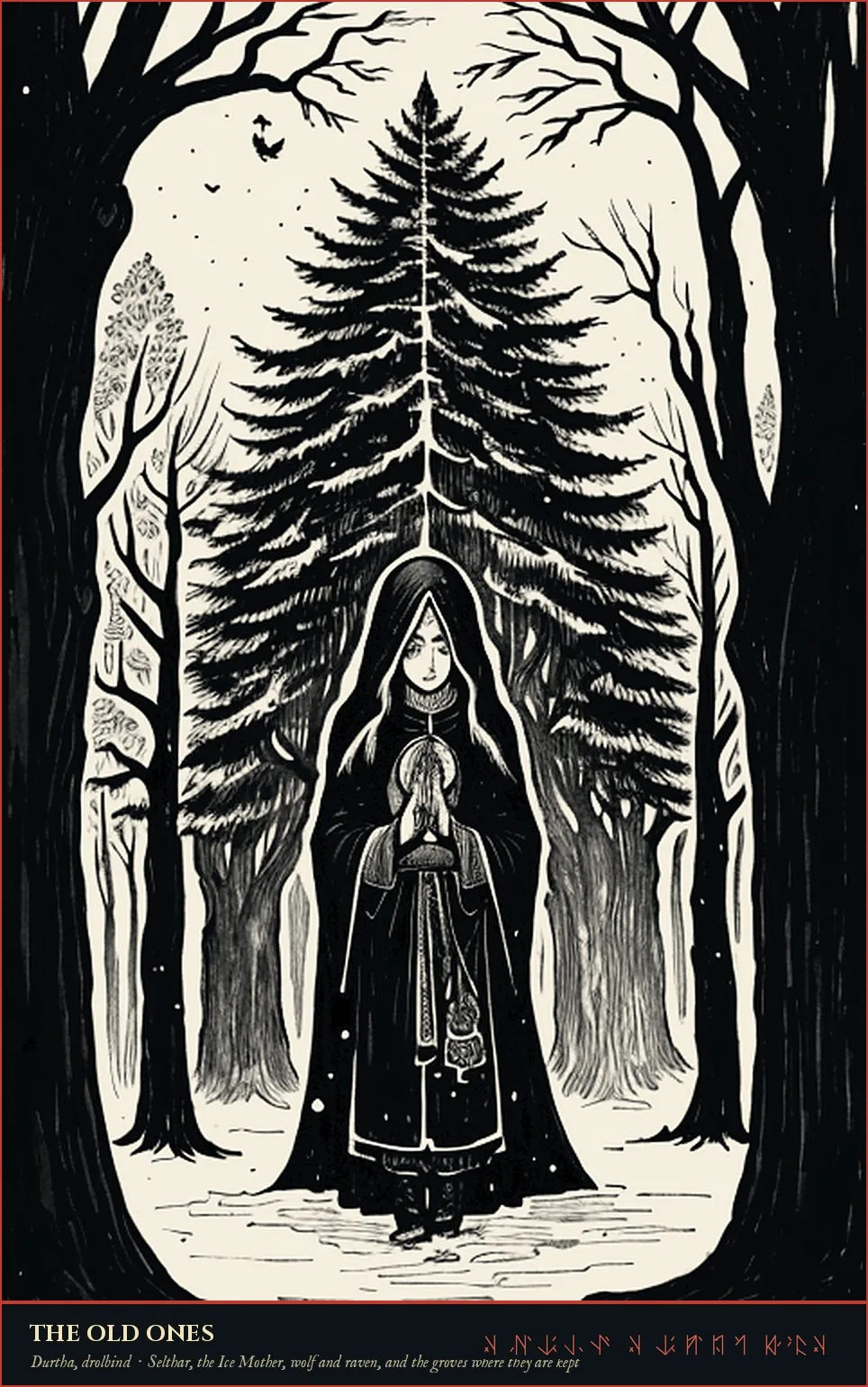
Women. Hrodvald women fight, trade, lead and speak in the reldith. Three women have been elected Hearthking, Thuba Nugag leads her clan, and Statha the Far-Seer is the most revered priestess in the north.
Who is not free. The Hrodvald hold no one as property. A raid-captive was held for ransom, and one not ransomed by the next Vuvud was taken into the clan or let go. The "free clansmen" of the reldith are those who are neither captives nor golest.
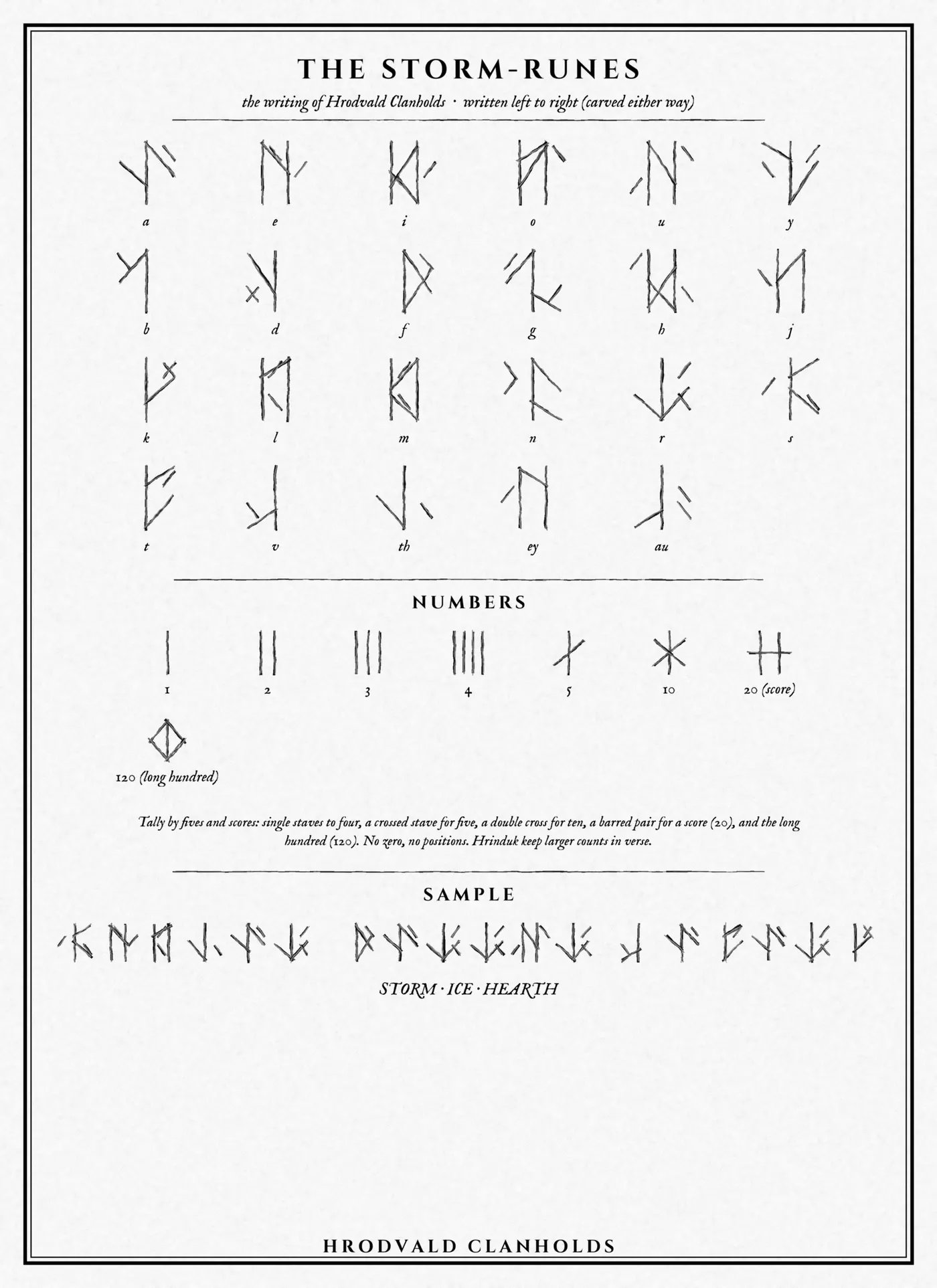
Children and schooling. About one Hrodvald in twenty can read the Storm-Runes. Children learn by doing: nets, oars, axes, the ice. They give their ages in winters, and they learn never to count longships leaving. The hrinduk and storm priests are the north's libraries.
Daily life
Food and drink. The north eats black rye bread with everything and drinks ale and mead.
|
A stelest's hall |
A Net Row fisher of Krasvuv |
A rye-stead farmer |
| Morning |
Rye bread, butter, cold elk, ale |
Rye bread and dried whitefish |
Rye porridge with milk |
| Midday |
Bread, cheese, dried fjord cod |
Bread and a fish from the net |
Bread and cheese in the field |
| Evening |
Elk or taiga capercaillie, salmon in Hamul, cloudberries, mead |
Farvig whitefish stew, rye bread, ale |
Rye bread, mutton or fish, ale; seal fat in the worst of winter |
In spring everyone drinks sweet sap from the Farrur birch.
Dress and houses. Men and women alike wear wool and fur in layers. A stelest is known by the gold on his arms, and a sailor by the blue voyage bands tattooed on the arm. A family and its animals share one timber longhouse with a turf roof, the hearth in the middle and benches along the walls.
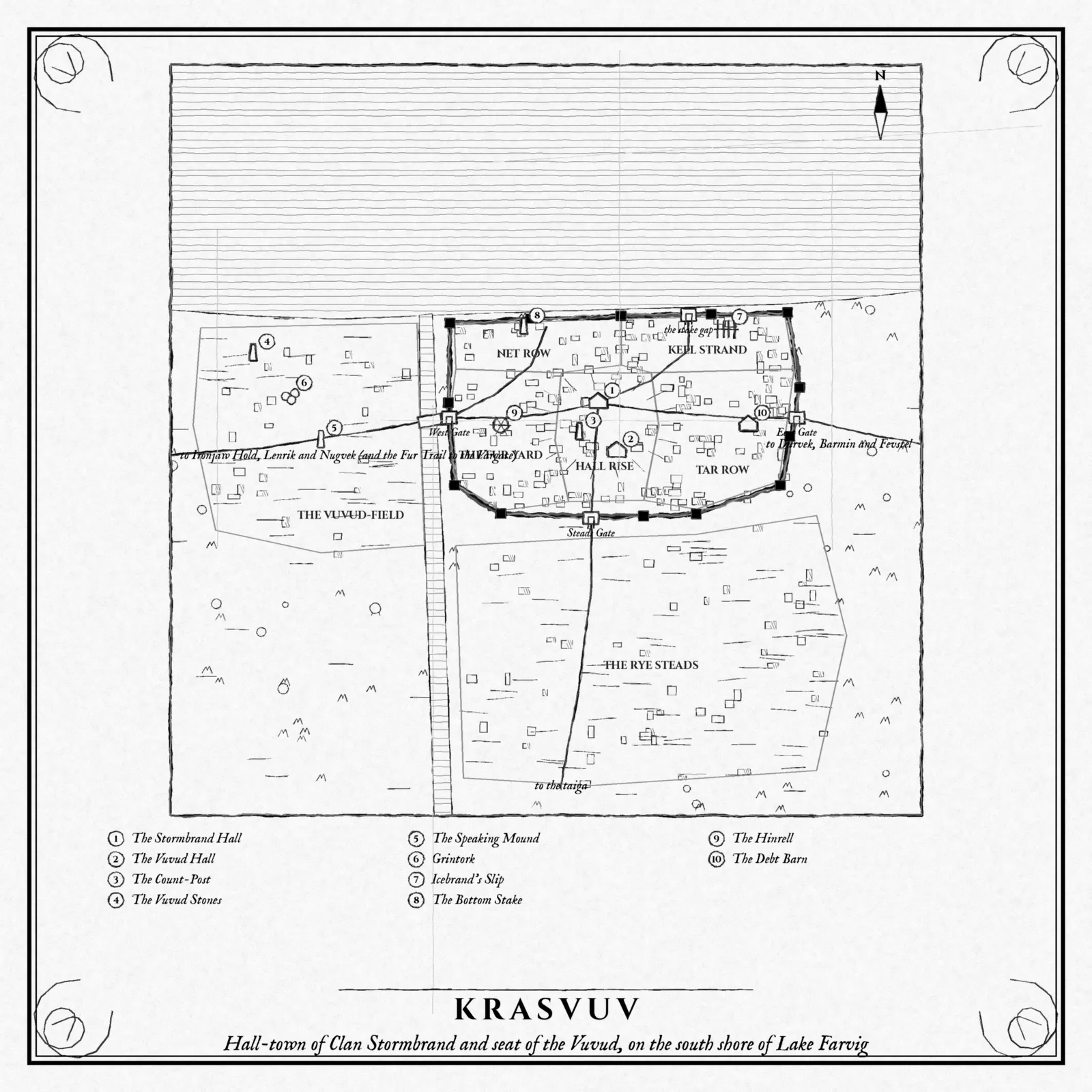
Health and hygiene. The Hrodvald bathe in steam-huts beside the water and then in the lake or the snow, even in winter. Storm priests read weather, ice and entrails for the sick as well as for longships. On Krasvuv's Keel Strand the man who sets bones and pulls teeth is Fakoth the Bonesetter (fakoth, "kind"). He charges a cup of mead for a finger and will not touch a stelest before he has been paid. Seal fat is rubbed on cold-burns, and every child knows wolf-lichen, the wolf-bait poison. The great killers are winter and hunger. The Ice Mother's Count at the end of Selthar is, said plainly, the stores running out.
Birth and death. A child born in a Wolf Winter will never be warm and never be afraid. A child is named after it has lived nine nights. The dead are buried in barrows, and on the coasts the Salt-Sworn give their dead to the sea. A longship that does not come back is remembered by an oar laid in the path to its stelest's door.
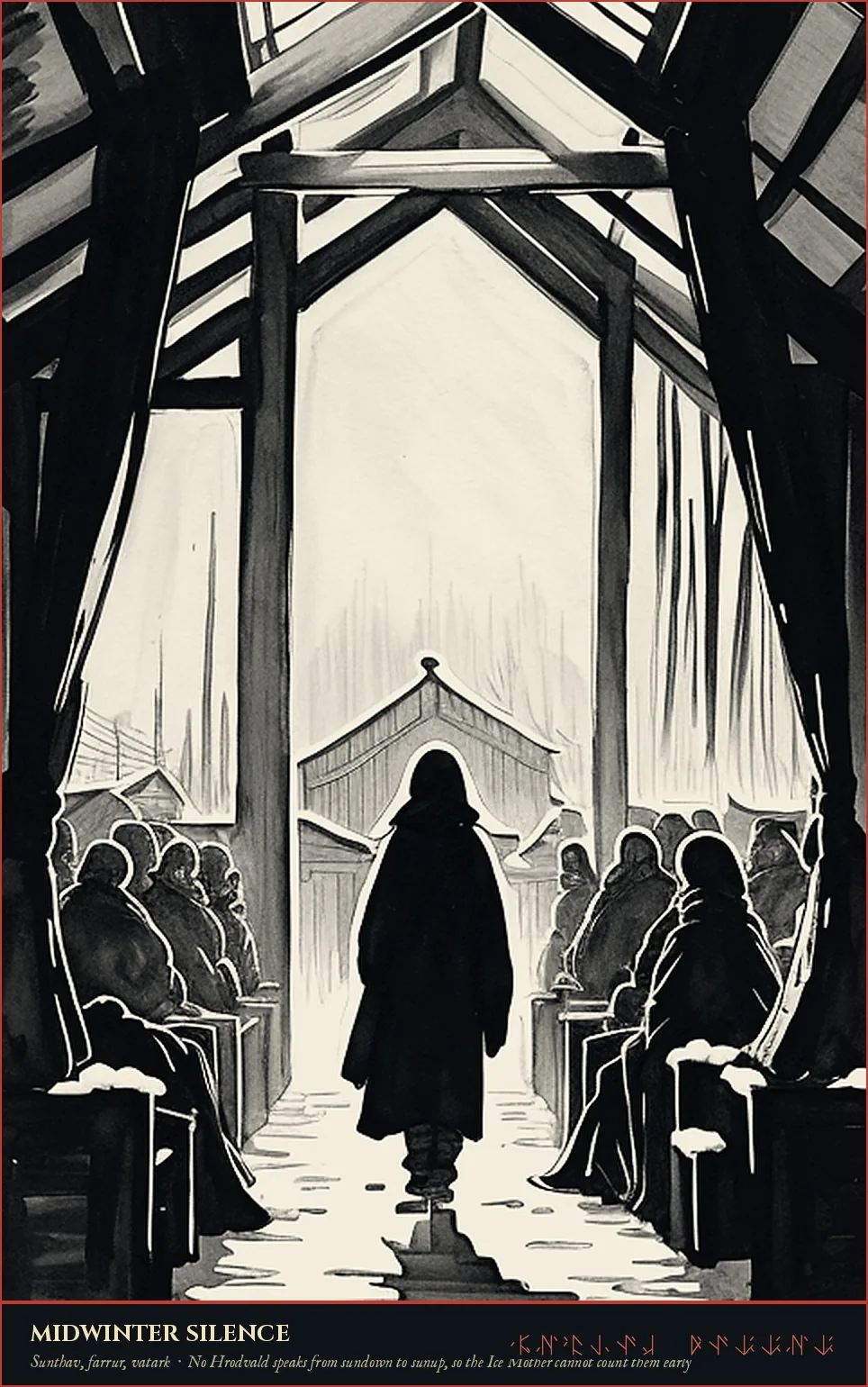
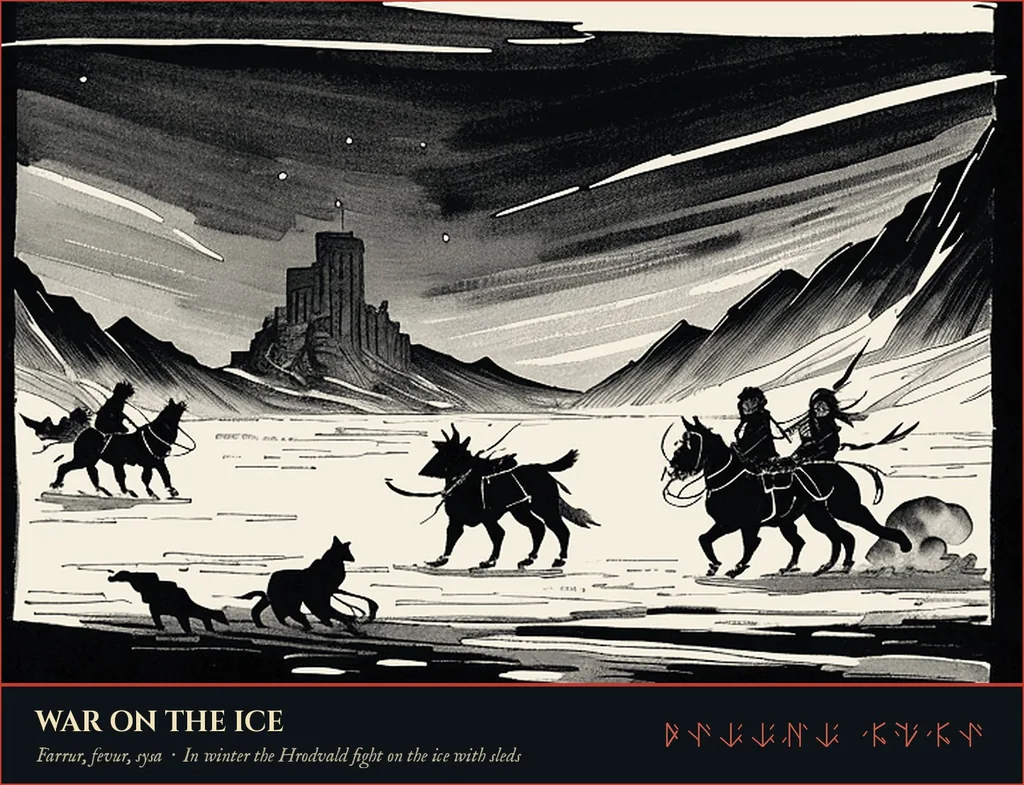
Pastimes. The north races sleds on the ice, wrestles, sets hounds to fight and hears sagas sung to the lute. On Midwinter Silence, the 6th of Stauni, nobody speaks from sundown to sunup, and the hrinduk find it the hardest night of the year.
A day. In summer the sun barely sets and the town works half the night. In winter it barely rises, and people mend nets, tell sagas and count the stores. There is no week. A journey is so many nights long.
Where it is going: CONTESTED. The Concord's law has held for 270 Vuvuds by being honored half the time. Selra wants one law and one nation, Kruman wants the Old Way, and the Speaking Mound allows a challenge that could settle it with an axe. If Selra holds, the north may get its first law kept on purpose. If Kruman wins, drolak will go back to being something a man pays when he would rather not wait for winter.
Trade, taxes and money
Makes and sells. Furs, walrus ivory (its richest export), whale oil, amber, bog iron, dried fish, tar, longships, war hounds and crews for hire.
Buys. Grain above all, then salt, wine, cloth and Dunmorrow steel.
Taxes. The Hearthking levies none. Each stelest takes gifts from his clan and his road. Kruman takes no toll at Ironjaw Hold, but no caravan leaves without a gift, and the gifts are weighed. Clan Barerk takes one whale in five from the Barerk Whalers and cannot make them give more. Since 1145 the Stormbrand Hall takes the weigher's twentieth, one part in twenty of every weighing on the Hinrell, to feed the hall and pay Farisel. Drolak for a killing runs to about a hundred marks' weight in 1146, and less for a wound.
Direction. CONTESTED. The north has begun to trade instead of raid, and has learned what trading on credit costs.