Courts, crimes, marriage, food, dress and a day in Caelvenne
Law
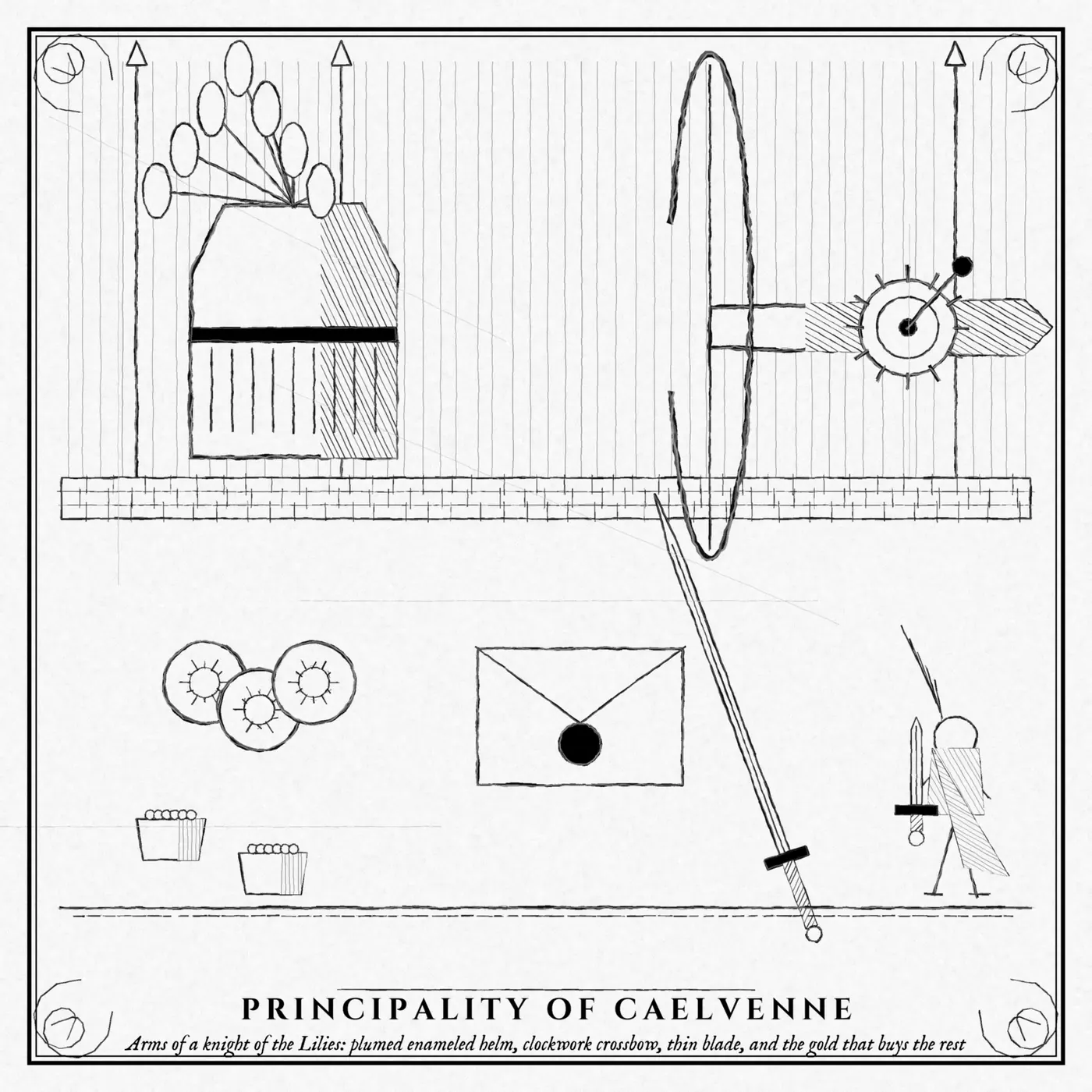
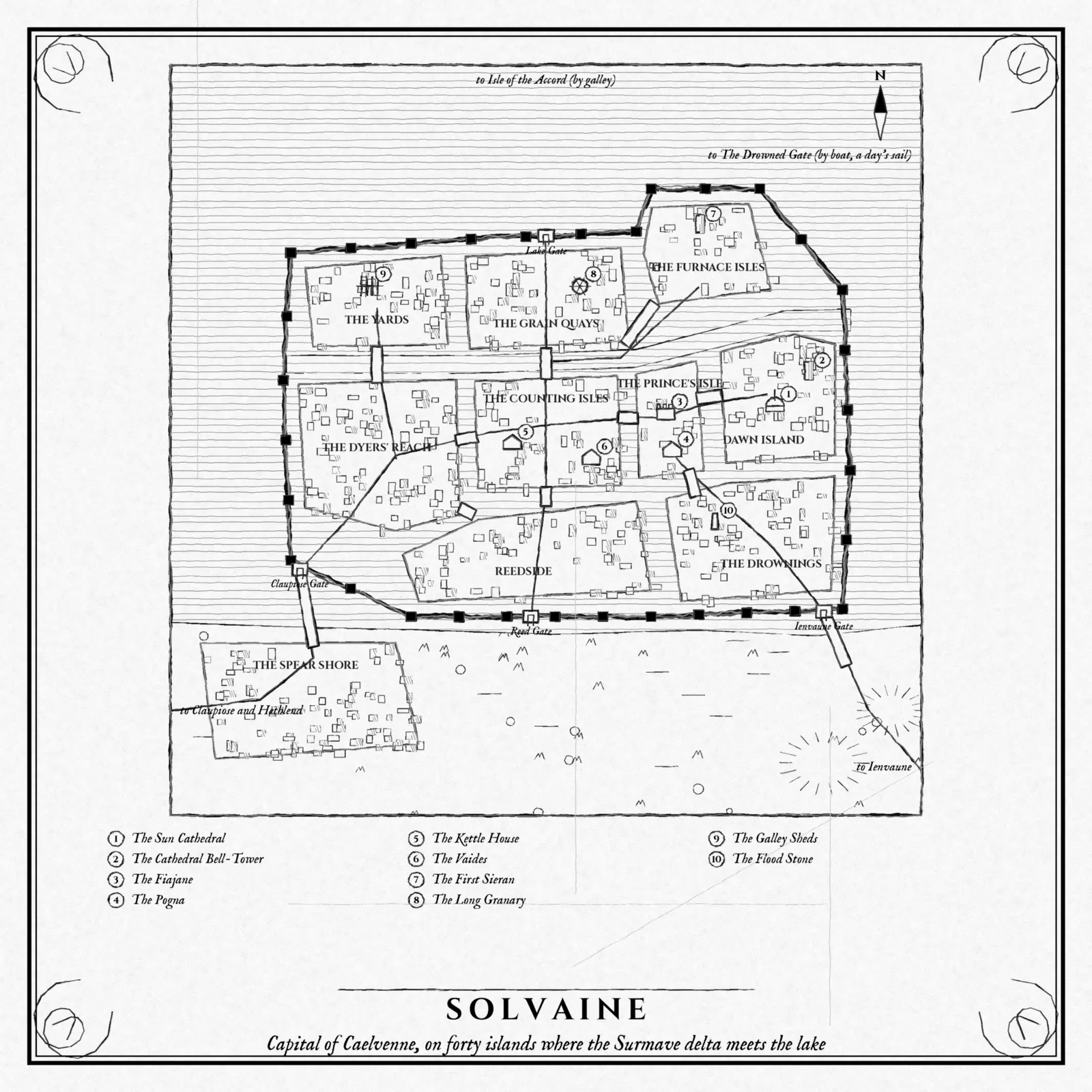
The Conclave of Nine Houses makes Caelvenne's law in the Pogna, with the prince presiding. Each house holds some islands and towns as its wards, keeps watchmen on them and settles small quarrels in its own counting-house. Quarrels between houses go to the Conclave. The Lilies guard the prince, the Tharaxi guard Solvaine's shore by day, and the Quiet Office watches everyone and answers to no court.
Caelvennois law is mostly the law of contracts (lounile). A contract signed after dark or under a clouded dome is void, and that has saved more than one debtor. Interest falls due on the four Settling Days, the 1st of Punsimor, Clauve, Caudés and Jende, and the books close on Closing Day, the 30th of Gresil. Every merchant must be entered in the nélognel, the trade register. To be struck from it is how Caelvenne makes an outlaw: a struck man may not sign a contract, and nobody will buy from a man who cannot.
| Crime |
Usual punishment |
| Theft |
Pay back twice what was taken |
| Boat theft |
Pay back twice, and a season rowing a house's barge |
| Clipping coin |
A flogging on the quay, and the clippings forfeit |
| Smuggling past the customs |
The goods forfeit to the ward's house |
| Signing a contract in the dark |
The contract is void, and the party who asked for it pays the other's costs |
| Forging the leusore |
Drowned in the harbor with the coins sewn into the coat |
| Murder |
Hanging, from the ward's gallows or, for a great crime, the bell-tower |
| Heresy |
Nothing, if it pays its tithe |
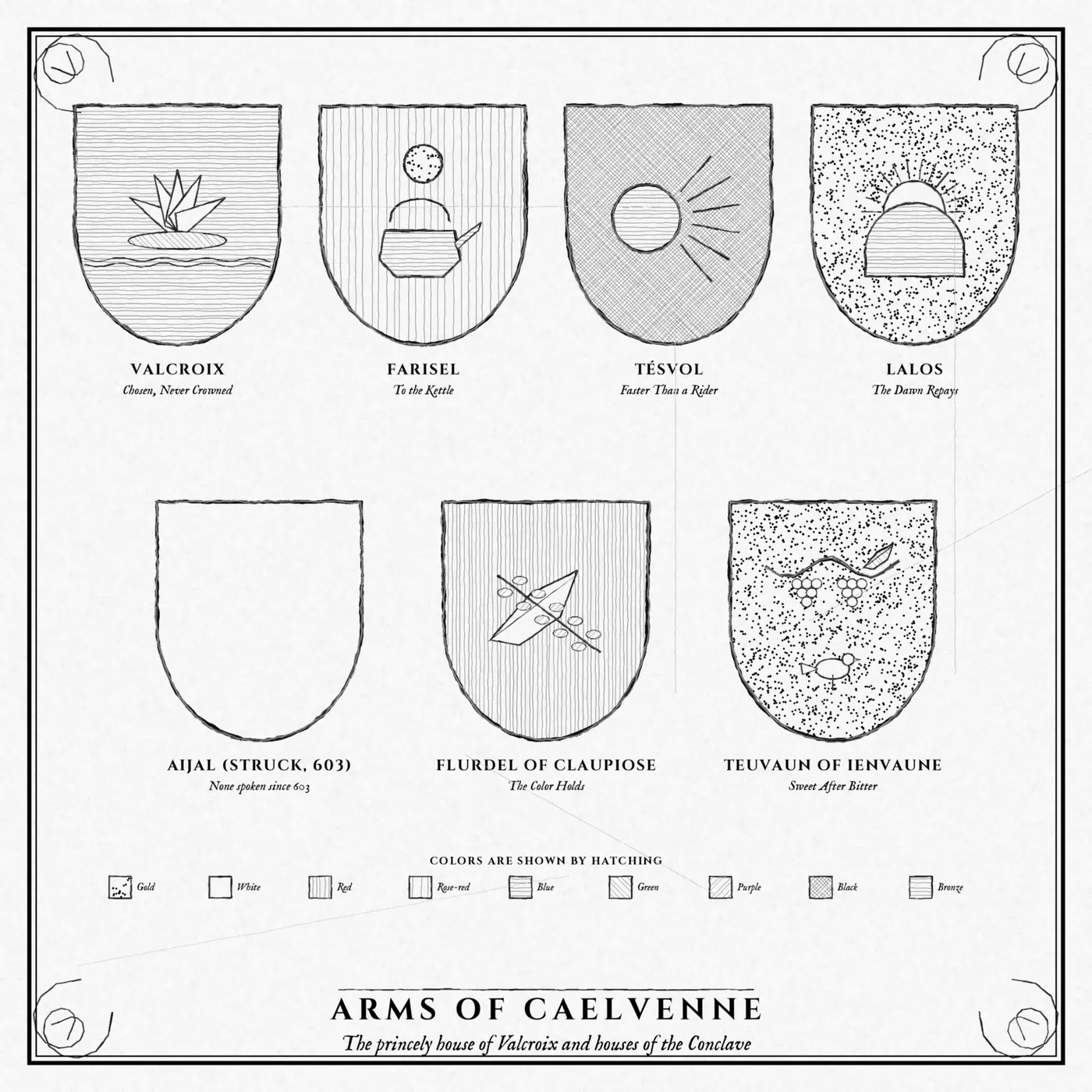
Debt. A debtor who cannot pay goes to the Debtors' Hulks, two old galleys moored off the Yards, and sits there until his family pays. Their book is kept by Miqui the Hulk-Clerk (miqui, "honest"), a Ledger-follower who lets families visit on Gresil and has never lost a name. A debt passes to the debtor's heirs and, among the great families, to the house. That is how the House of Tésvol came to be married into Farisel after the Panic of 1068.
Family
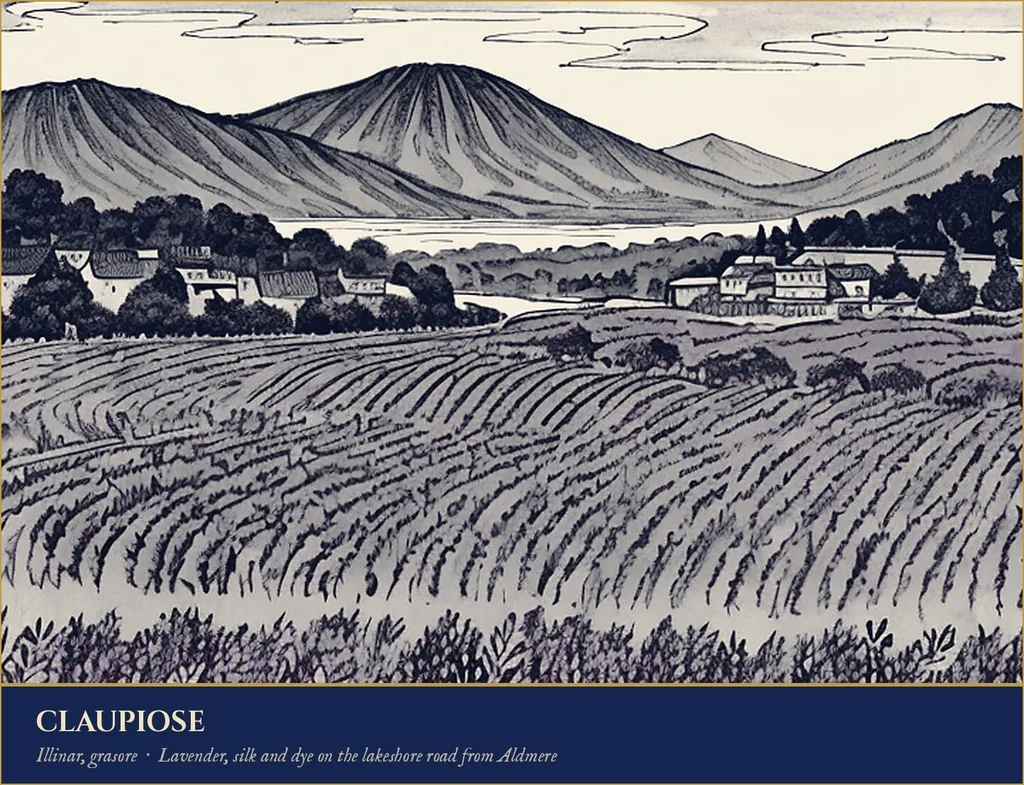
Marriage and divorce. A marriage among the houses begins as a contract, the dowry written in ledger figures and signed at noon. Girls of the houses float a lily on the lake at sixteen, and if it comes back they will marry within the year. At the Mirror Vow the couple face a mirror rather than each other, and only then is the house's secret mirror-name, its ètinvime, spoken aloud. Claupiose houses do not marry Ienvaune houses. The Church does not undo a marriage, but the Conclave's clerks will cancel the contract when both houses agree and the dowry is returned. The cardinals call it a separation. The houses call it a settlement.
Inheritance. Commoners leave their goods by a testament written in daylight, divided among sons and daughters alike unless it says otherwise. Headship of a great house goes to whichever member the house chooses, and Farisel has been founded and led by widows. The prince is elected, and no Valcroix has held the seat by right.
Women. Caelvenne's women run banks, reel silk, dive for the Drowned Court and build mirror towers. The Church's high offices go to men of the houses, so the women have found other roads to power.
Who is not free. No one in Caelvenne is owned. The poor of Solvaine are free to go hungry, and when they do they ring the cathedral bells.
Children and schooling. About four in ten Solvainers can read, and perhaps one villager in seven. Guild schools teach the trades, the cathedral school on Dawn Island teaches the Cathedral Hand, and the houses hire tutors in languages, law, ciphers and the ledger figures. A Solvaine child is likely to learn her letters from a printed bill of exchange.
Daily life
Food and drink. Caelvenne grows almost nothing it eats. Its bread is Aldmere wheat, and when the grain is late, the price chalked at the Grain Stair rises before anything else does.
|
A banker of the Nine Houses |
A Furnace Isles glassblower |
A vineyard hand at Ienvaune |
| Morning |
Zarvani coffee and an Ienvaune pastry after First Light |
Bread, and coffee on a Settling Day |
Bread and watered white wine |
| Midday |
A long lunch in the arcades: whitefish, delta eel, Tsanha sturgeon roe, Ienvaune white |
Bread, perch or eels from a canal stall, wine |
Bread, cheese, onions, wine |
| Evening |
Mirror pike, villa fruit, cacao from the Verdant Deep; lake sturgeon and mirror swan only at the prince's table |
Whitefish stew, bread, Castavari red if the week was good |
Bean soup, bread, wine |
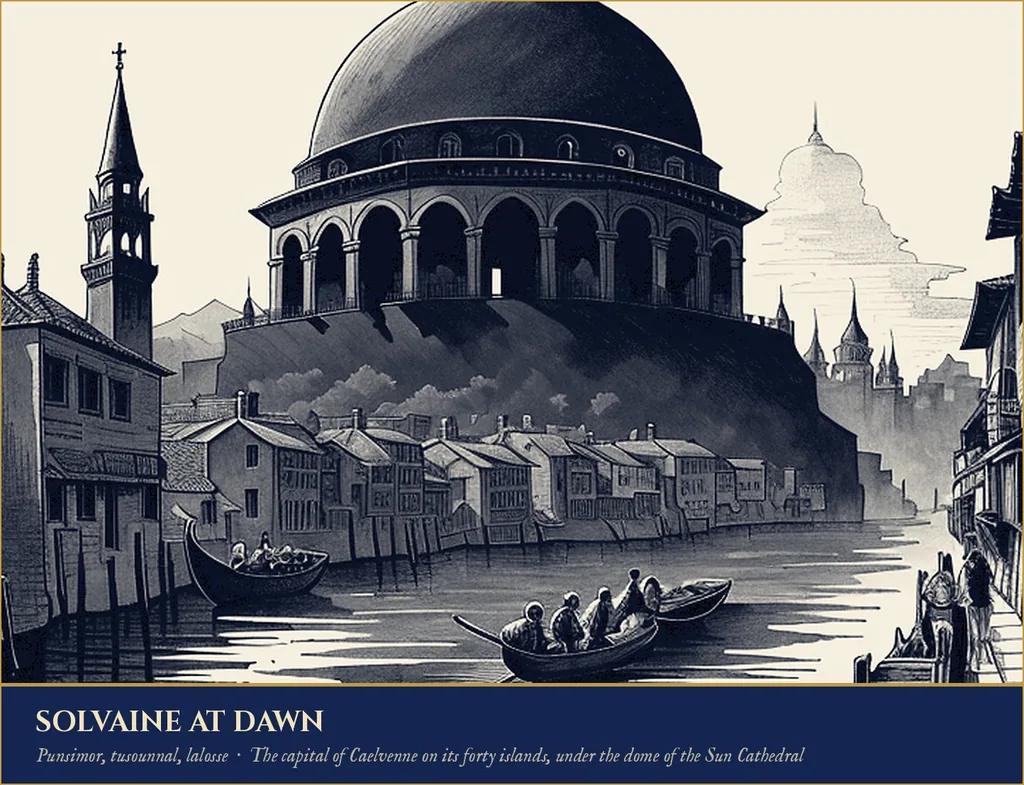
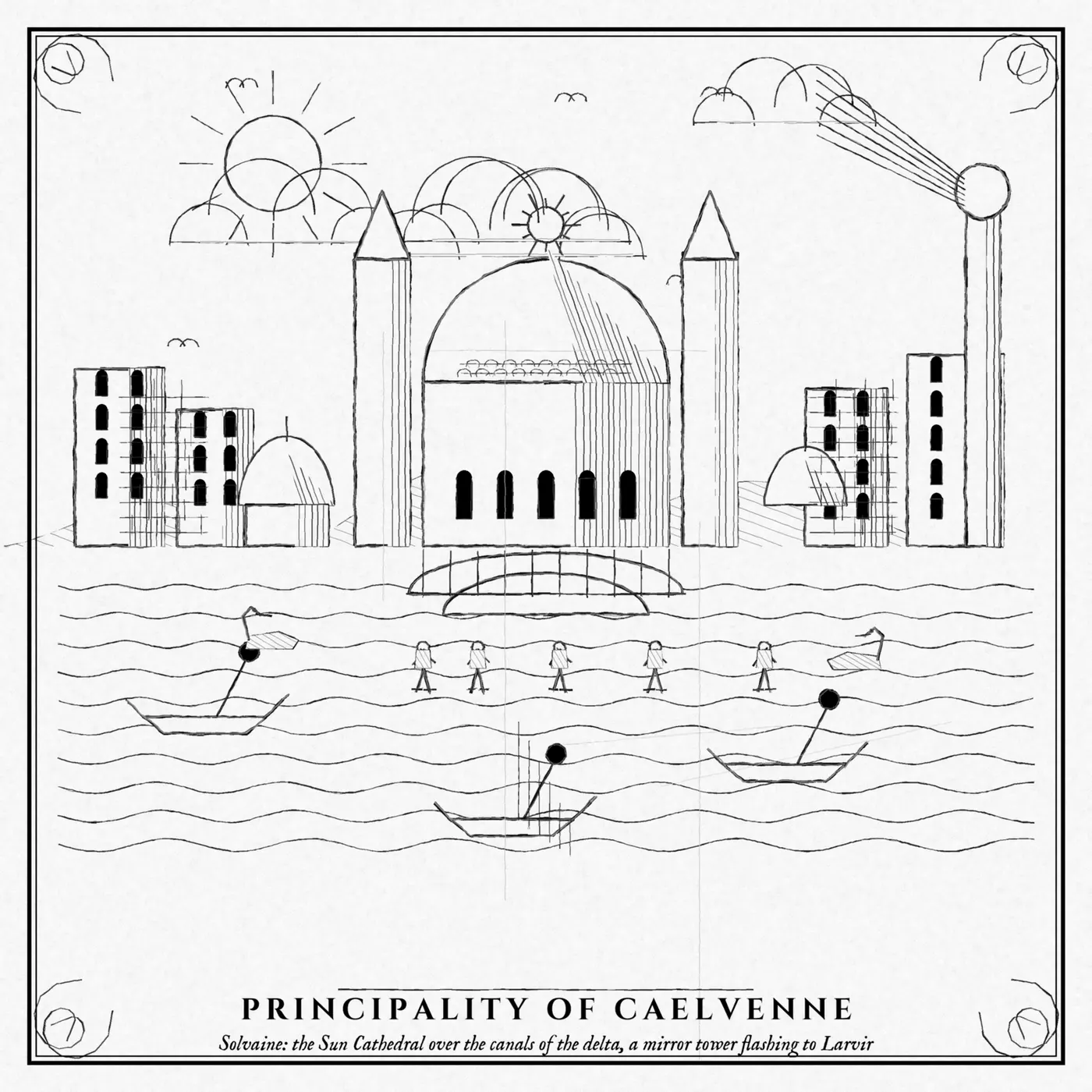
Dress and houses. Anyone who can manage it wears silk dyed red, blue or saffron. Men and women alike wear scent, and the poor wear linen and old silk turned twice. Solvaine's houses are tall, narrow and painted, with a water door below and a land door on the walkway, and nobody sleeps on a ground floor that floods every wet spring. Every roof is tile.
Health and hygiene. Nobody drinks the canals. Water comes from rain cisterns under the squares and from springs in the villa hills, carried in by boat. The houses heat bath-rooms from their kitchens, and the poor wash in ward bath-houses the houses pay for, so that the Bells stay clean and quiet. Physicians are bought from Zarvand. The lens-grinders of the Furnace Isles make reading spectacles, and Aldmere's Lord Chancellor wears a pair on a chain. Lavender and villa-rose water wash the sickrooms. In bad summers the delta mosquito brings the lake fever to Reedside first.
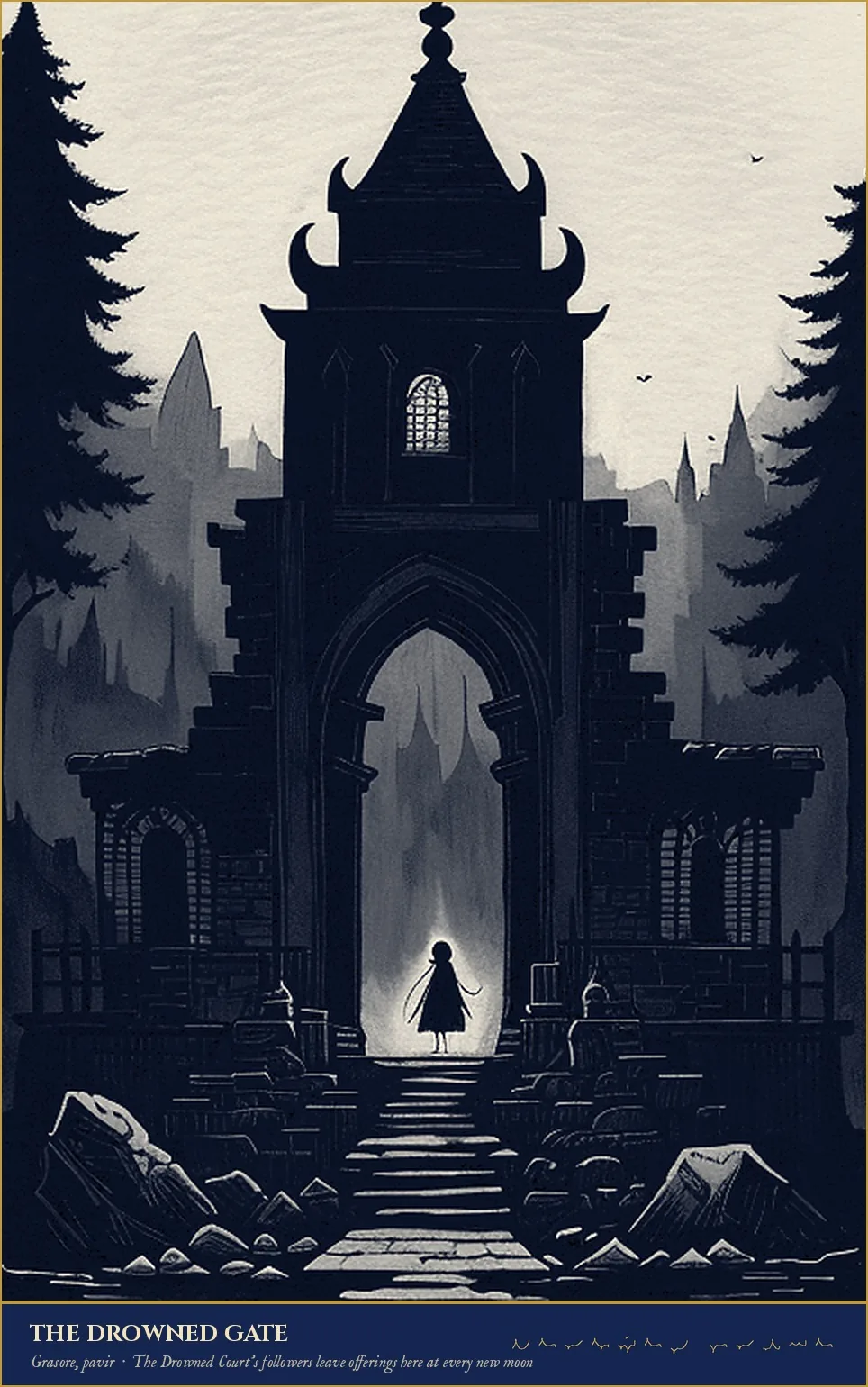
Birth and death. A child born during the dawn liturgy will be rich and unhappy. One born during the Bells will be poor and never alone. Children are named at a dawn service facing east. The dead are rowed at dawn out the Reed Gate to the Dawn Fields, the burial grounds on the mainland beyond the marsh, so that the Sun sees them go. Drowned Court families give their dead to the lake at the new moon, with a knotted cord tied at the ankle.
Pastimes. Galley crews race on the Pavir after each Settling Day, and the whole city bets on them. Caelvenne has choirs, composers, painters, the Lantern Road's players, and a tavern song that must not be hummed near an Aijal.
A day. At dawn the eldest opens the eastern shutter and says, "The debt is paid," and coffee follows for those who can pay for it. The counting-houses open at full light, do business over long lunches and close at dusk. The week runs six days, from Siale to Gresil, when the banks close.
Where it is going: CONTESTED. Caelvennois law is the most exact on Aethorra, and the most one-sided. It protects the lender, and in 1146 its largest borrowers are running out of ways to pay. A law of contracts holds only while both parties want the contract to go on.
Trade, taxes and money
Makes and sells. Credit first. Then mirrors, glass and lenses, dyed silk, perfume, Ienvaune white, printing, clockwork weapons, jewelry and painting.
Buys. Aldmere grain, which is most of what it eats; Castavari red; coffee "at ruinous cost"; furs; sturgeon roe; pepper, saffron and cacao; Kaishoni silk; and Tharaxi spears.
Taxes and tolls.
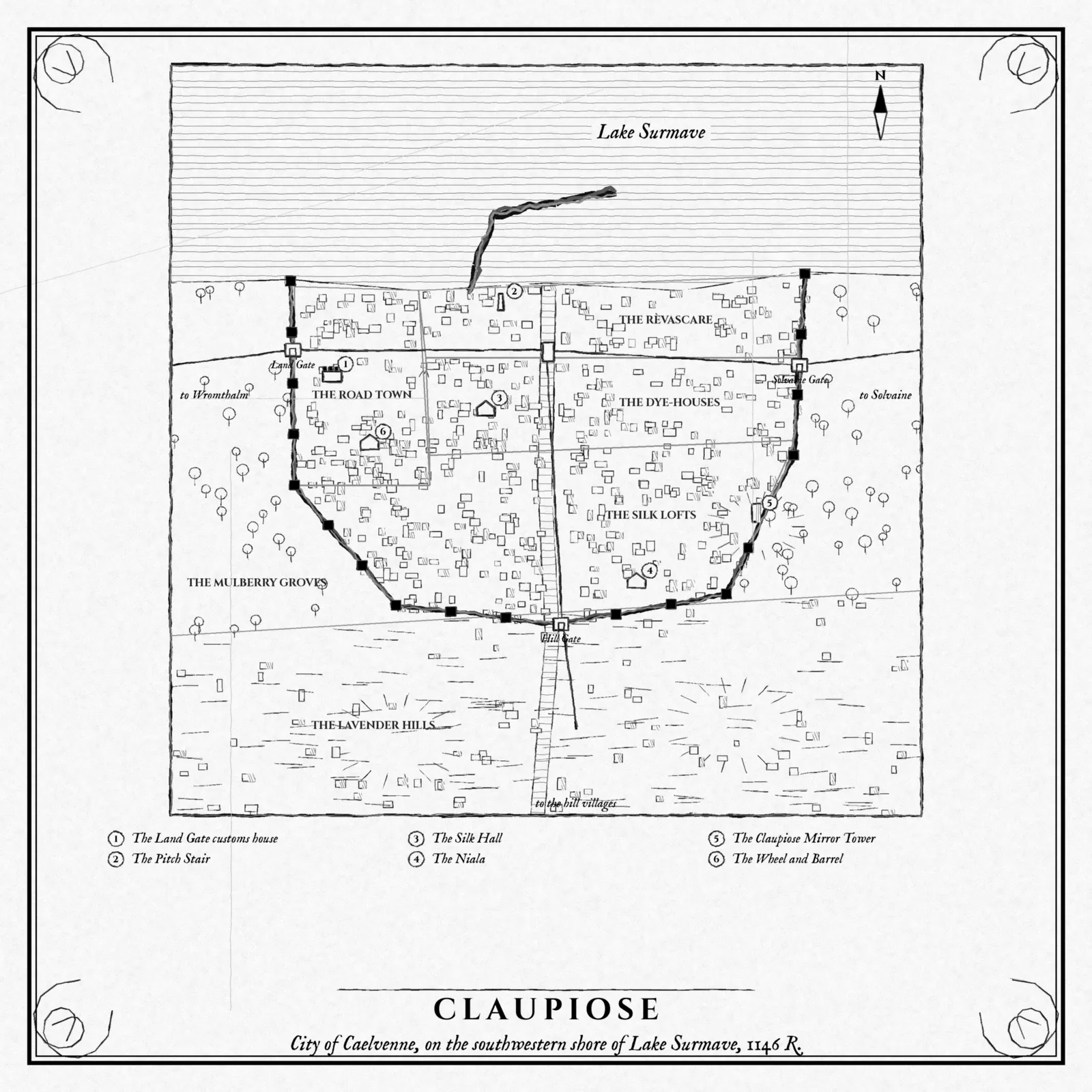
- The Land Gate twentieth at Claupiose and the Lake Gate twentieth at Solvaine: one part in twenty of the worth of everything that comes in, save Compact grain. Ienvaune and Larvir take the same at their gates.
- The Silk Hall's fifth: one part in five laid on eastern silk, won by the Claupiose reelers in 1119.
- A lake toll on every foreign hull on the Mirror, one flirone for each ton it can carry, taken at Solvaine and Larvir. The Drift has never paid it.
- Ward dues: each house charges the islands it holds a flirone a month for each house and a leusore a year for each shop, for watchmen and lamps.
- The Vaides' charge of one part in forty for striking coin. Indulgences and tithes go to the Church, not the state.
Direction. CONTESTED. Caelvenne has never been richer on paper, and nearly all of that paper is owed by people under strain.