Courts, crimes, marriage, food, dress and a day in Kaishon
Law
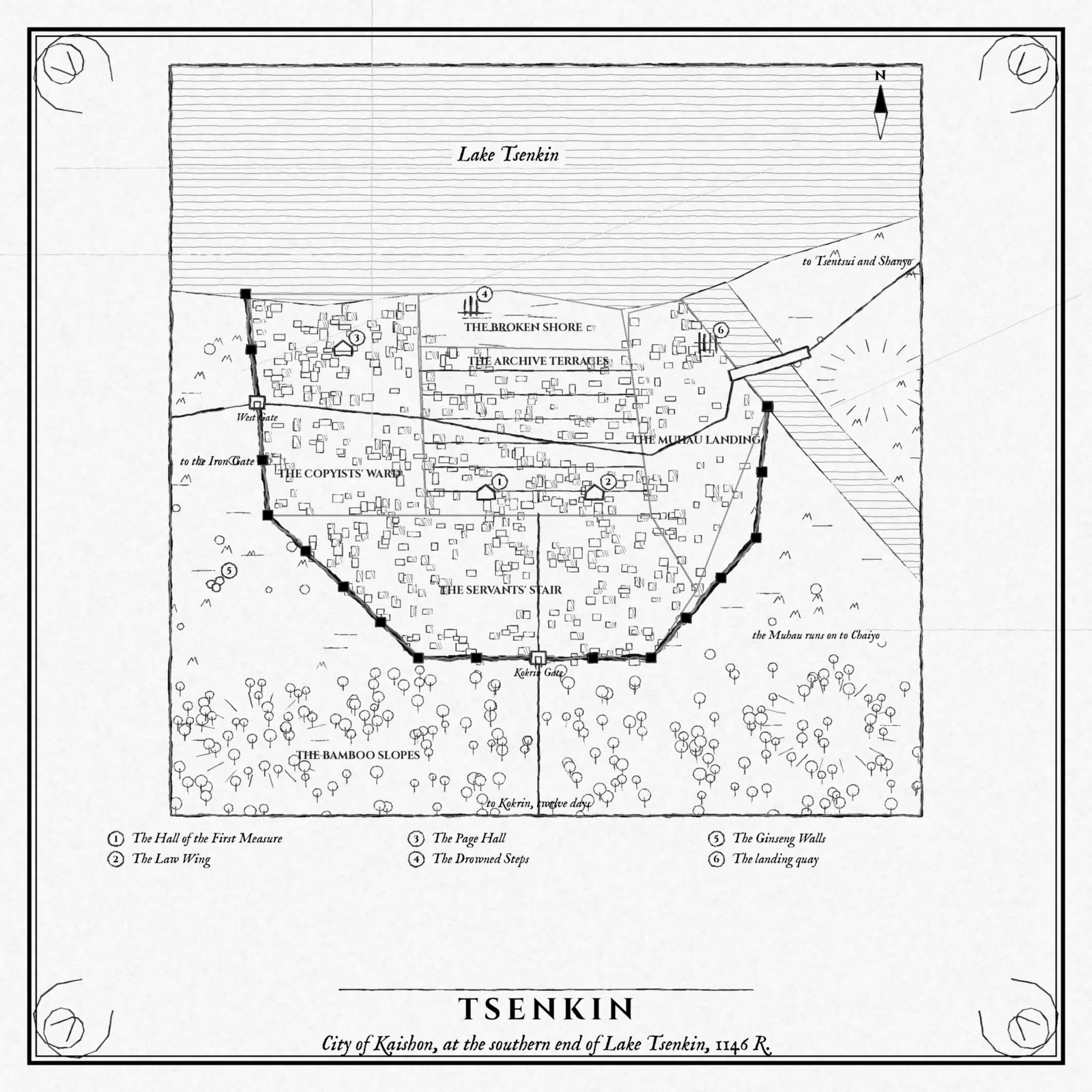
Kaishon's law is written, numbered and kept. The ministries write it in the Emperor's name, and the imperial house's own laws, the succession law among them, are kept in the Law Wing at Tsenkin. Every district has a magistrate chosen by examination and moved every few years so that he cannot grow roots. He wears the jade crane on his robe, every citizen begins a sentence to him with hyáu-sen ("Honored One"), and he hears every case from a stolen pig to a murder. A tenth taken in bribes is thought moderate.
Every household is entered in the register with its members, land, stove and duty to the army. The city watch is drawn from the conscript garrisons, and its true work is fire. Since 927 every stove has been registered, and inspectors look into every kitchen on the tenth day.
| Crime |
Usual punishment |
| Petty theft, brawling |
The bamboo rod, or a fine in silver |
| Gambling |
Illegal; in practice a fee to the magistrate |
| Forging paper notes |
The rod, and labor on the Long Rampart |
| Serious theft, assault, desertion |
Labor on the Long Rampart |
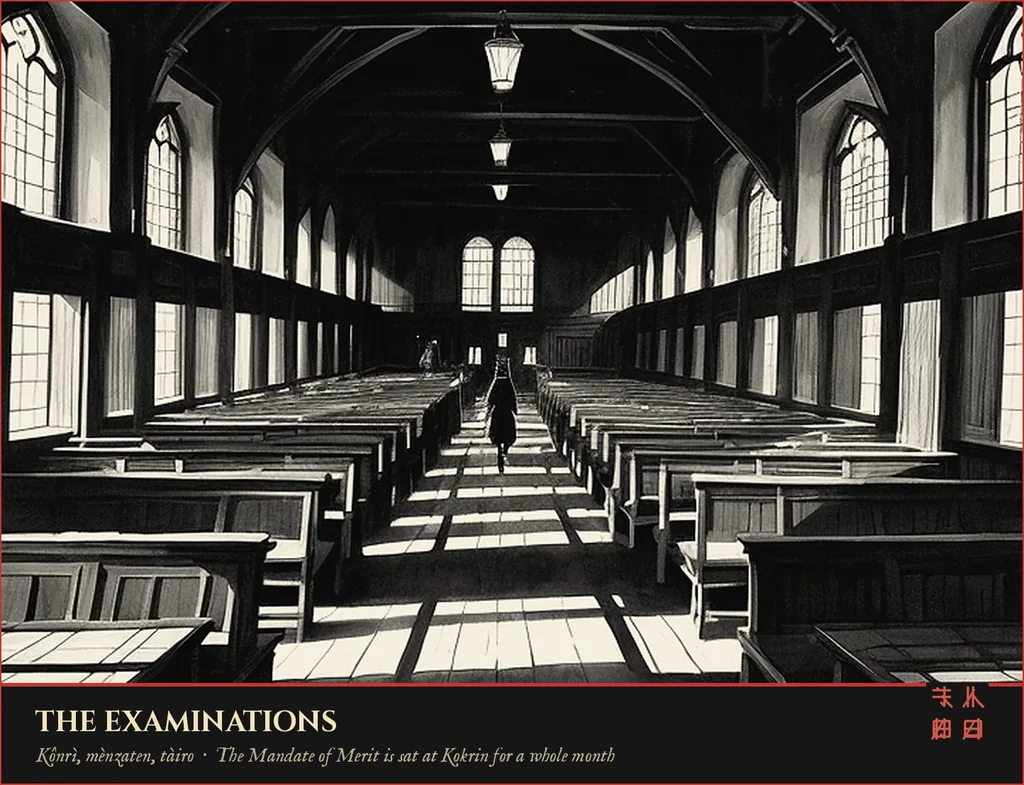
| Examination fraud |
The paper burned and the candidate barred for life |
| Exporting silkworms or their secret |
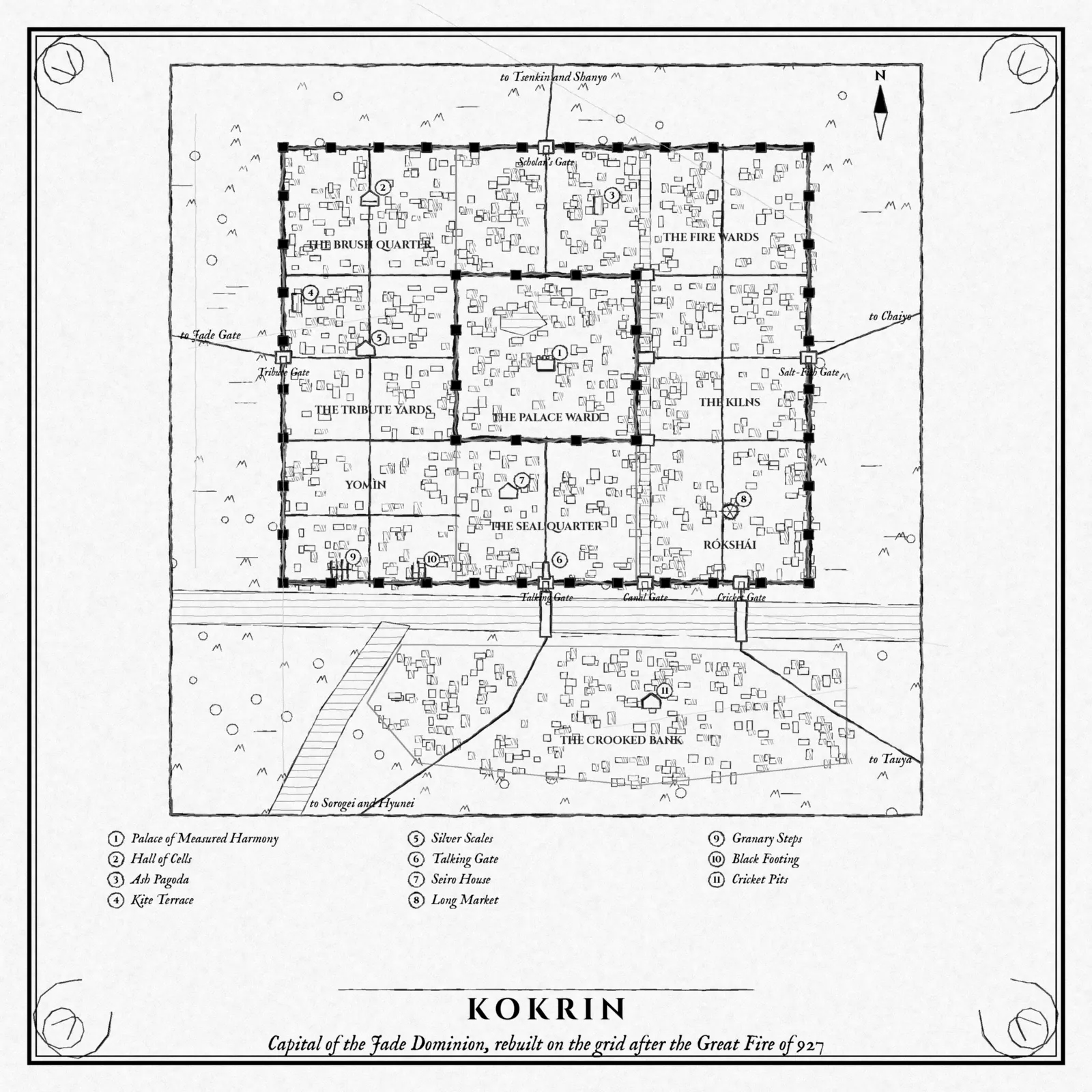
Hanging at the Tribute Gate |
| Keeping a temple or preaching a faith |
Arrest; household shrines are not seen |
| Arson |
Death; no magistrate may accept silver for it |
| Rebellion |
Death, and the head displayed |
Outlawry and debt. A Kaishoni struck from the register may not own land, marry, sit an examination or appear in a magistrate's hall, and many such people end among the Rampart Squatters. Debts are registered with the magistrate and pass from father to son. A debtor who cannot pay may be sent to the state workshops to work it off, and the Kilns of Kokrin are full of debtors' sons.
Family
Marriage and divorce. Families arrange marriages through go-betweens, and the marriage is entered in the register. Mandarin ducks, which pair for life, are the wedding sign. The bride's family tells its Door-Kin that she is leaving, and her new family tells its own that she has come. Neither rite is written down. Either family may petition the magistrate to dissolve a marriage, and the register records the result and never the reason.
Inheritance. Land and goods are divided equally among sons, and daughters receive dowries. Office is never inherited, because it must be won by examination, though the Seiro family has given Kaishon nine Grand Chancellors. The Measured hold that the succession law bars women from the Jade Throne.
Women. Women may not sit the examinations. Princess Seitotai sat them under a false name, placed third, and had her paper burned. Outside the ministries women run a great deal: a widow owns the largest gambling house in Kokrin, a woman keeps the Kite Terrace, and every household shrine is kept by its mothers.
Who is not free. Kaishon holds no slaves. Its conscripts are not free until their term ends, nor are men sentenced to the Rampart. The Tsenkin Hill-Folk are free because the register has never managed to count them.
Children and schooling. About one Kaishoni in three can read, and every province has state academies. A boy going to his first examination is given a brush by his father and a bowl of rice by his mother. He takes the brush, and leaves the bowl by the stove until he returns. Learning is for passing examinations.
Daily life
Food and drink. Muhau rice is boiled at every meal, and everyone drinks Shanyo tea. The first bowl of every meal is set by the stove for the Kin, and the youngest child eats it afterward "so it is not wasted."
|
An official of the Seal Quarter |
A porter of the Fire Wards |
A rice farmer on the Muhau |
| Morning |
Rice porridge, pickled greens, Shanyo tea |
Rice porridge and tea |
Rice porridge, pickled greens |
| Midday |
Rice, Tsanha sturgeon, lotus root, wine |
A bowl of rice with paddy eel from a Yomìn stall |
Rice and soy in the paddy, with tea from a jar |
| Evening |
Rice, black Kokrin pork, coast crab in autumn, Chaiyo seaweed, wine |
Rice, soy, pork on the tenth day, ale |
Rice, ford carp or paddy eel, greens |
Conscripts on the Long Rampart live on rice, Rampart soy and paddy eels.
Dress and houses. Officials wear silk in the colors of their rank, and commoners wear hemp in blue and brown. Farmers live in rammed-earth houses under tile. A Fire Wards family in Kokrin lives in two rooms and shares a courtyard stove, while a Seal Quarter family has a walled compound with a pond and a household shrine that nobody calls a shrine. By law every city block keeps a well or a covered water jar.
Health and hygiene. The state keeps granaries in every province. In the Year Without Summer Kaishon opened them, and came through better than anyone. Physicians are examined like other officials. Tsenkin ginseng is worth its weight in silver, Shanyo deer antler velvet is a medicine, and Sorogei camphor keeps insects out of clothes. Bitter-bell is an old poison of the court, and there is a Kokrin herb-seller who swears a palace servant has been buying it: Tèinai the Herb-Seller (tèinai, "safe"). In the Southern Reach the magistrates pay any price for bitter-bark. Every city ward has a bath-house, entered in the fire register like any other stove.
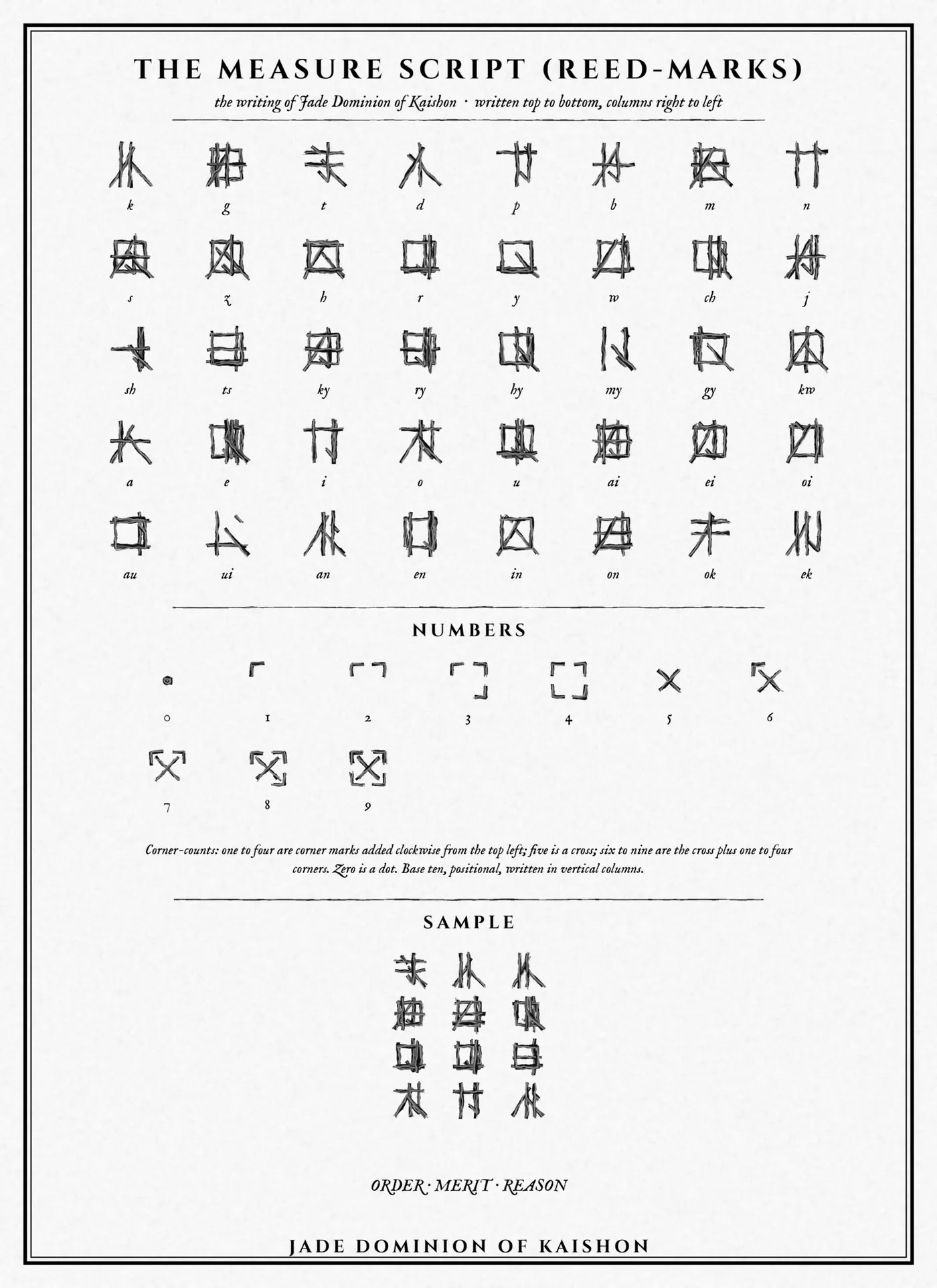
Birth and death. A birth is entered in the register within ten days, and the Door-Kin hears the child's name before the magistrate does. The dead are buried on family hillsides, their names cut in Measures. By the ministries' reckoning a funeral is only a custom. By the family's, the dead join the Kin and are fed with them on the longest night.
Pastimes. Kaishon fights crickets, plays buitso, keeps caged cicadas, flies kites and gambles, all of it against the law or nearly so. On Kite Day every roof that can hold a child flies a kite with a paper wish tied to its string.
A day. In the cities the fire-tower drums keep the day, and in the country the paddies do. The week is ten days, and on the tenth, shôktéwâ, the shops close and every household cooks for the Kin.
Where it is going: CONTESTED. Kaishon's law is the most complete on Aethorra, and it now hangs on a succession law that may exist in two copies differing by one character. The register and the granaries will outlast any emperor. Whether the throne's law is the Measured's or the Meritists' will be settled in the Seal Quarter, and perhaps by whoever holds the seal.
Trade, taxes and money
Makes and sells. More of everything than anyone: rice, silk, porcelain, lacquer, tea, paper, iron and steel, ginseng, tuna, mahogany and pepper. Silk, tea and porcelain go west. The steel stays home, and to carry the rearing of the Tsenkin silkworm out of the Dominion is a crime against the state.
Buys. Horses, felt and hides from the steppe, and glass and medicines from the far west. Little else.
Taxes.
- The rice-tax: a tenth of every harvest in kind, stored in grain-tax warehouses like those at Yomìn.
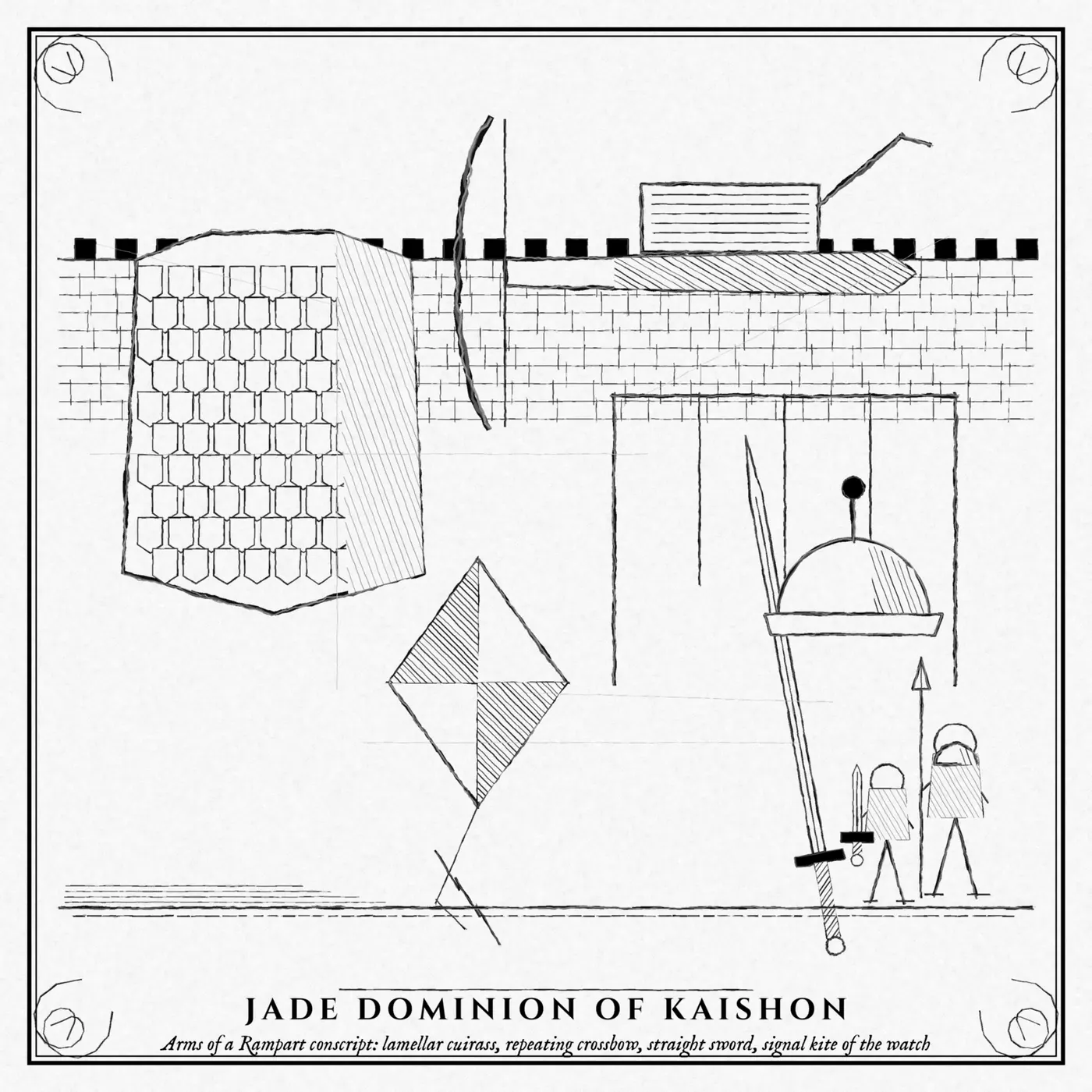
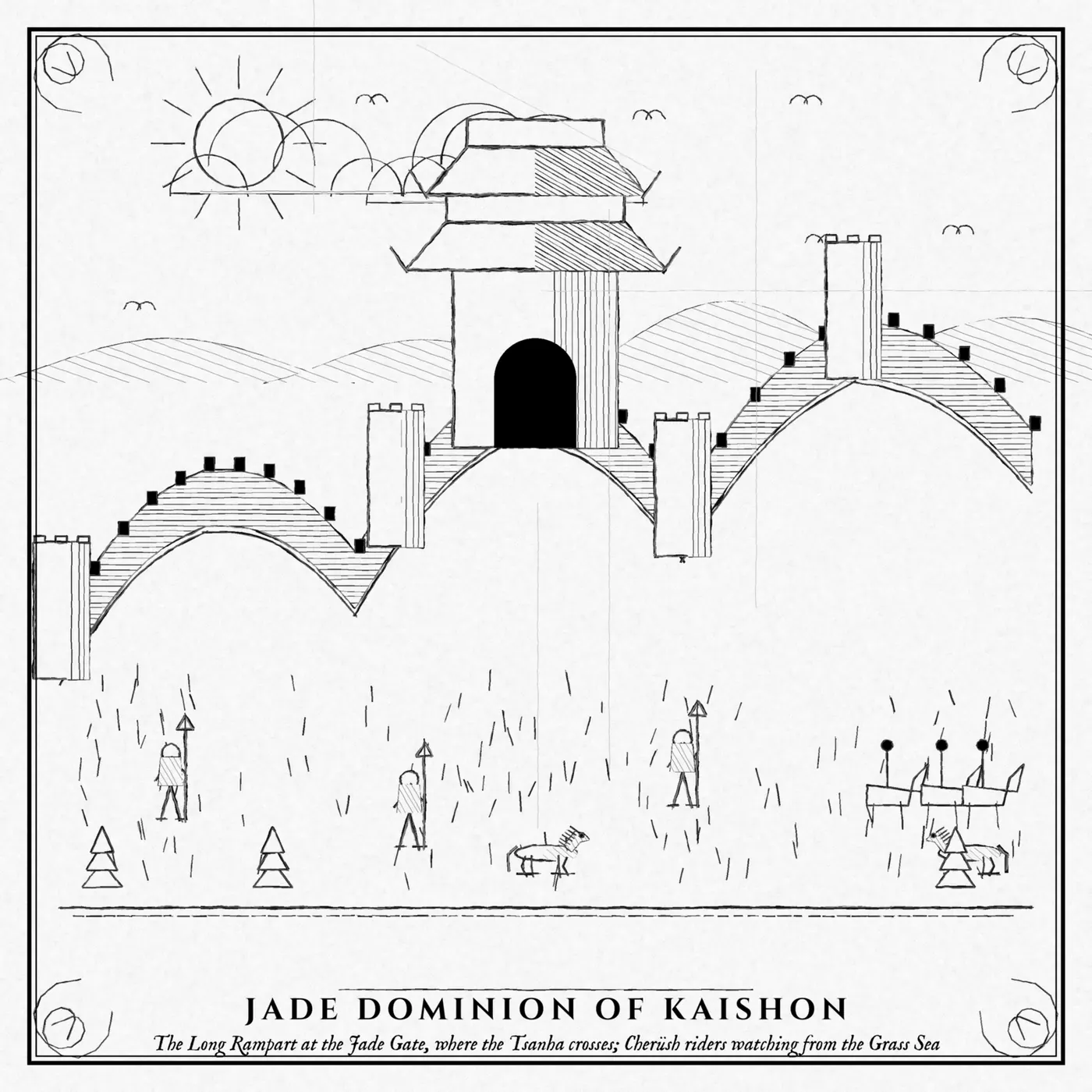
- Labor service: thirty days a year from every household, on the Rampart, the canals or the roads.
- The dock tax, a tenth of landed catch. It is the Chaiyo Boat-People's only tie to Kokrin.
- Stall licenses in every market, held in families for generations.
- The magistrate's tenth, which is not a tax, is paid everywhere, and a tenth "is considered moderate."
Paper notes are taken at full worth for small taxes and refused for large ones, and forgers in Yomìn print false twentieths because nobody checks them.
Direction. CONTESTED. The largest treasury in the One Land cannot buy an answer to who will sit on the throne.