Courts, crimes, marriage, food, dress and a day in Castavar
Law
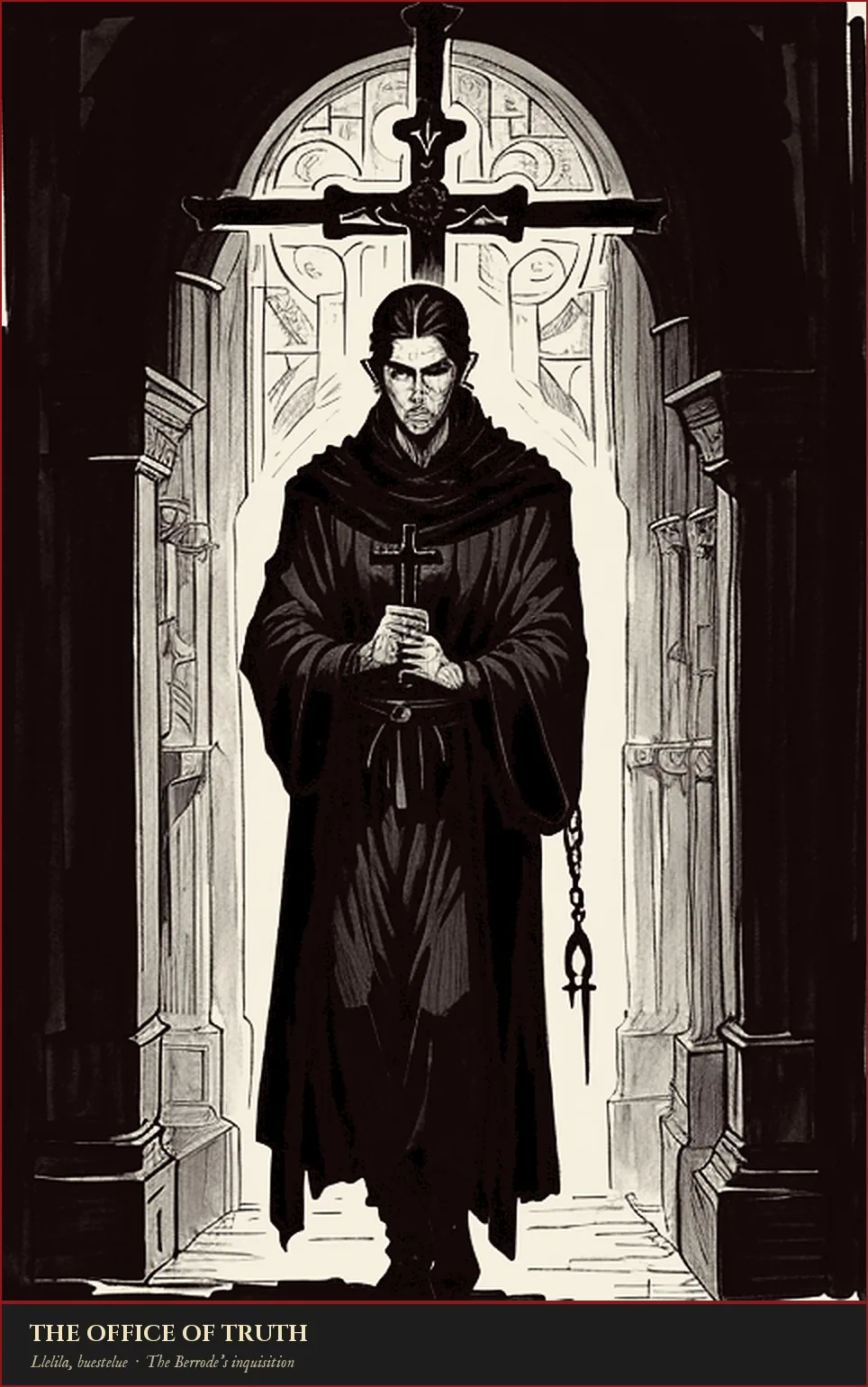
The king makes Castavar's law with the Grandees, who vote him money in the Jevarrie, and the Rislo holds a veto over matters of faith, which he reckons broadly. The king's courts hear property, debt and violence. The church's courts hear sin, marriage, oaths and heresy, and heresy goes to the Office of Truth, which can take a prisoner out of the king's own cells. The Grandees judge their own lands in everything short of death, and the Upland Shepherds cannot be arrested on the drove-road.
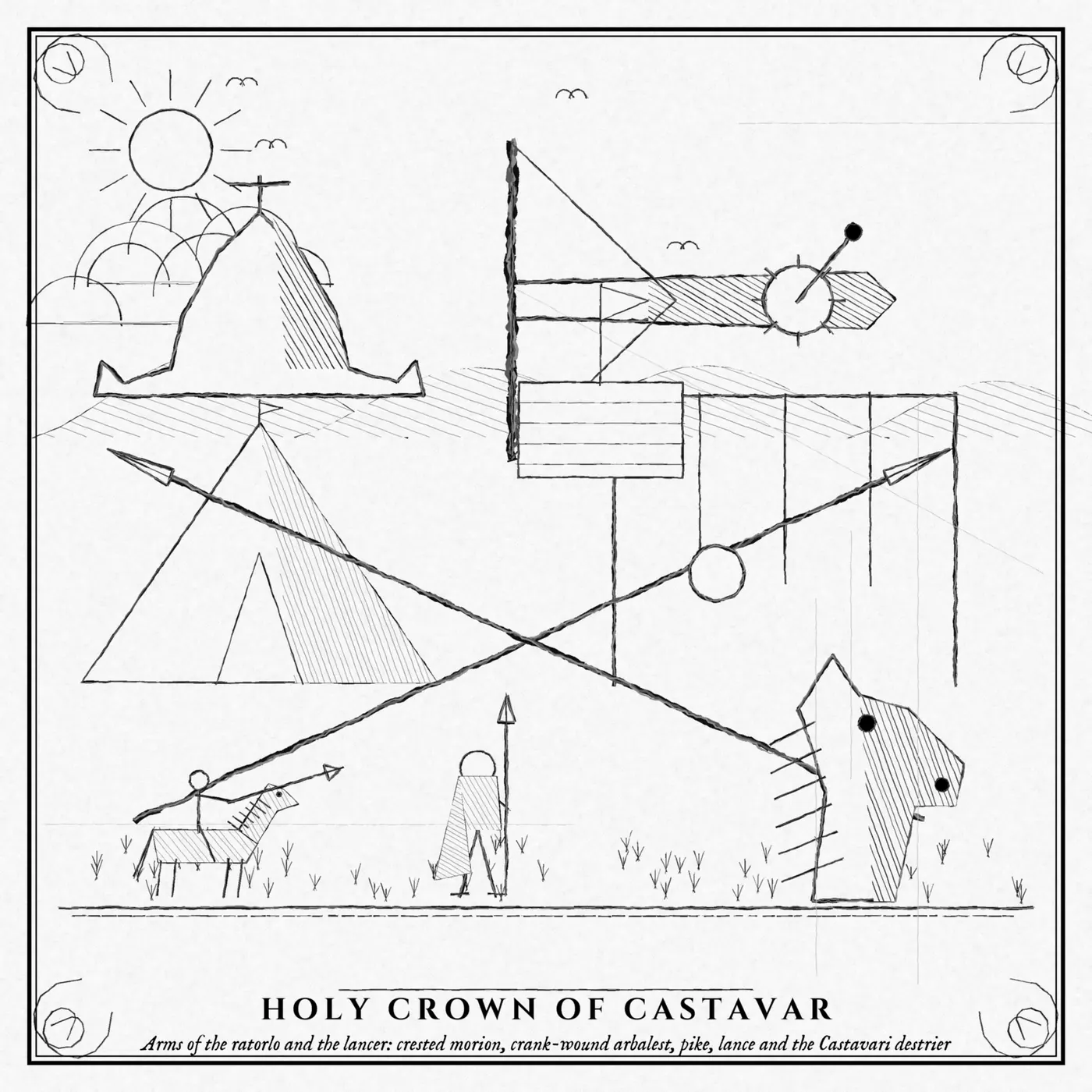
The watch is drawn from the ratorlon of the garrisons, who walk in pairs and keep out of the poor quarters after dark. The Office of Truth needs no watch. It pays informers. Punishment follows rank: a laborer who steals is flogged, a lesser noble is fined, and a Grandee is invited to lend the king money.
| Crime |
Usual punishment |
| Theft by a commoner |
Flogging in the town square |
| Theft by a masesben |
A fine |
| Clipping jabirga |
Branded on the hand; a second offense is hanged |
| Selling Zarvani poppy |
Flogging, and the poppy burned |
| Keeping or copying star tables |
The tables burned, and a fine; navigators are rarely charged |
| Murder |
Hanging for a commoner, the sword for a noble |
| Blasphemy |
A brand on the forehead, the Office of Truth's mark |
| Heresy, Grove masks, preaching the One Light |
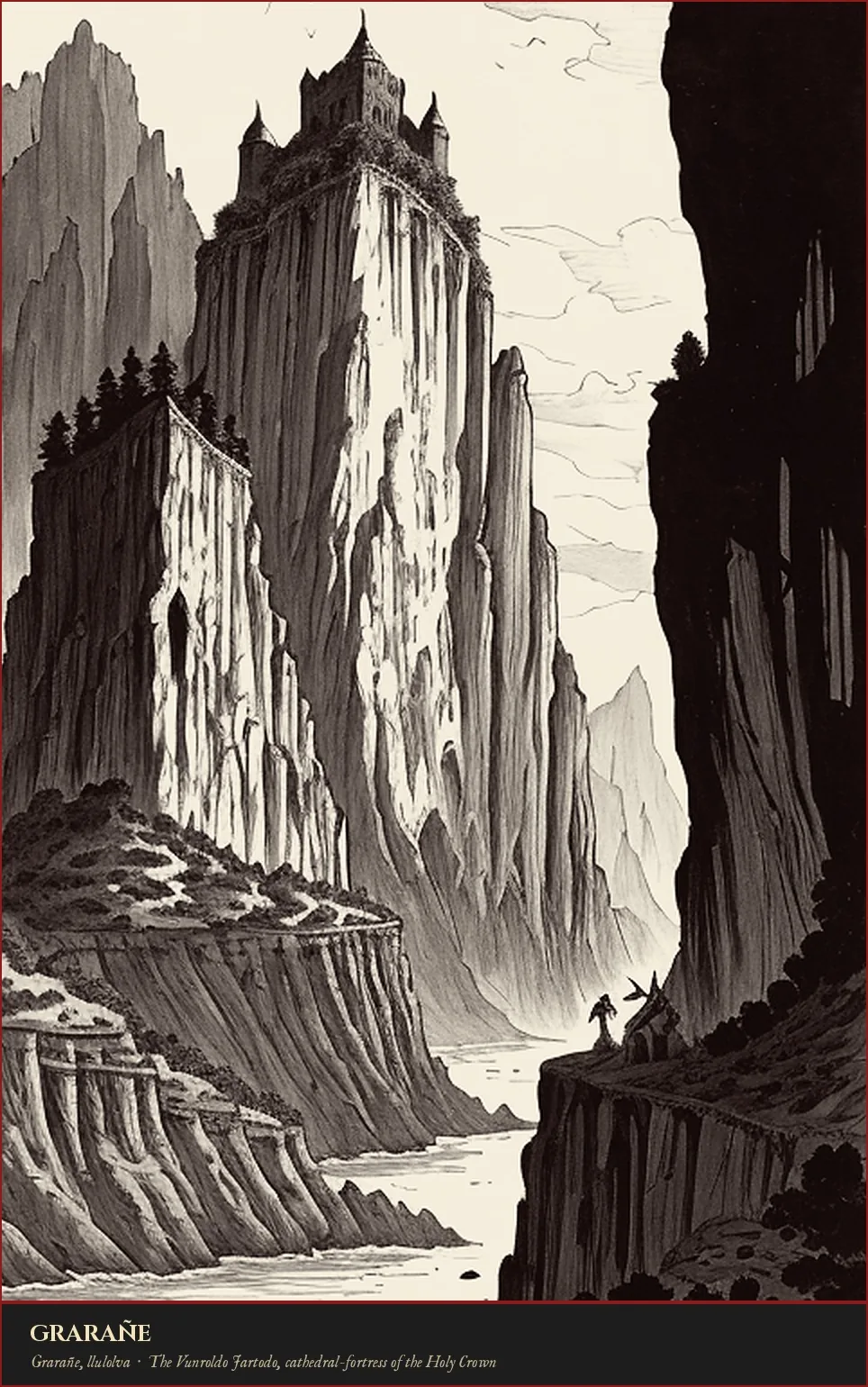
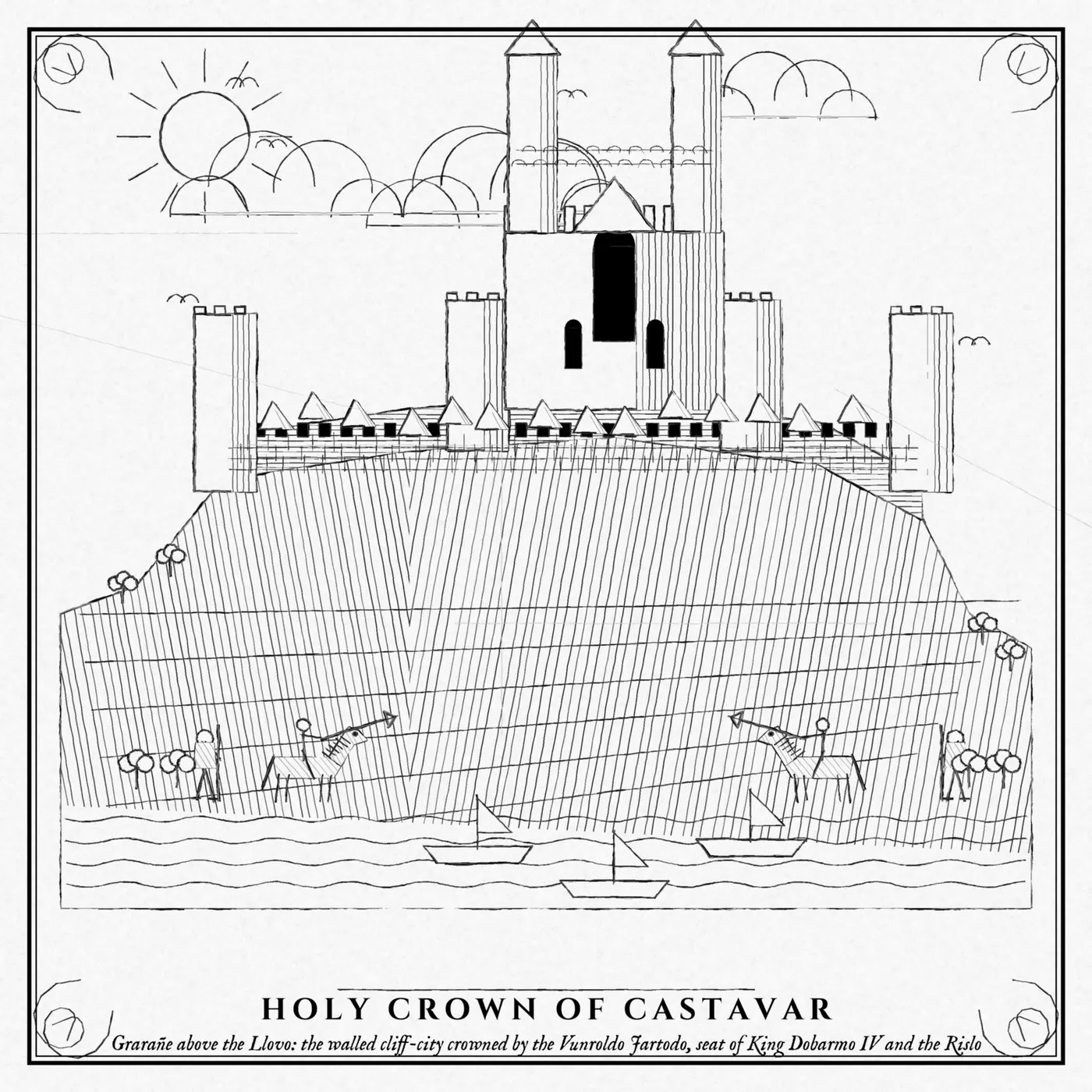
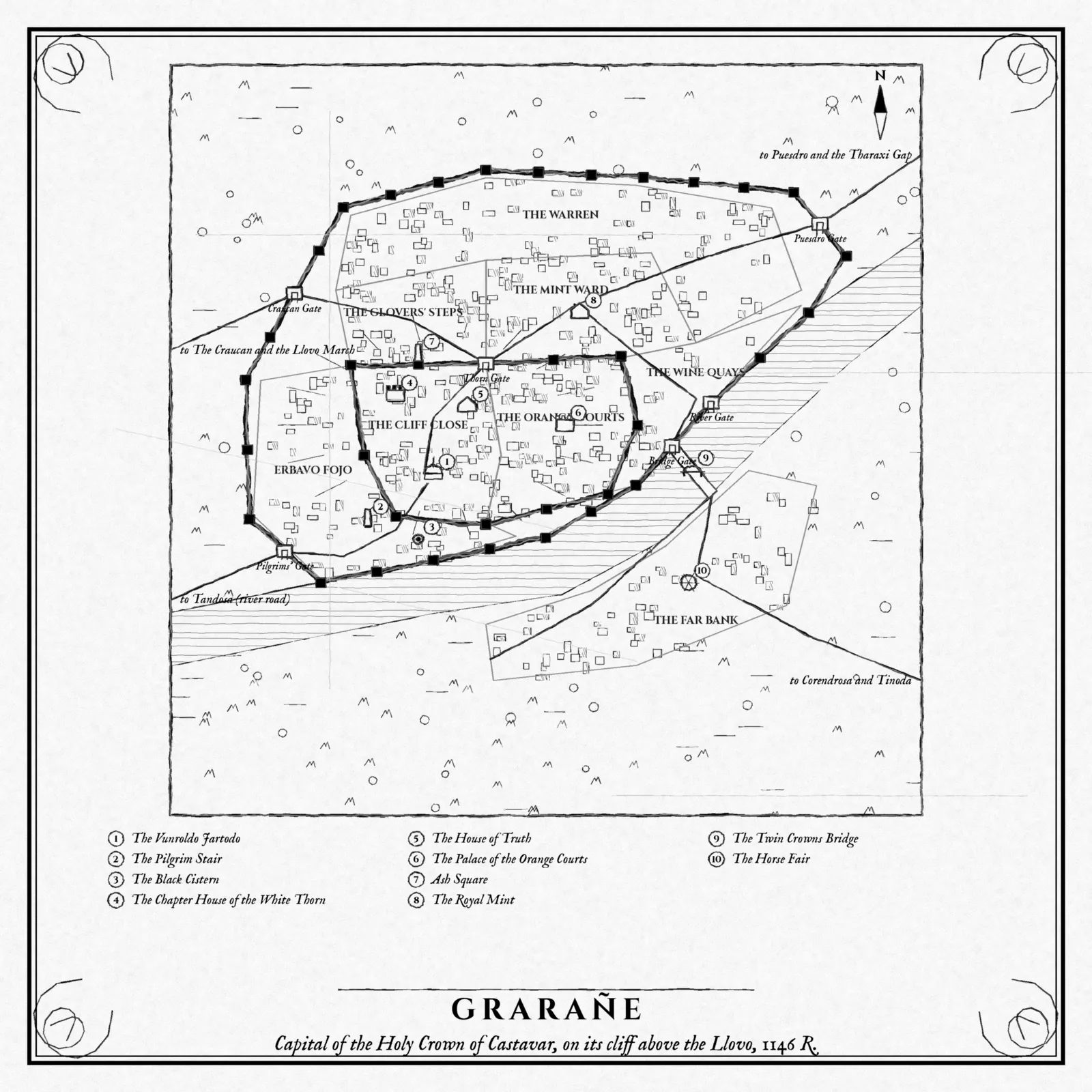
Burning; in Grarañe, in Ash Square |
Unhearing and outlawry. Short of the fire, the church's heaviest sentence is to declare a person unheard. An unheard man may not marry, swear an oath, stand as a witness or be buried in the church's ground, and whoever helps him shares his sentence. The crown outlaws bandits in the Upland, and any man may kill an outlaw found on the king's roads.
Debt. The Berrode calls lending at interest between believers a sin (talue), so Castavari borrow from Caelvennois, and that is how the crown came to owe Farisel. A peasant owes his Grandee's granary for seed and bread, and the debt passes to his sons. A masesben who cannot pay pawns his land to the lenders of the Mint Ward.
Family
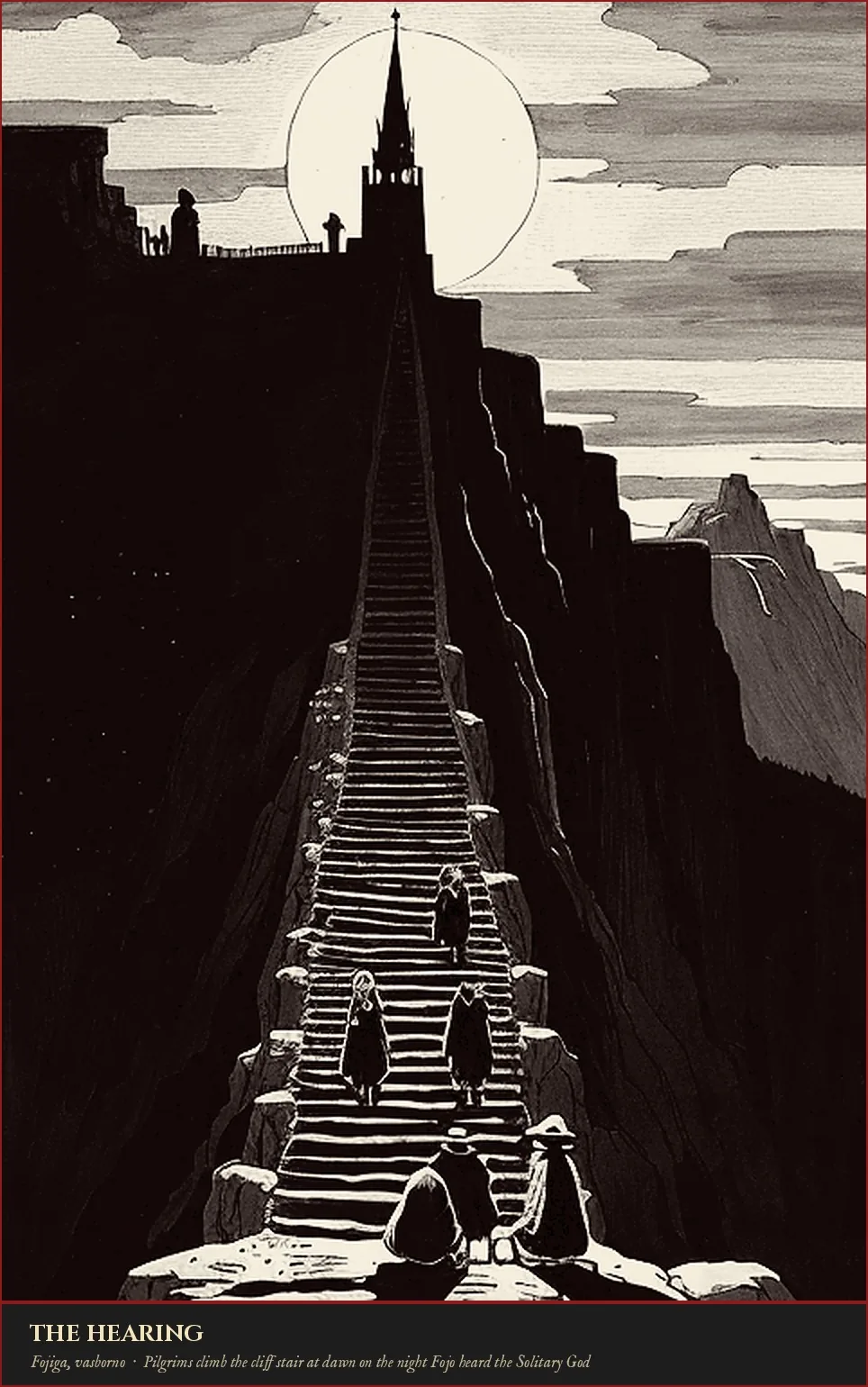
Marriage and divorce. Marriage belongs to the church courts. It is made before a priest in silence, the vows spoken into the quiet the way Fojo heard his God. No weddings are held in Litota, and many are held at the Feast of Grace that ends it. Marriages are arranged on the evening walk, and a noble daughter marries where her father's treaties need her. Queen Rorelle married at seventeen to seal the Gilded Pact. The Berrode does not undo a marriage. A church court may separate a couple for cruelty or heresy, but neither may marry again while the other lives.
Inheritance. A Grandee's lands go whole to the eldest son, and younger sons go to the church or the knightly orders. Commoners divide land among their sons and give their daughters dowries. The crown passes in the male line, and Castavar remembers that Lasdara ended in 301 when its male line died out.
Women. A Castavari woman lives under her father's law and then her husband's, and may not be a priest or sit in the Jevarrie. Women still rise, by the sea, by widowhood and by faith. Captain Modarsa Tandosno commands the navy's best galleon, and the widows of the Third Crusade hold their own property for the first time in their lives.
Who is not free. Castavar holds no one as property, and its peasants are free in law. In truth most owe their Grandee a year's harvest, a son for the ratorlon, and their silence.
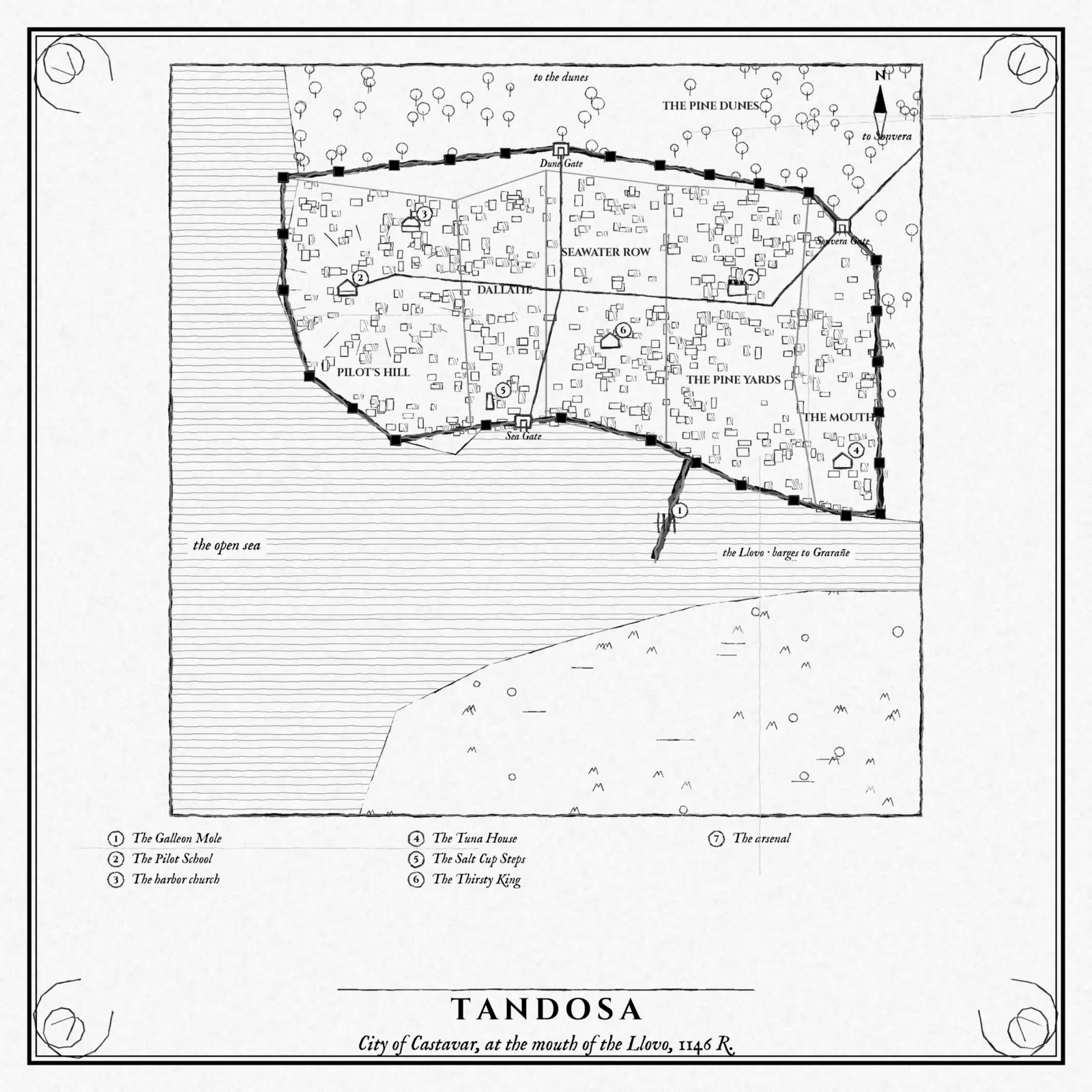
Children and schooling. About one Castavari in seven can read, nearly all of them clergy or nobles, taught in the cathedral schools and the orders' colleges. The navy's pilot school at Tandosa teaches boys of twelve from Zarvani star tables bound inside approved covers. Everyone else learns from the pulpit, and pays a Market Hand scribe to write a letter.
Daily life
Food and drink. Castavar eats from the olive, the vine and the pig. In Litota it eats no meat at all.
|
A Grandee in the Orange Courts |
A glover on the Glovers' Steps |
A peasant of the Royal Demesne |
| Morning |
Bread, olive oil, bitter-orange preserve |
Bread and olive oil |
Bread dipped in oil, a handful of olives |
| Midday, before the heat |
Cork-hill ham, roast kid or Upland ibex, Sonvera rice with almonds, Llovo red |
Chickpeas with rabbit, bread, red wine cut with water |
Chickpeas, bread, wine cut with water |
| Evening |
Llovo barbel, cheese, Tinoda almonds and honey |
Salted sardines, bread, olives |
Rock rabbit if one was trapped, bread, onions |
On the coast the daily meal is sardines, dried octopus and bread, and spring tuna is for feast days.
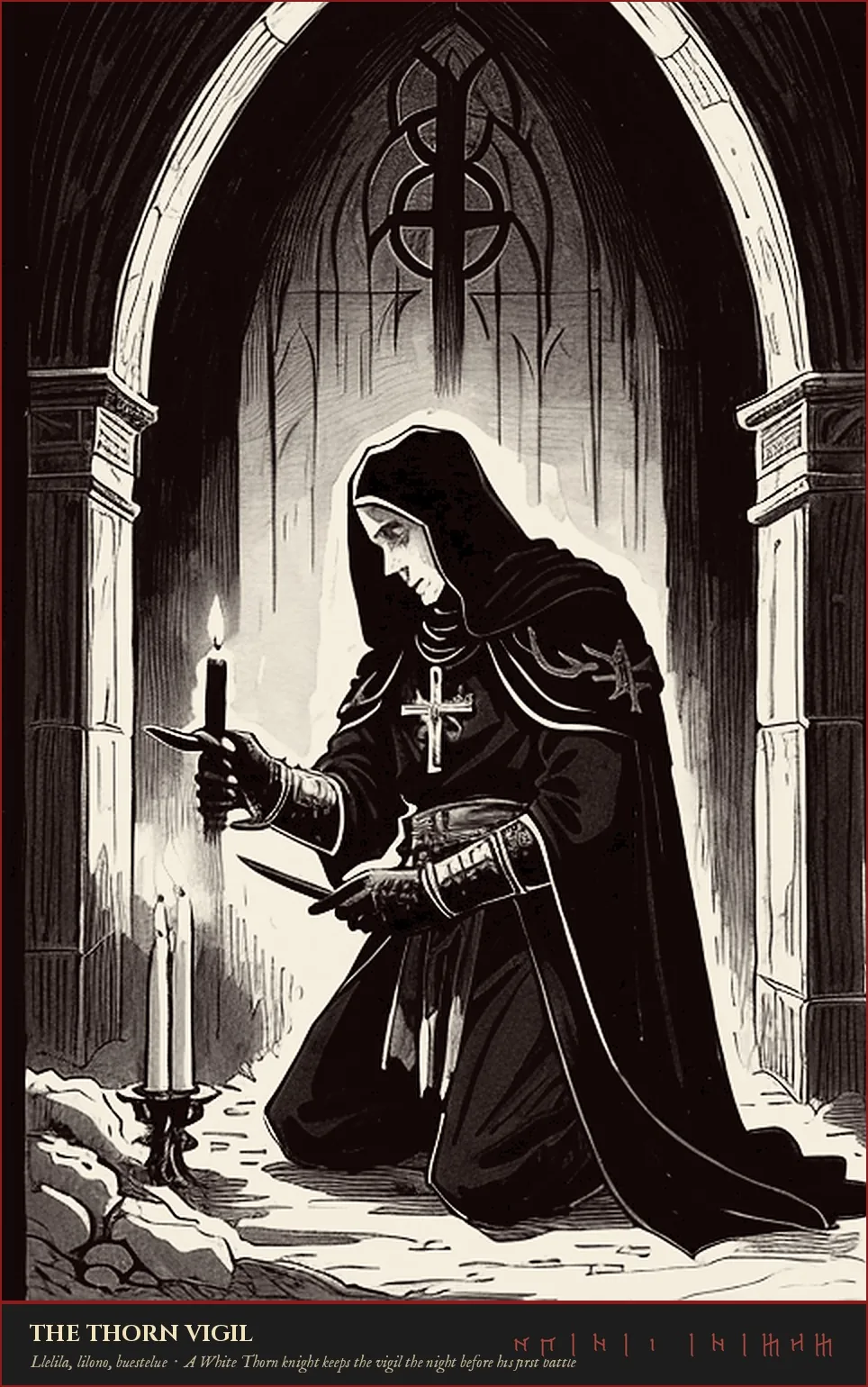
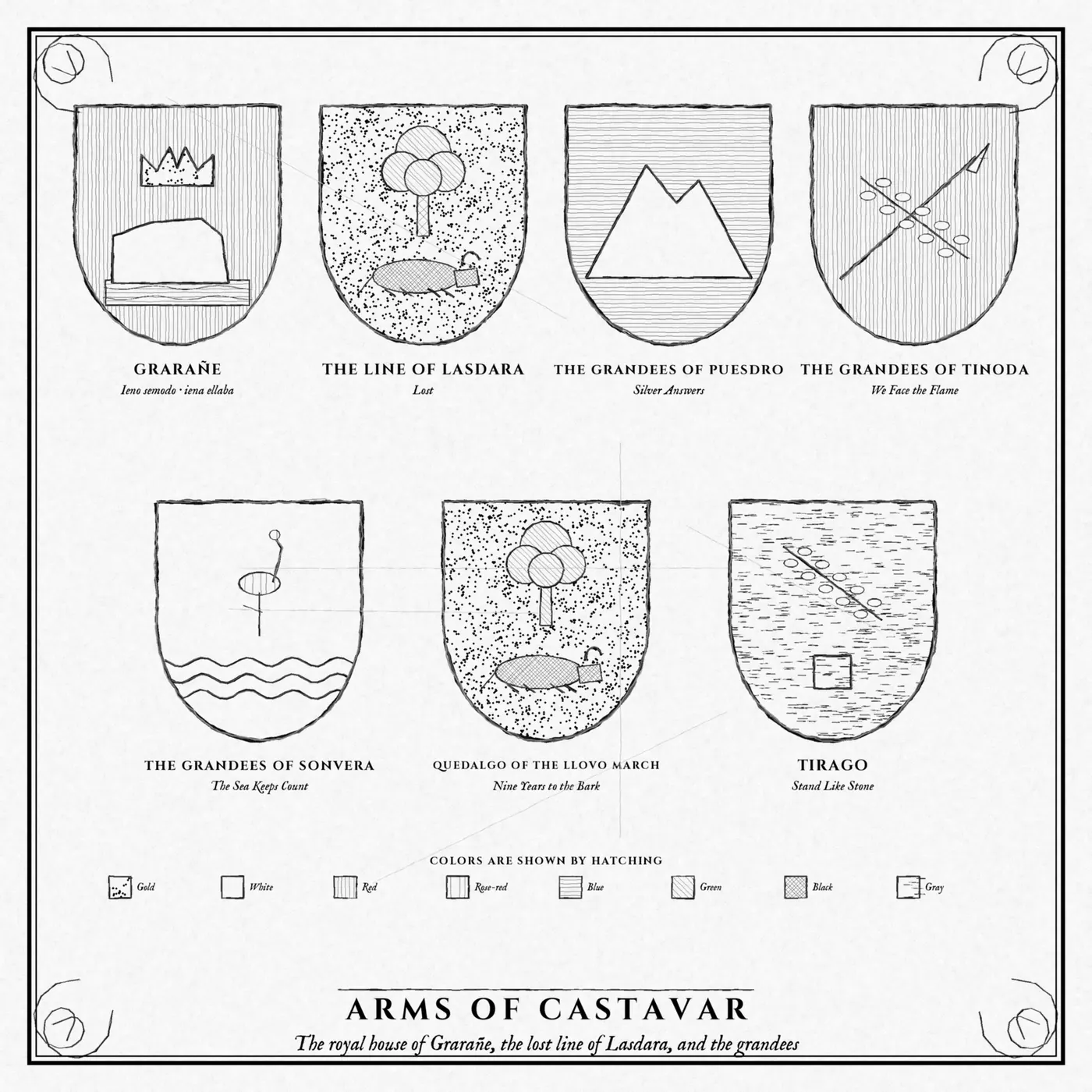
Dress and houses. Castavari wear dark wool and linen, the pious wear black on Fojiga, and knights of the White Thorn wear Rosemary of the Thorn in the helm. Every Castavari burned in war wears a glove over the scar and takes it off only to pray. Houses are whitewashed stone or adobe under red tile, built around a courtyard with a well or cistern.
Health and hygiene. Castavar had physicians once, and burned or lost most of them. The knightly orders keep infirmaries for their own men. The poor go to herb-women with Upland thyme, rosemary and thyme-hill honey, and the Office of Truth watches the herb-women. Zarvani medicine is smuggled in wine barrels, and the Sunmaw poppy is against the law. A pious Castavari washes his hands at the cistern before prayer. In the Warren of Grarañe the best-known midwife is Randue the Midwife (randue, "safe"). She has delivered half the quarter, and by what she tells the priest, she decides which thorn-shaped birthmarks are worth reporting.
Birth and death. A child is named at the first service of Fojiga after its birth. The priest says nothing, and the family speaks the name into the silence. The dead are buried in the church's ground after a vigil without music. A family whose son never came home from the Sunmaw hangs his empty glove by the door.
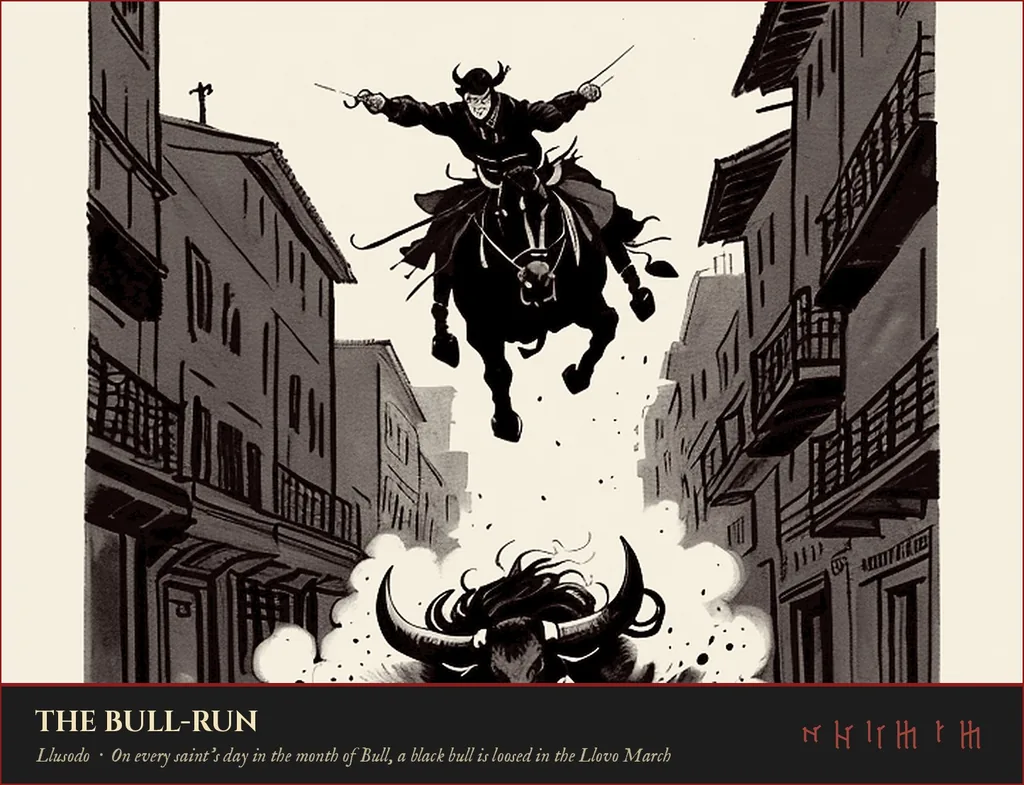
Pastimes. Castavar amuses itself with sermons, processions, horse-racing, dice and gossip. In Llusodo the young men run before the black bulls of the Llovo March, and in Litota there is no music on any day.
A day. The bells ring before dawn and business is done by noon. The towns shutter through the heat and wake for the evening walk, when marriages are arranged and informers take notes. The week runs from Ieno to Fojiga, the day of silence.
Where it is going: CONTESTED. Castavar's law has two masters, and in 1146 the church is winning. The Rislo wants the Grandees' mines for the Fourth Crusade, and the Office of Truth can overrule the king's cells. If the Old Jevarrie and the Crownmen join, the king's courts may win back their ground. If they do not, the Office of Truth will be the law.
Trade, taxes and money
Makes and sells. Silver, some sixty tons a year, more than every other realm together; olives and oil, Llovo red, cork, merino wool, hams, destriers, almonds, rice, lagoon salt, sardines, octopus and tuna.
Buys. Credit, until this year; Dunmorrow armor; Caelvennois clockwork arbalests; Zarvani star tables, in secret; timber for masts.
Taxes.
- The royal fifth: the Grandees who own the mines pay the crown a fifth of their silver in ingots at the Royal Mint, about 96,000 larrama a year.
- The mint charge of one part in twenty on all silver struck.
- The Mouth duty at Tandosa: one part in fifteen on everything loaded for the sea.
- The Jevarrie's grant, the sum the Grandees vote the king when he summons them. In 1146 they have voted none.
- The spring tuna, which belongs to the crown alone; a larrama on every destrier sold at the Horse Fair.
- The Church takes a tenth of every harvest and shares none of it. The Upland Shepherds pay the Grandees a sheep in ten and the king nothing.
Direction. CONTESTED. Castavar strikes more silver than anyone and keeps less of it than anyone.