Horse-lords, forest wardens, delvers, pirates, river-folk, ice hunters and road-traders. Some fifty peoples who pay no tax to anyone.
How the Free Peoples Live
What counts as a tribe. Any people that rules itself, pays no tax to a great power, and would be missed if it were gone. Size does not matter. The Cherüsh are eighty thousand riders, and the Uusung's Long Dark camp is forty people. Both are tribes.
Where tribes live. In the gaps. Every great power rules a heartland and claims a frontier, and the frontiers are wide: the Spine's high valleys, the Greenwarden, the Grass Sea, the Sunmaw's deep dunes, the Verdant Deep, the Frostmarch's far north, the coasts and islands, the road itself. Tribes live where the great powers cannot be bothered to go, or cannot pay to go, or went and failed.
How tribes are born. A clan splits over a feud or an inheritance. Folk fleeing a purge or a famine find a valley. A leader men will follow binds three villages into one. A great power pulls back its frontier garrison, and the people it ruled find they can rule themselves. A trade road opens, and the people who work it become a people.
How tribes die. A great power decides the gap is worth filling. A leader dies with no one to follow him. A famine, a plague, a Wolf Winter. A larger tribe swallows them. They do well, become a kingdom, and are a tribe no longer. Or they drift into a great power's markets one family at a time, until nobody remembers the name.
Tribal status. Each people below is marked: RISING (growing in numbers or power), STABLE, FADING, CONTESTED (fought over, or fighting within), or VANISHED (gone within living memory, the name still known).
The confederation problem. The tribes of Aethorra seldom join, and when they do it is the most dangerous thing on the continent. Tontanor did it in 455 and frightened two empires for fifty years. Sarsak Tolmar has done it now. Every great power's chancery keeps a list of which tribes could join, and prays.
Plates of the Free Peoples
The Cherüsh Horde
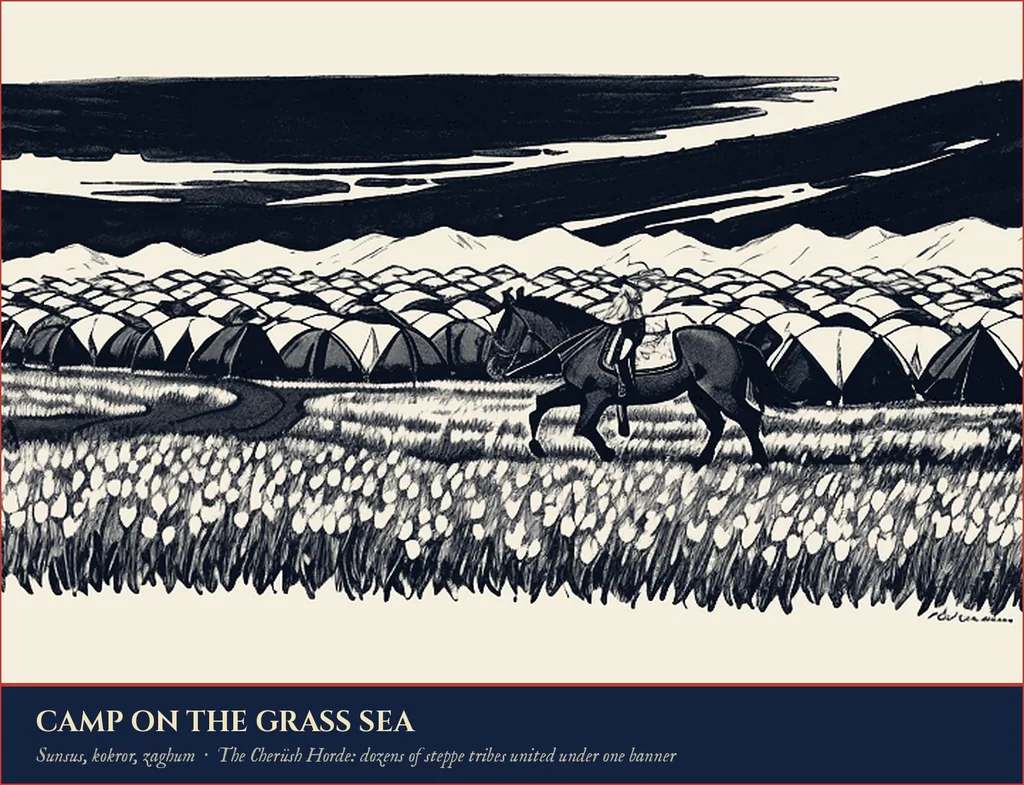
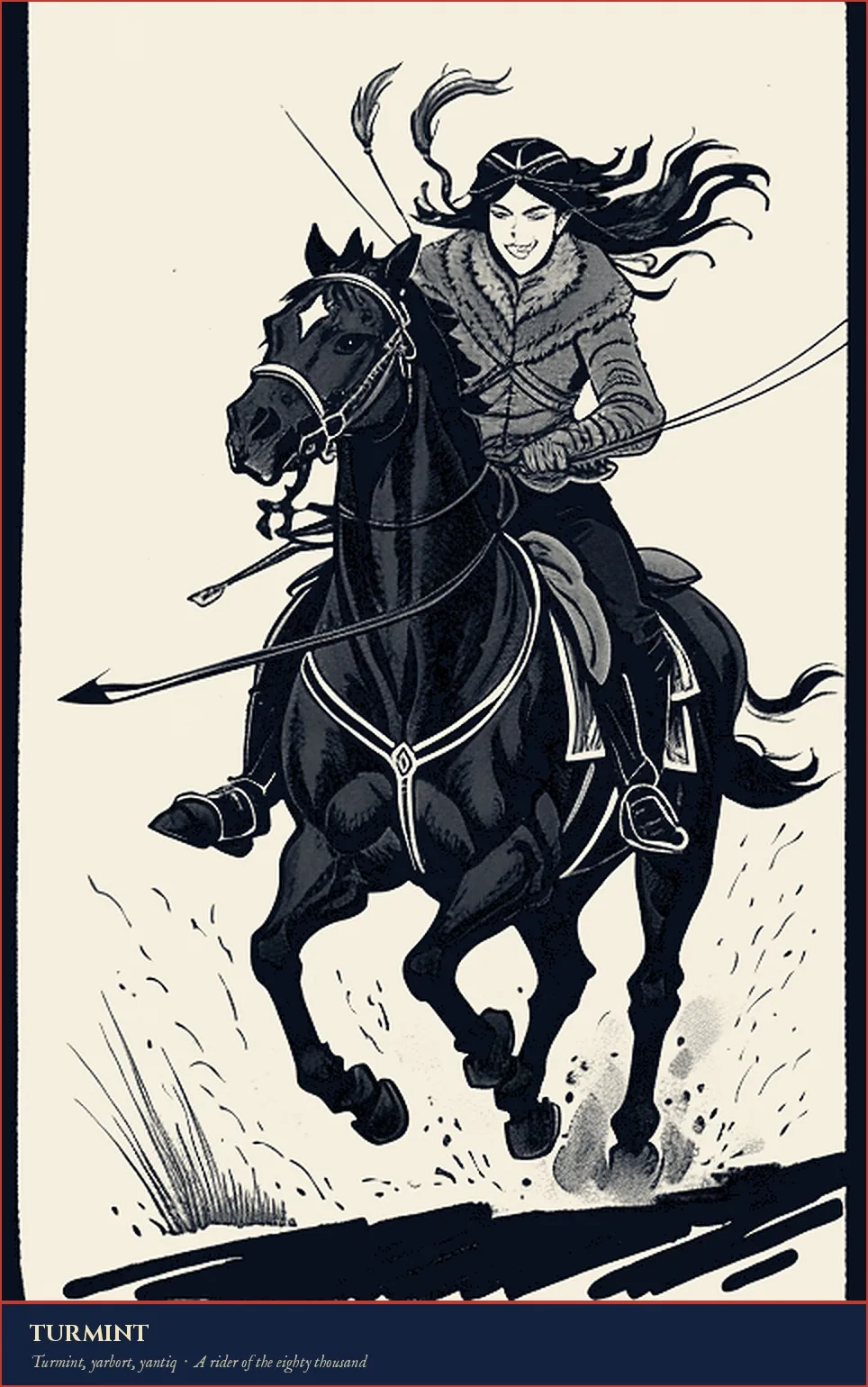
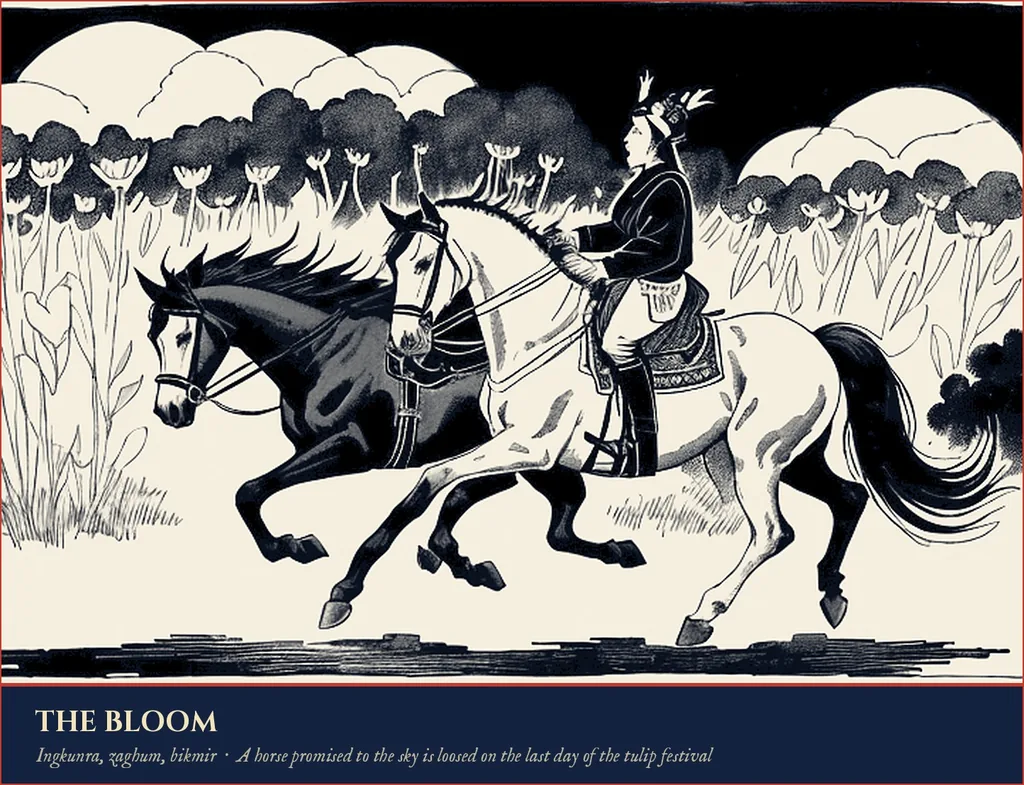
Camp on the Grass SeaThe Cherüsh Horde: dozens of steppe tribes united under one bannerTurmintA rider of the eighty thousandThe BloomA horse promised to the sky is loosed on the last day of the tulip festival
The Waheli
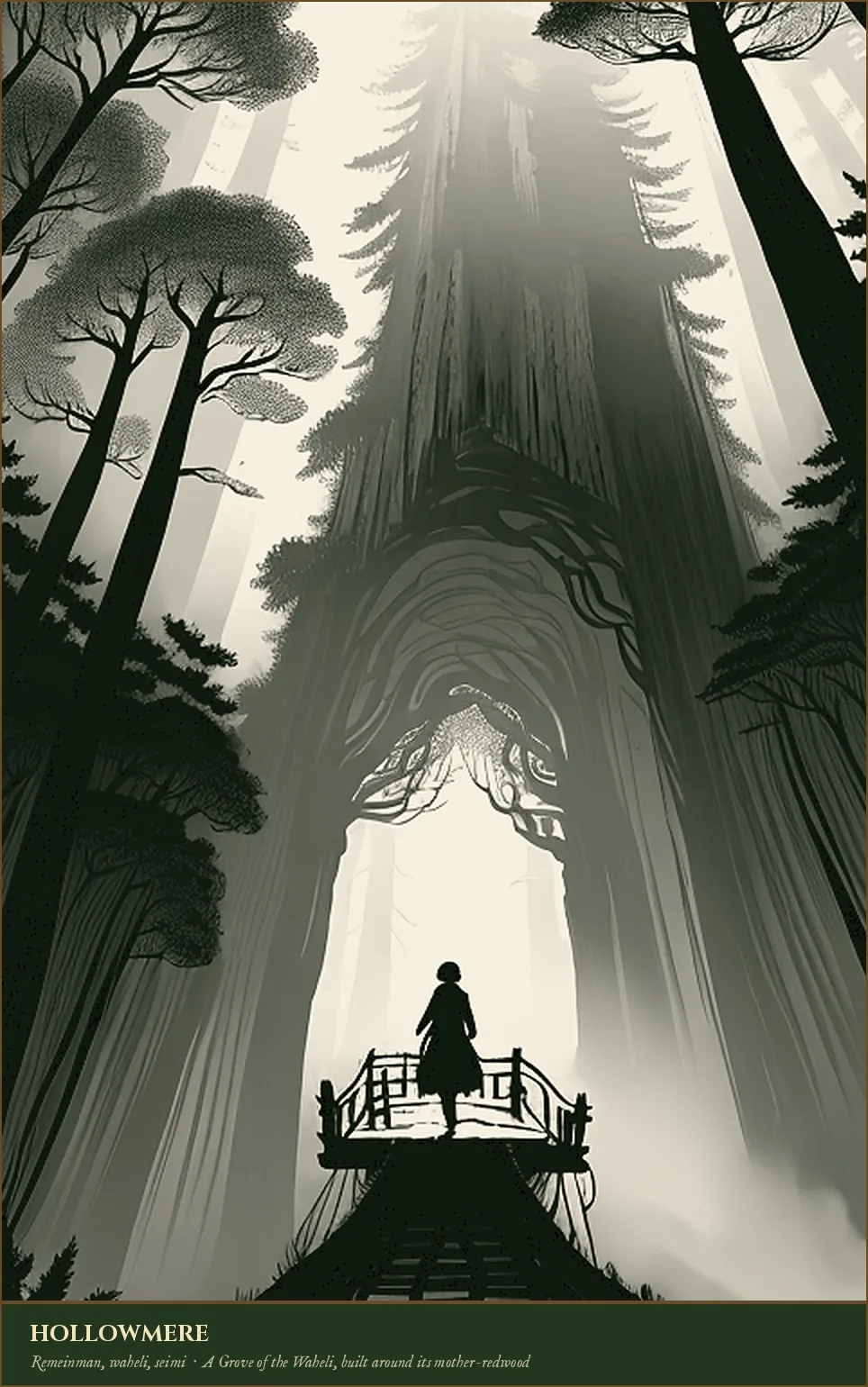
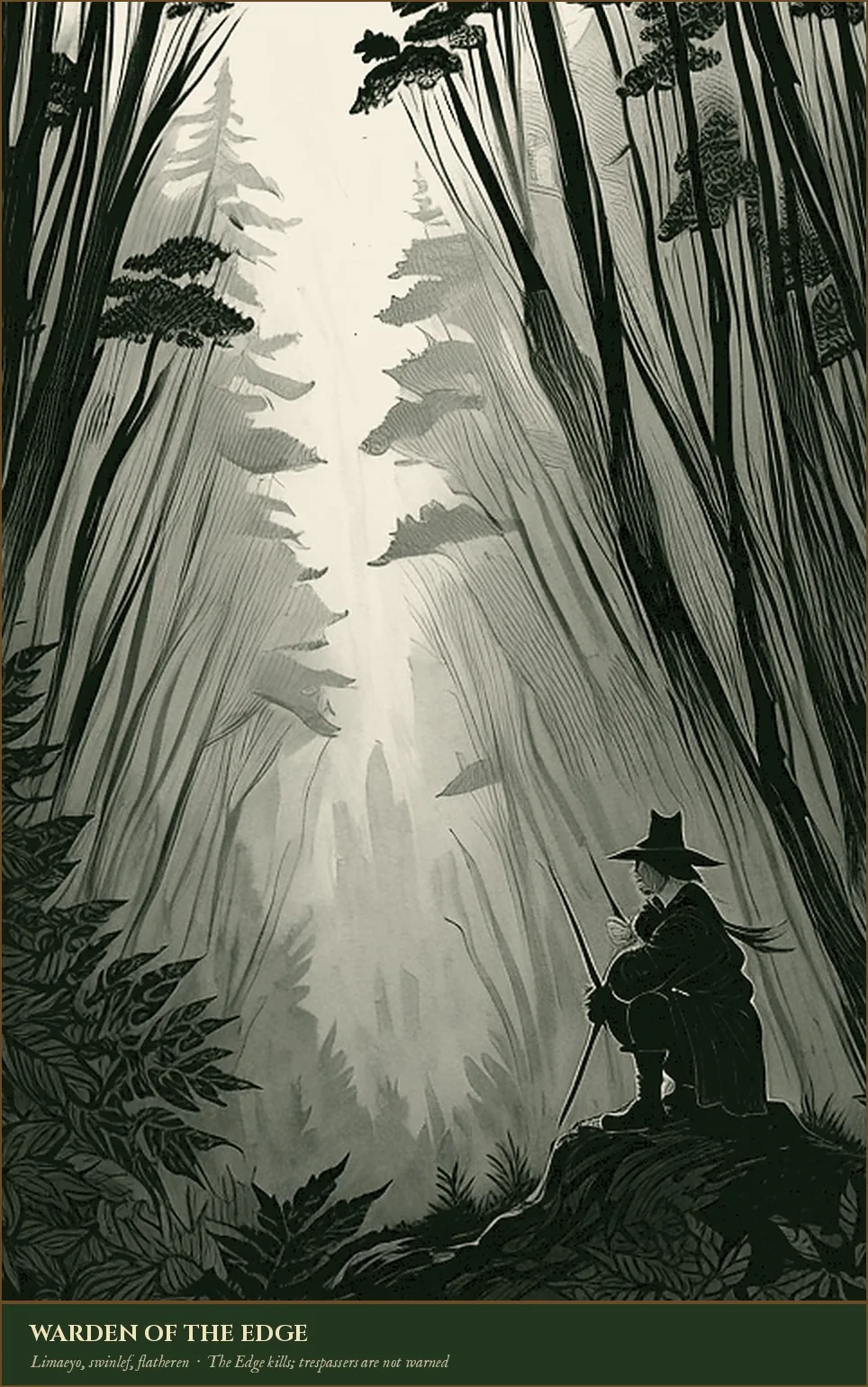
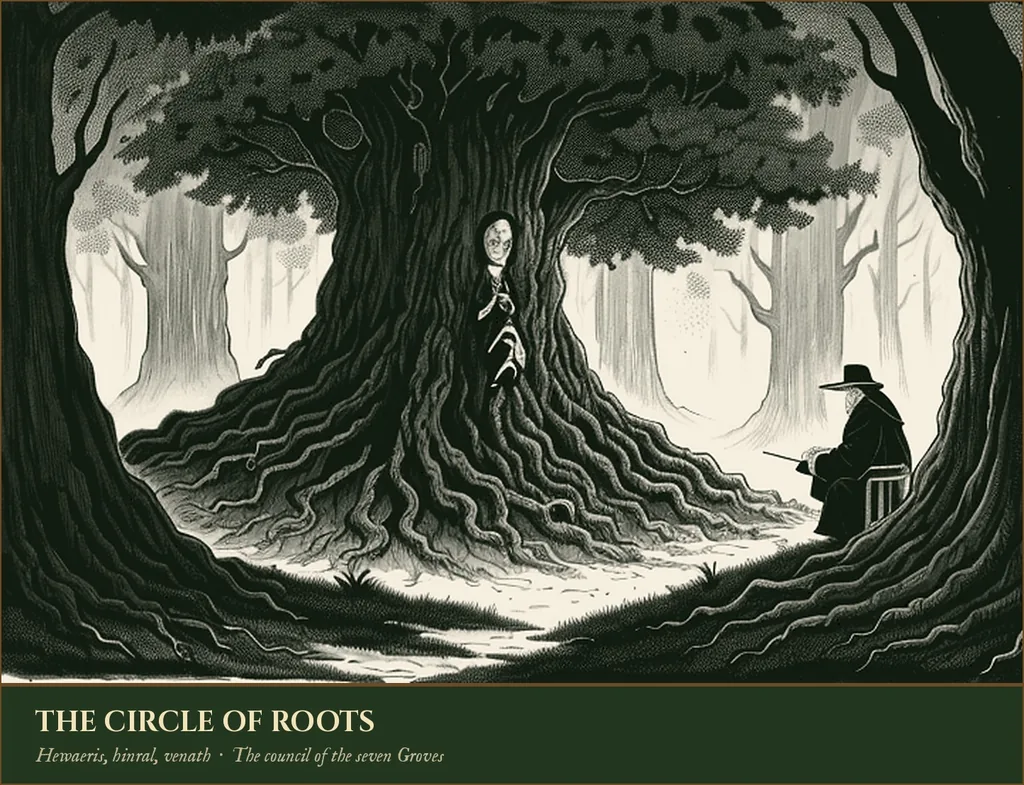
HollowmereA Grove of the Waheli, built around its mother-redwoodWarden of the EdgeThe Edge kills; trespassers are not warnedThe Circle of RootsThe council of the seven Groves
The Dunmorrow
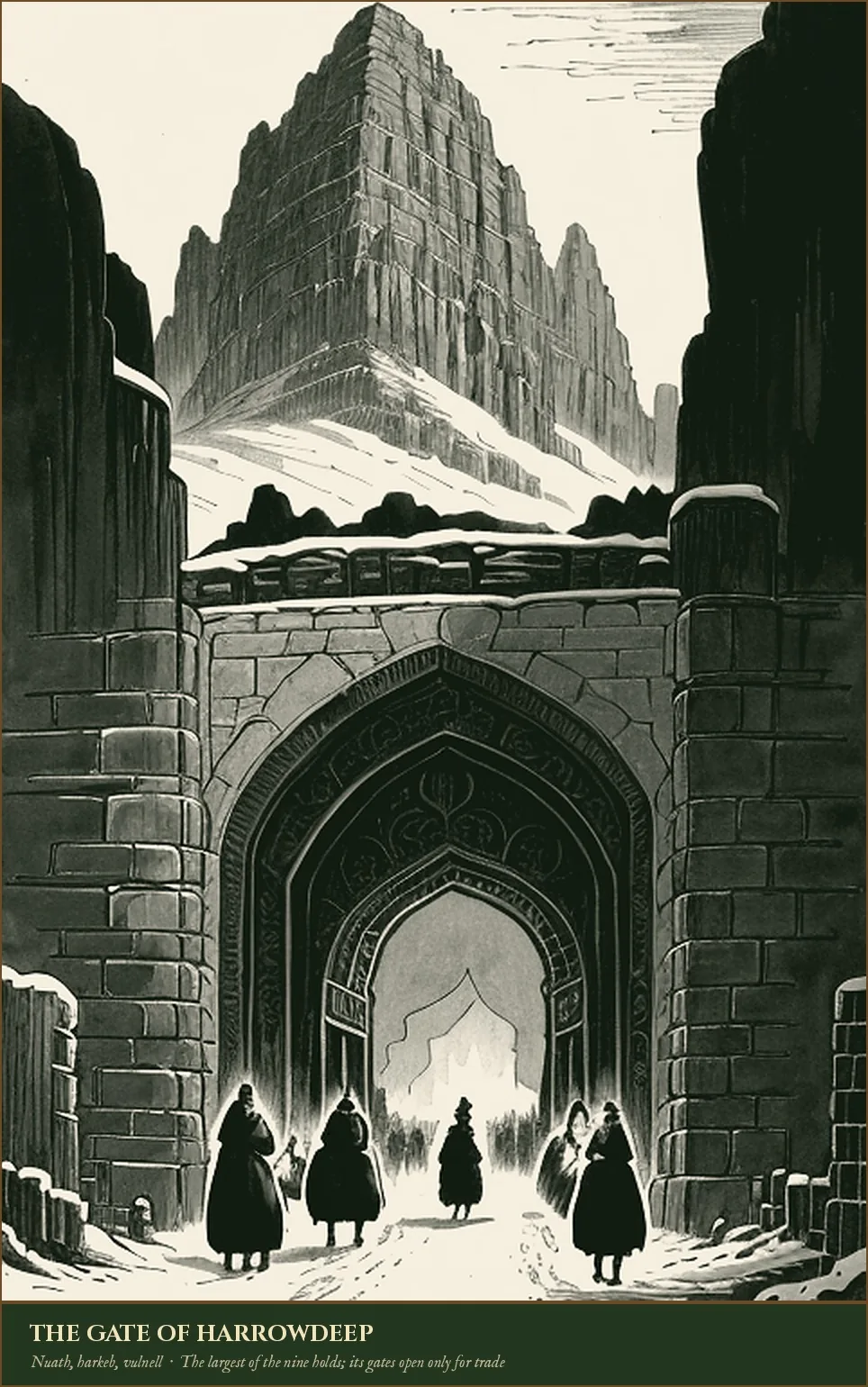
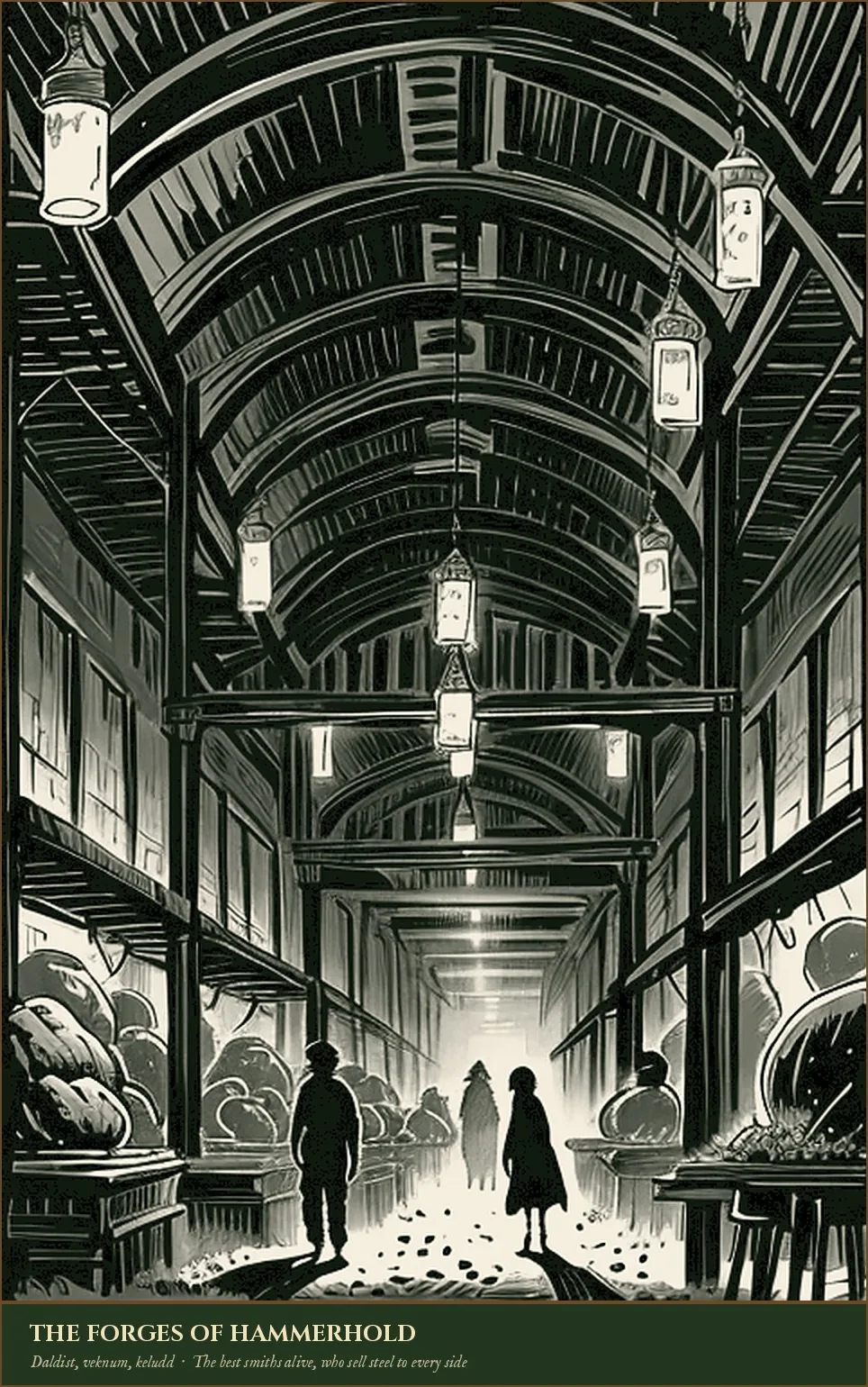
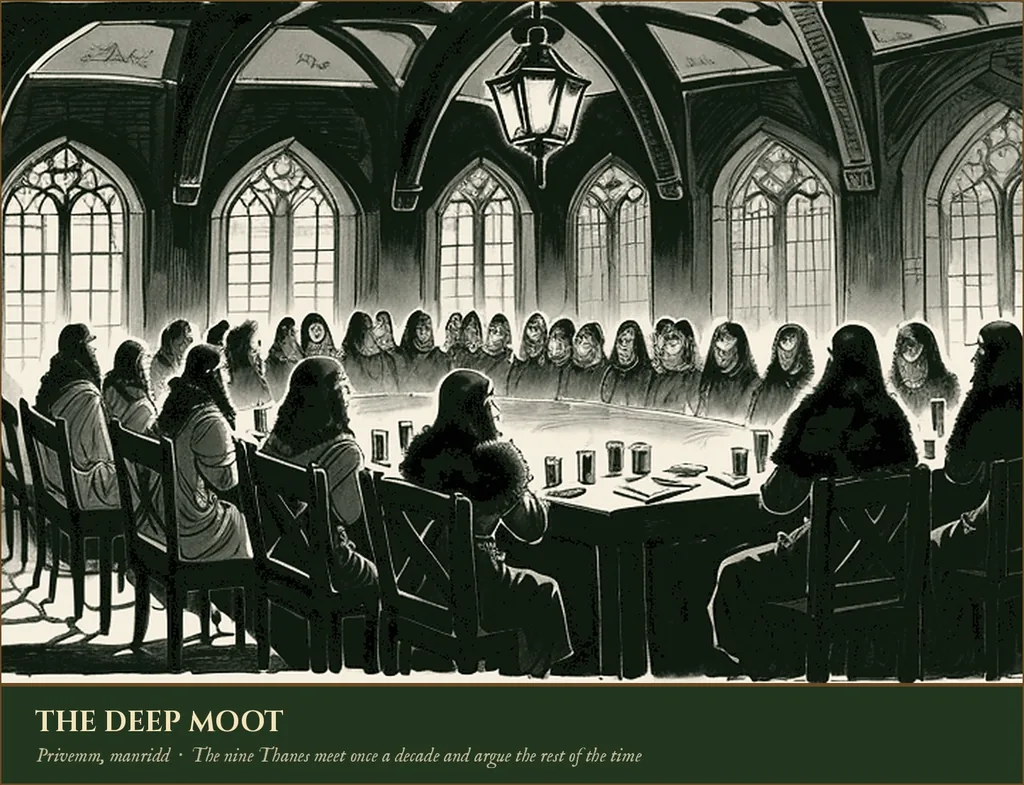
The Gate of HarrowdeepThe largest of the nine holds; its gates open only for tradeThe Forges of HammerholdThe best smiths alive, who sell steel to every sideThe Deep MootThe nine Thanes meet once a decade and argue the rest of the time
The Tzalan
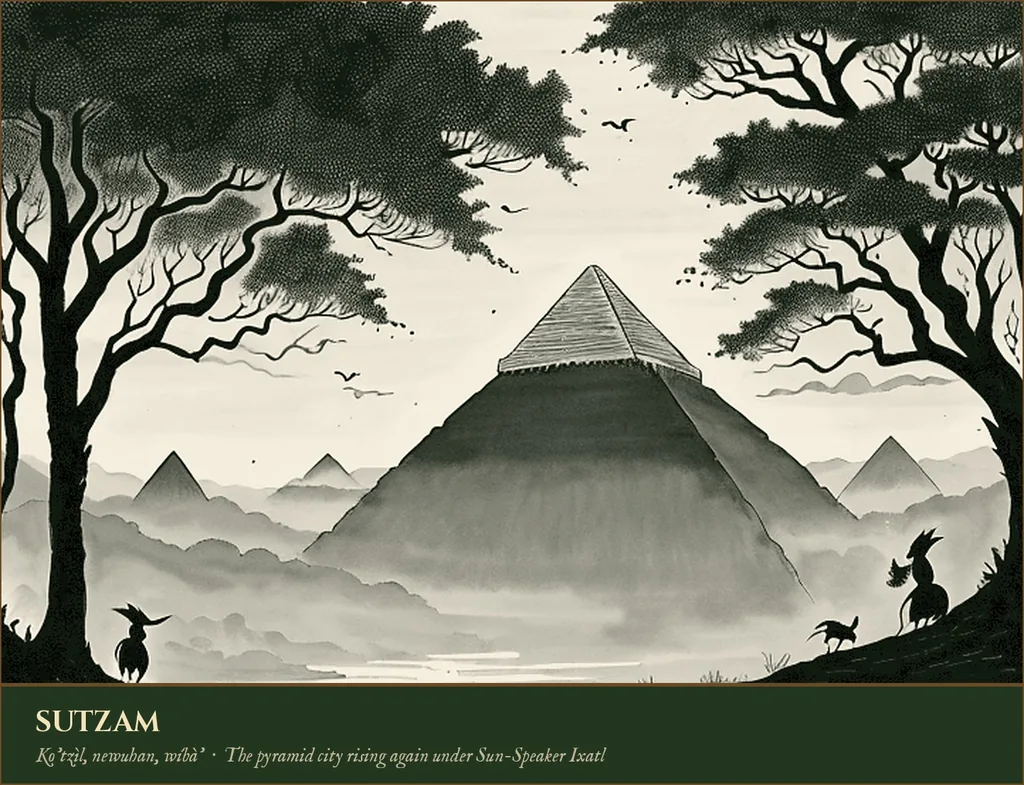
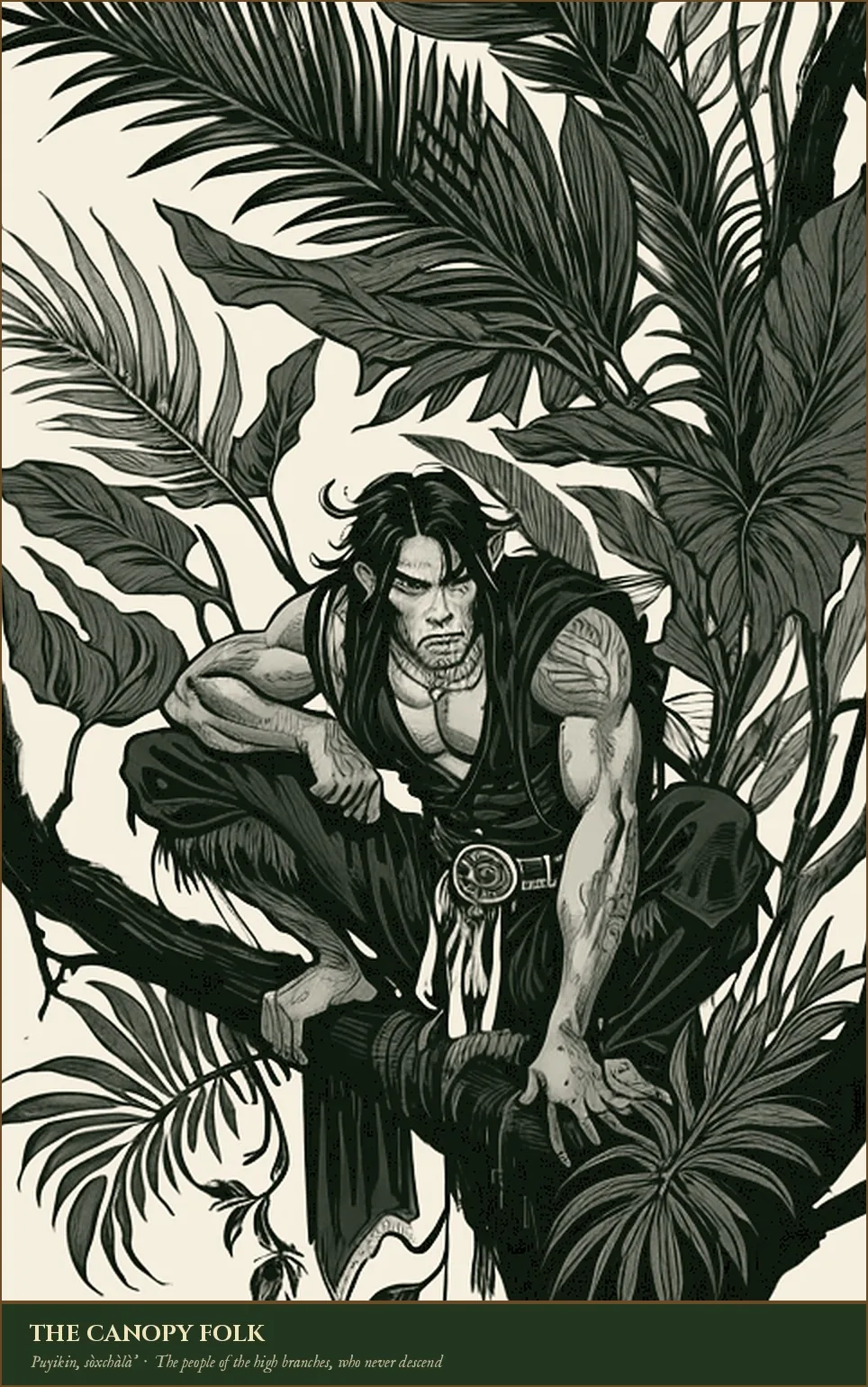
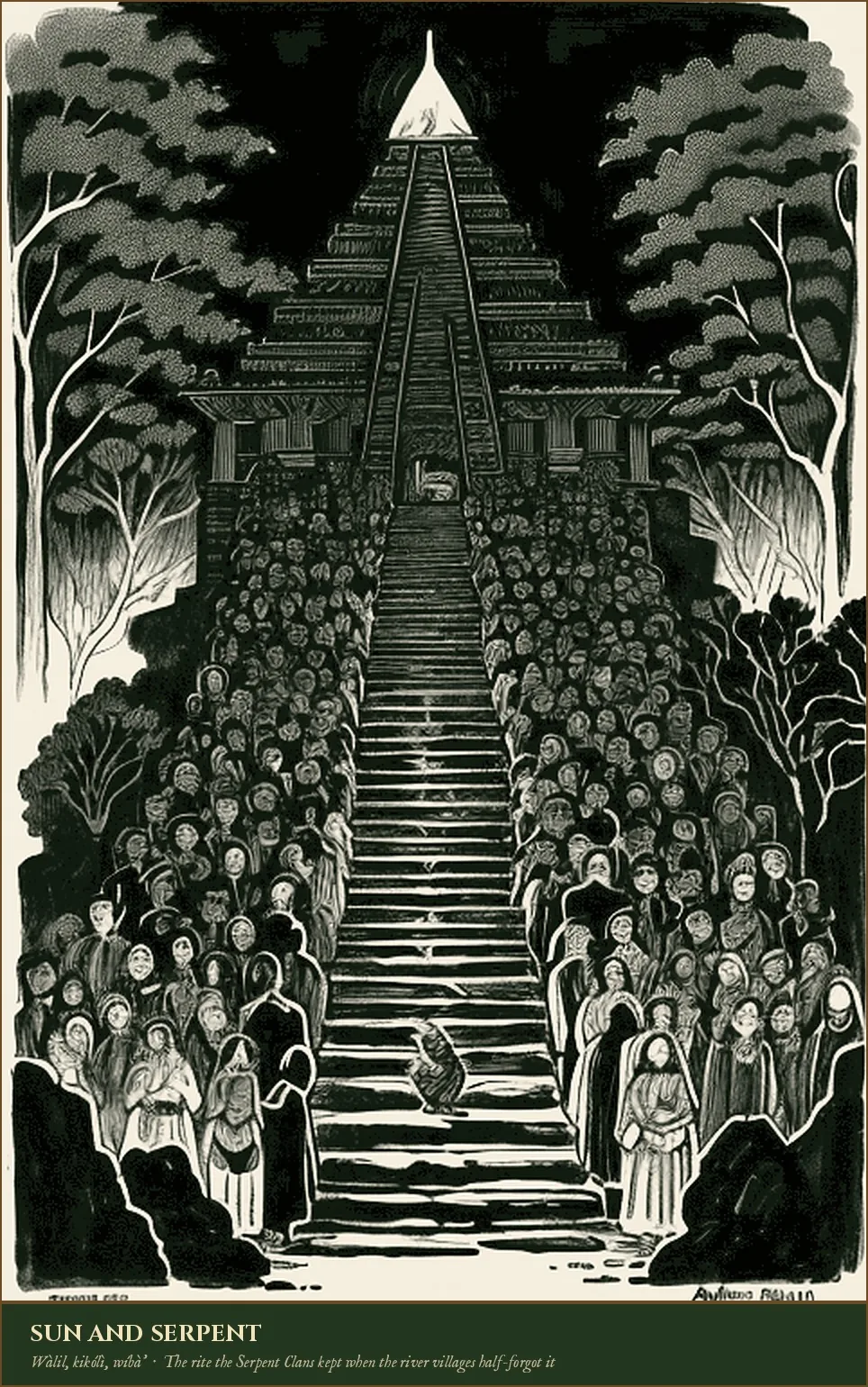
SutzamThe pyramid city rising again under Sun-Speaker IxatlThe Canopy FolkThe people of the high branches, who never descendSun and SerpentThe rite the Serpent Clans kept when the river villages half-forgot it
The Uusung
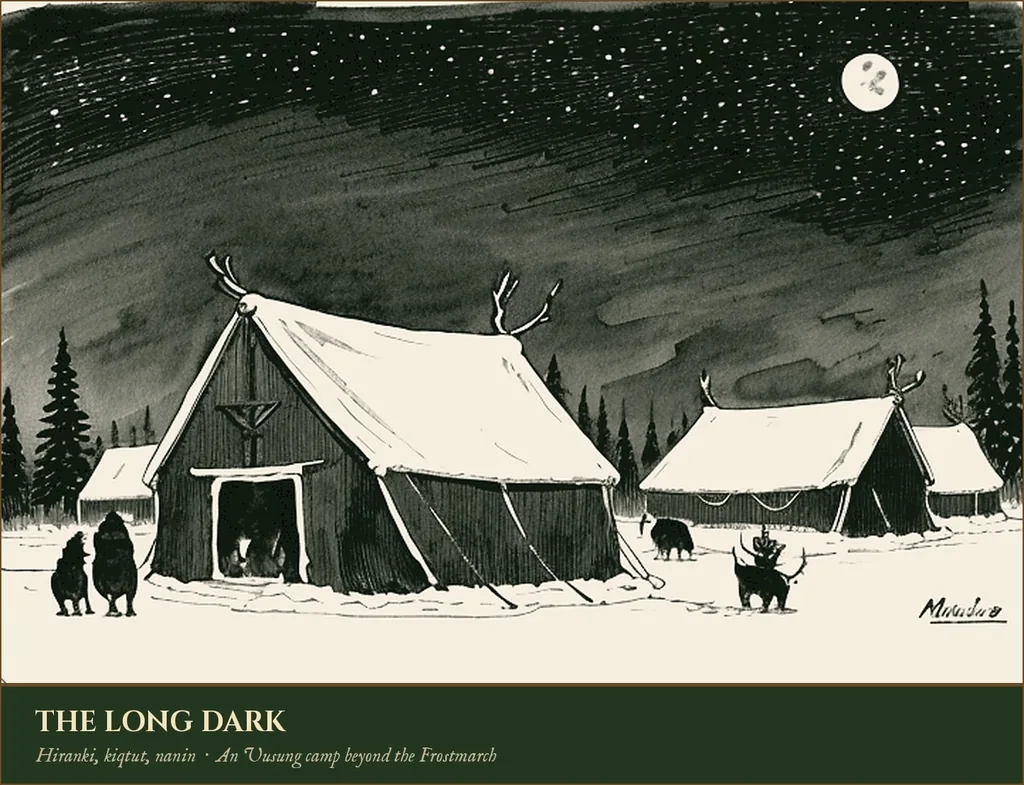
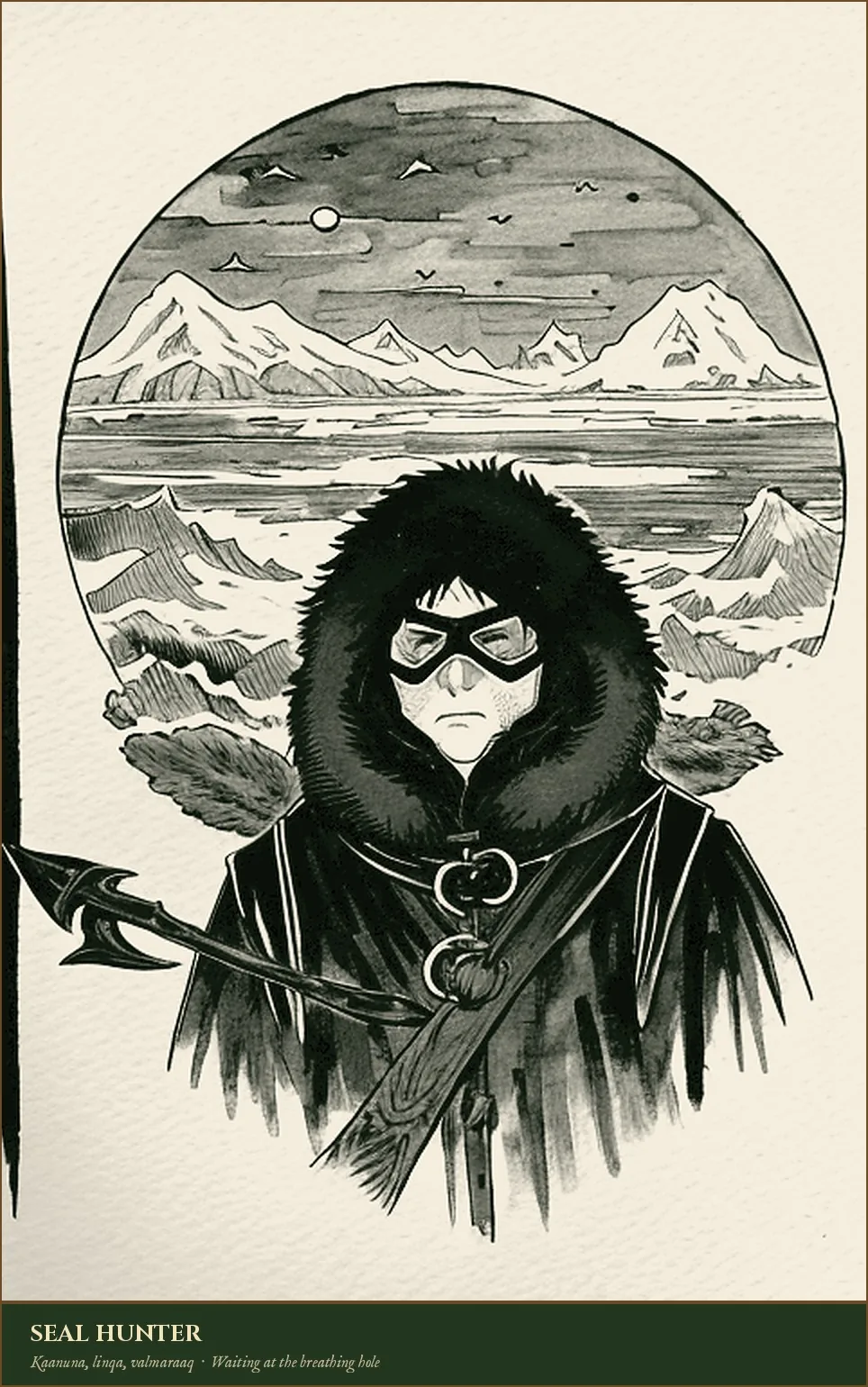
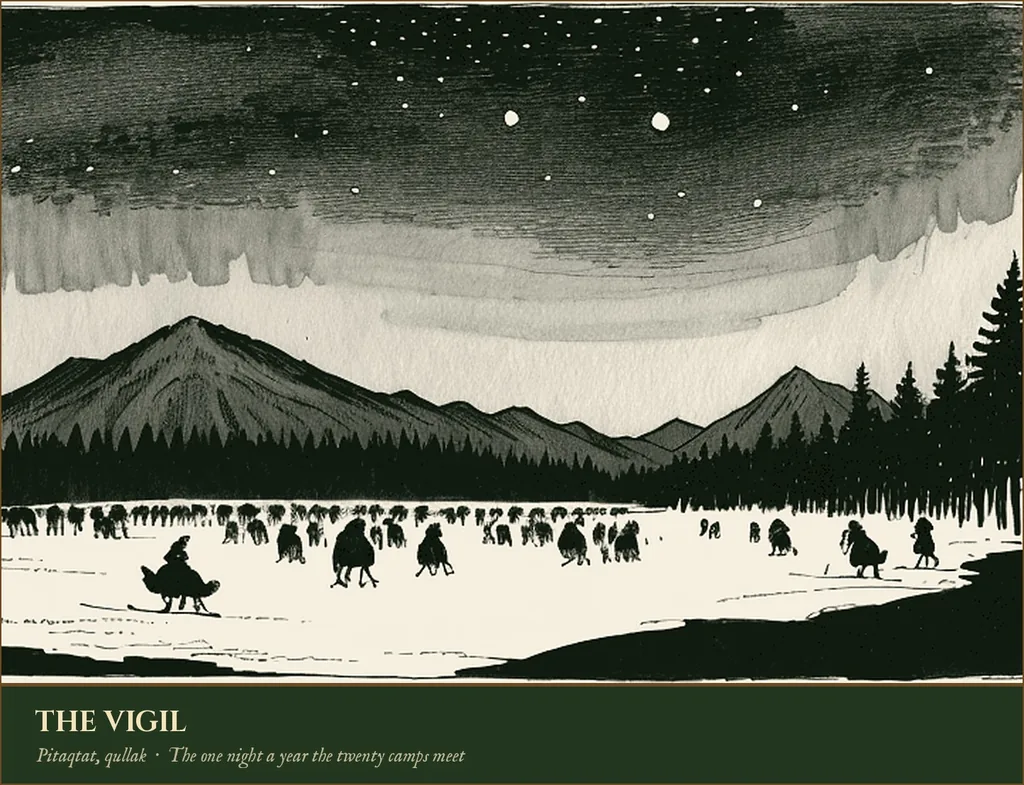
The Long DarkAn Uusung camp beyond the FrostmarchSeal HunterWaiting at the breathing holeThe VigilThe one night a year the twenty camps meet
The Qaflan
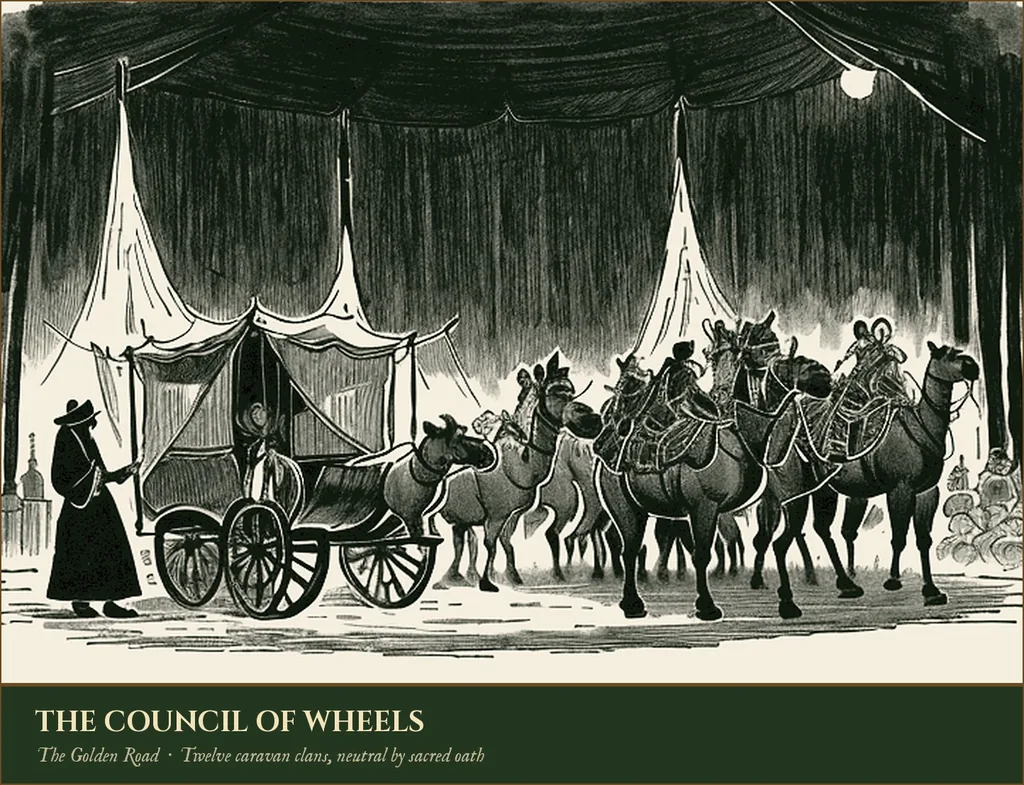
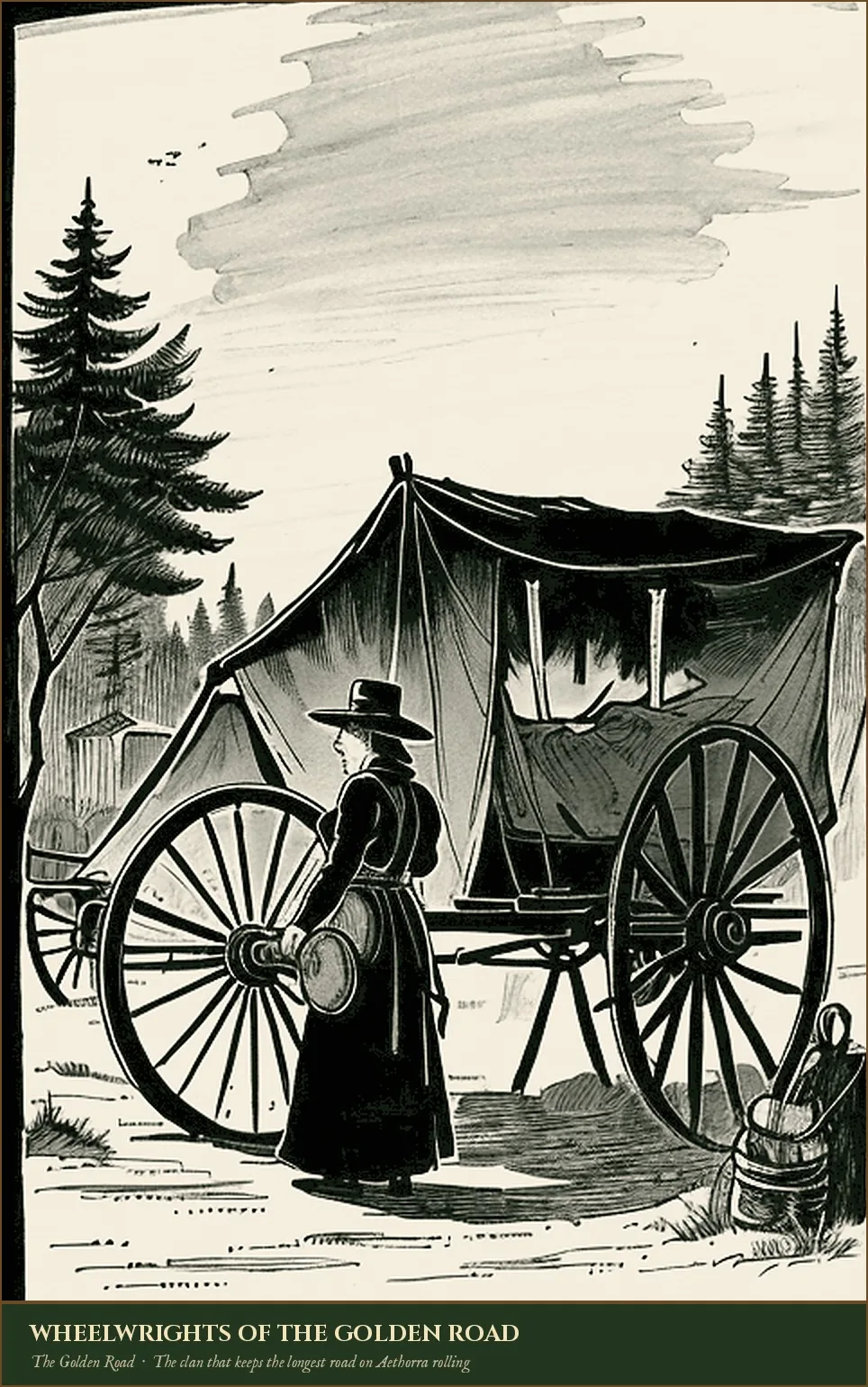
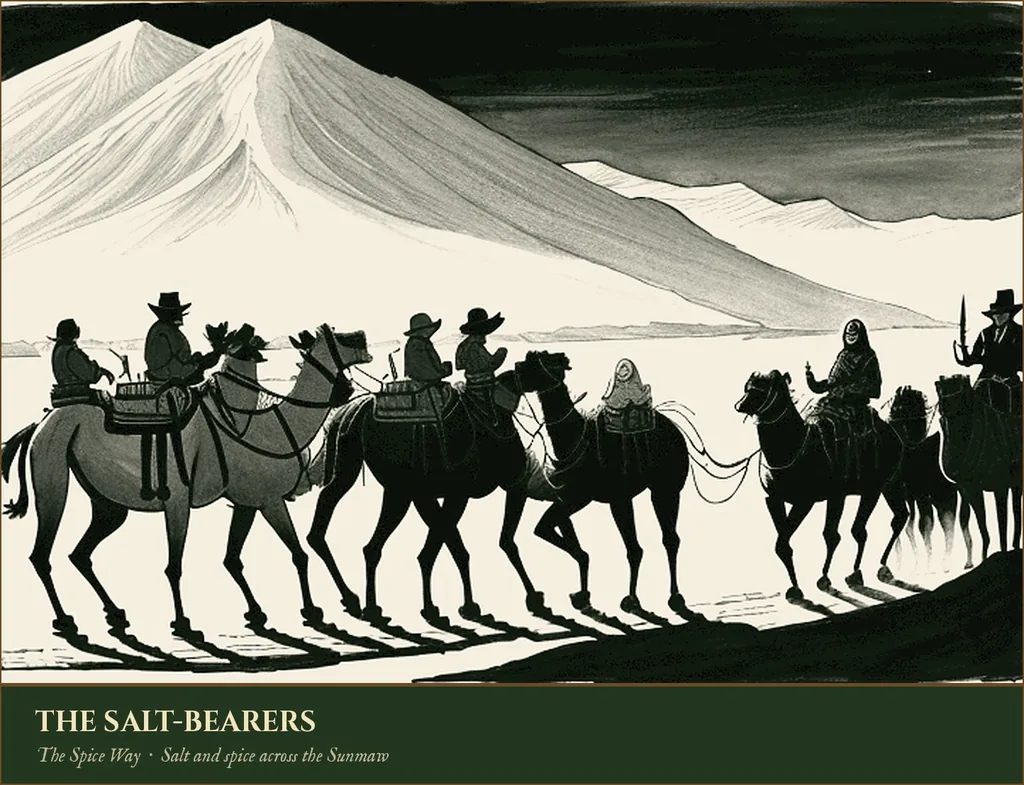
The Council of WheelsTwelve caravan clans, neutral by sacred oathWheelwrights of the Golden RoadThe clan that keeps the longest road on Aethorra rollingThe Salt-BearersSalt and spice across the Sunmaw
The Drift
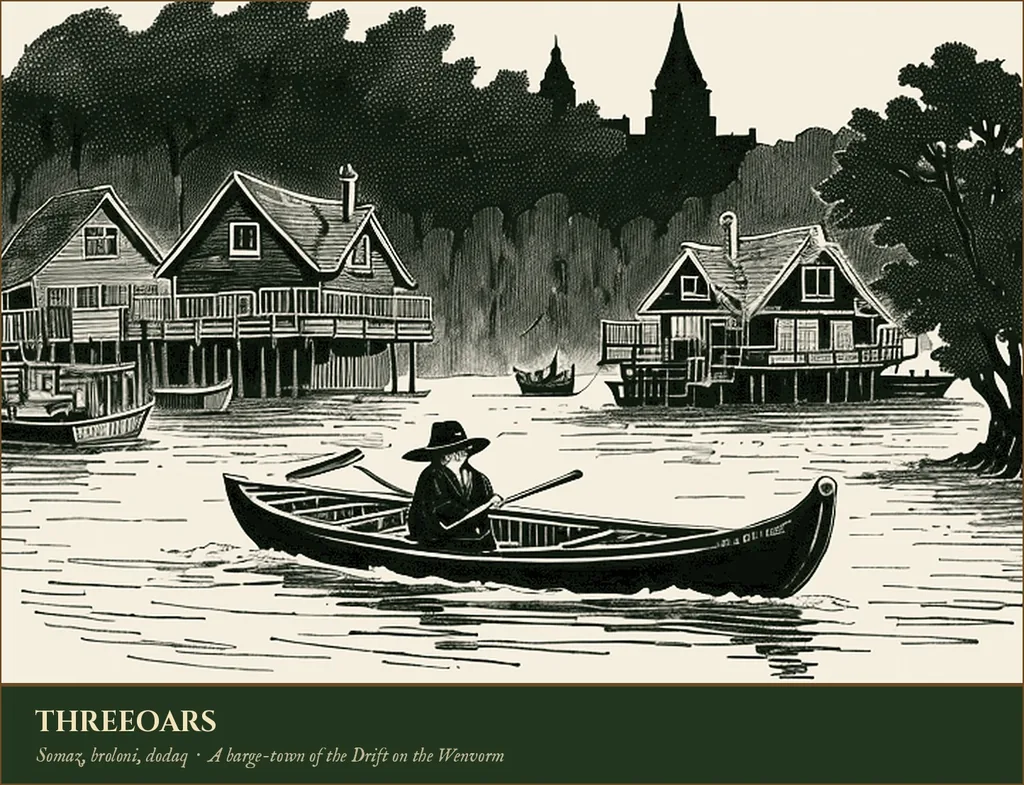
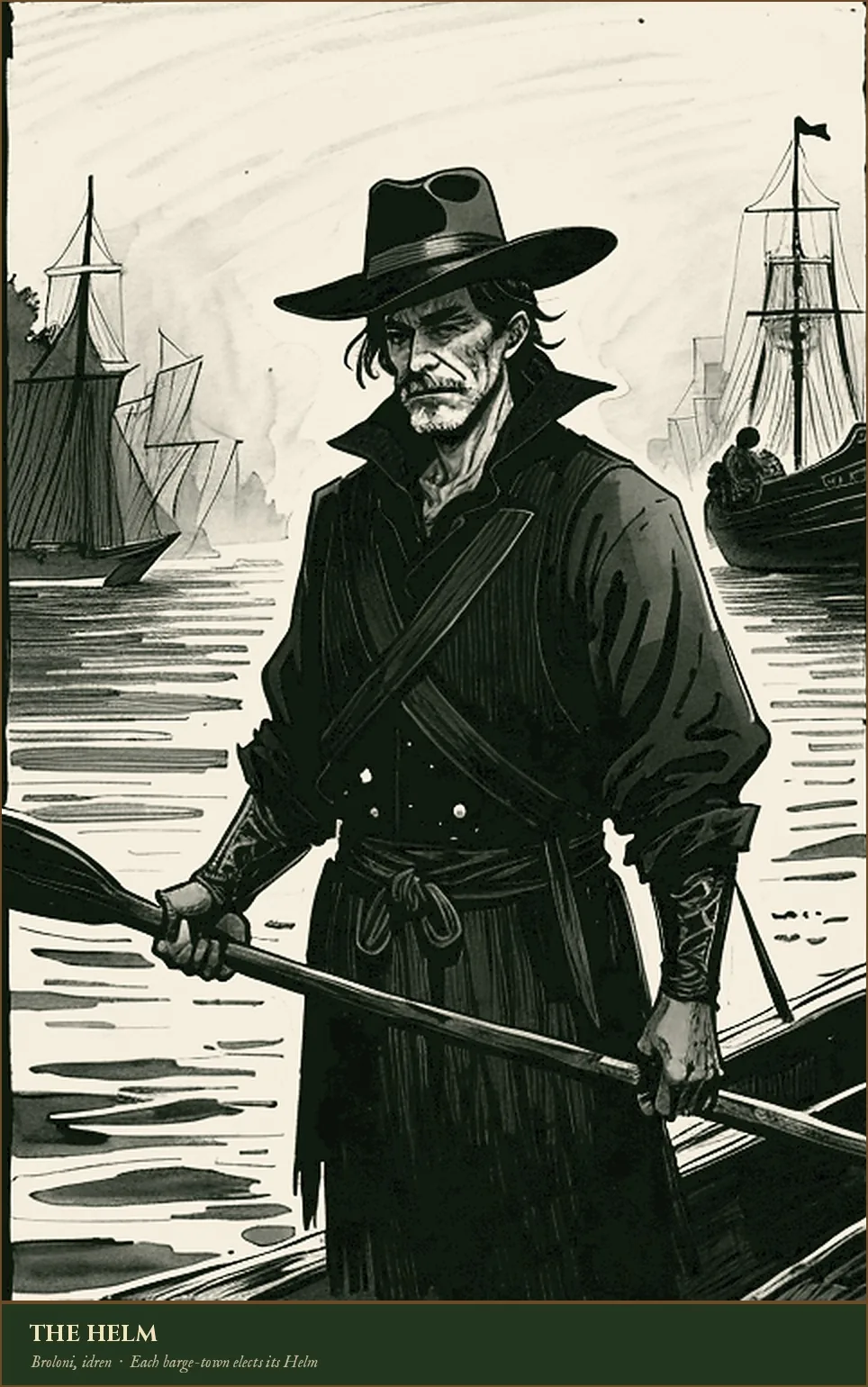
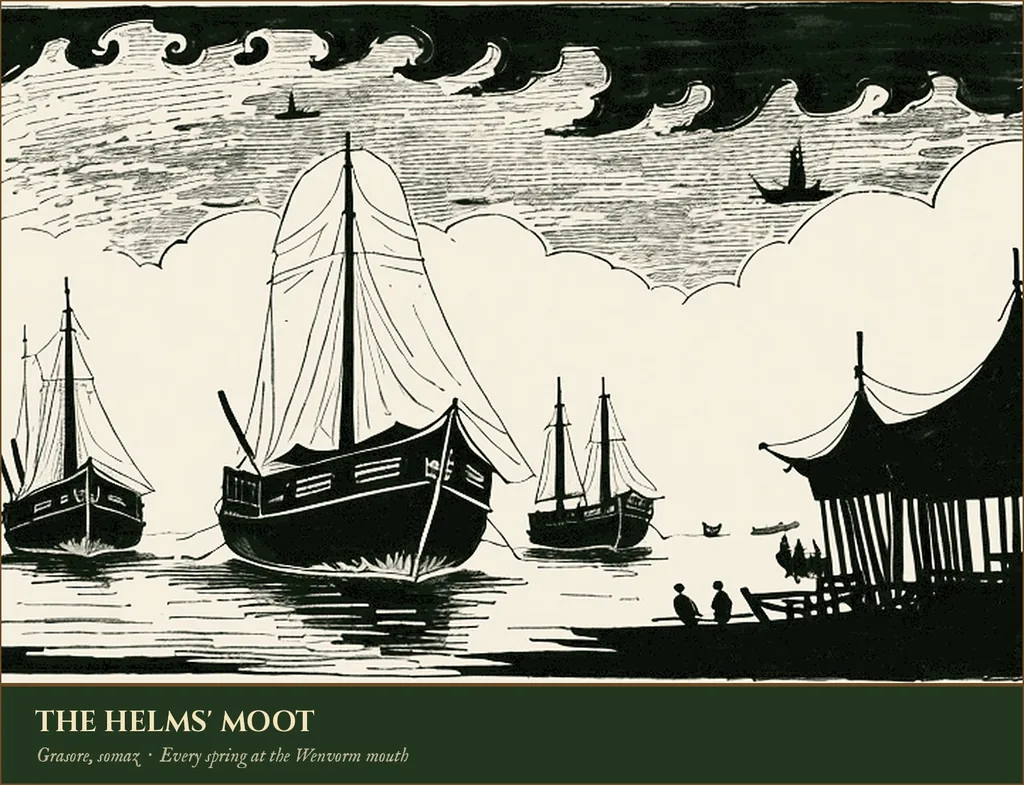
ThreeoarsA barge-town of the Drift on the WenvormThe HelmEach barge-town elects its HelmThe Helms' MootEvery spring at the Wenvorm mouth
The Hizkari
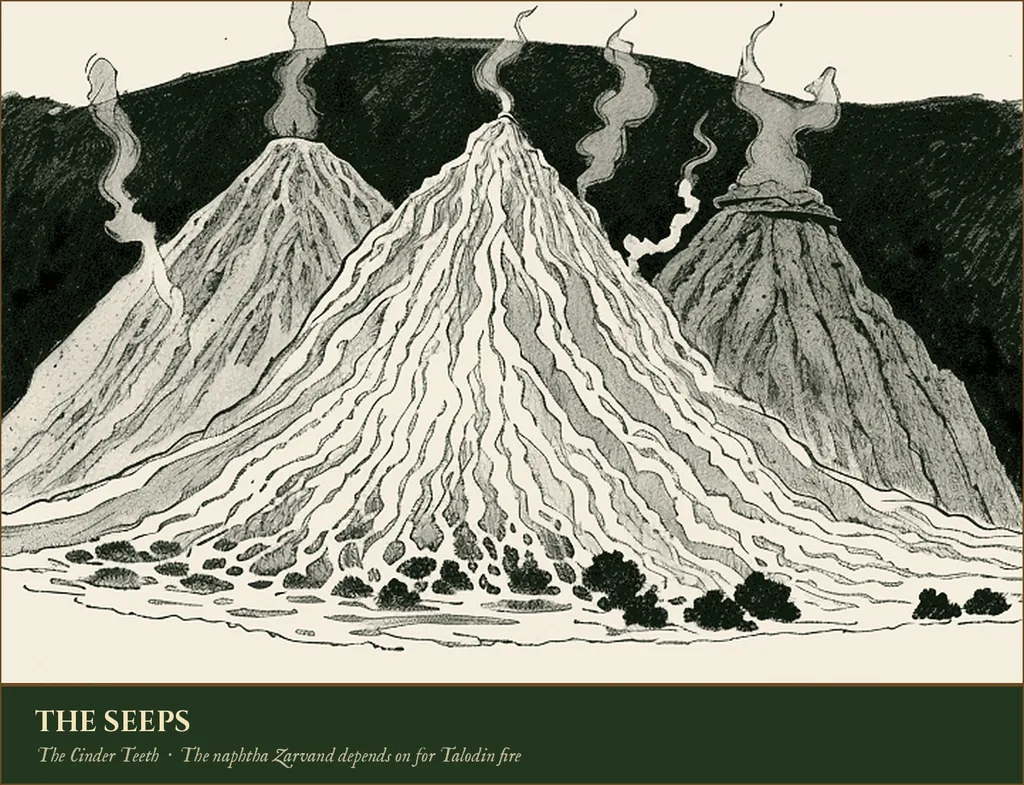
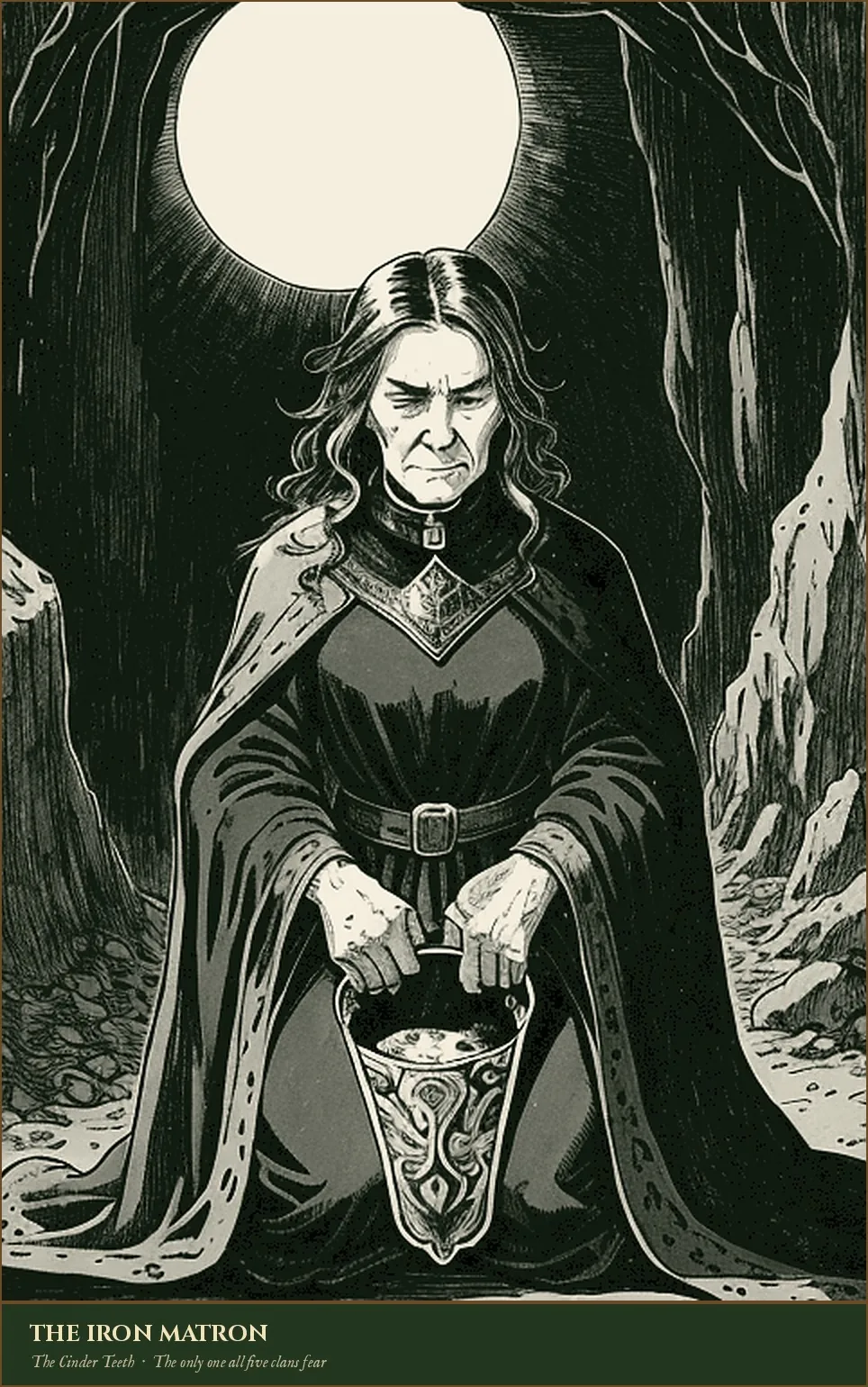
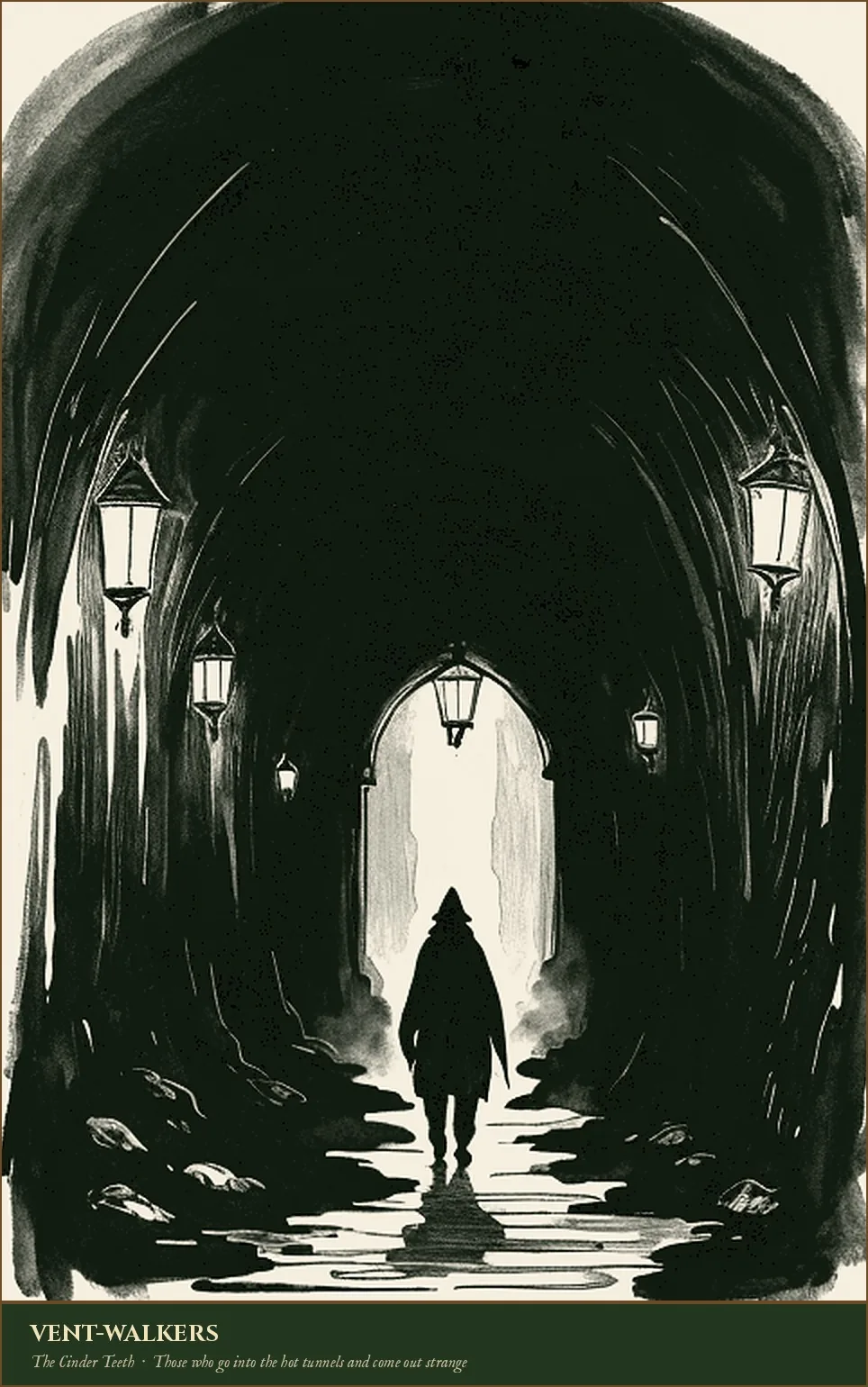
The SeepsThe naphtha Zarvand depends on for Talodin fireThe Iron MatronThe only one all five clans fearVent-WalkersThose who go into the hot tunnels and come out strange
The Salt Brotherhood
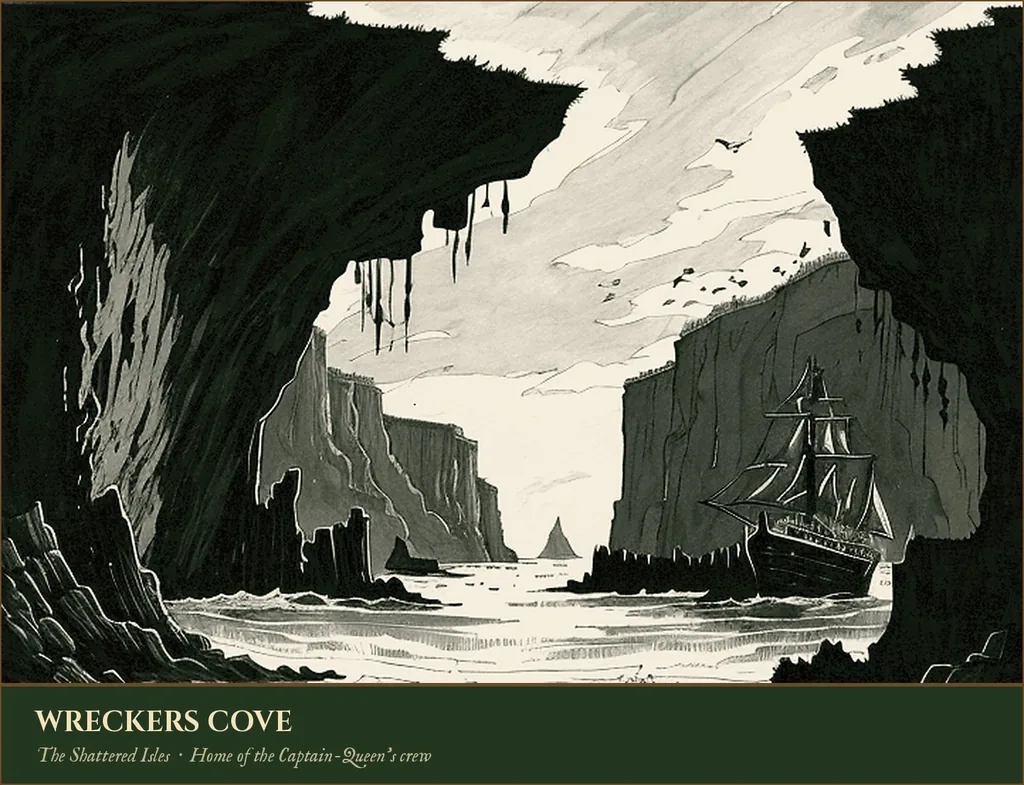
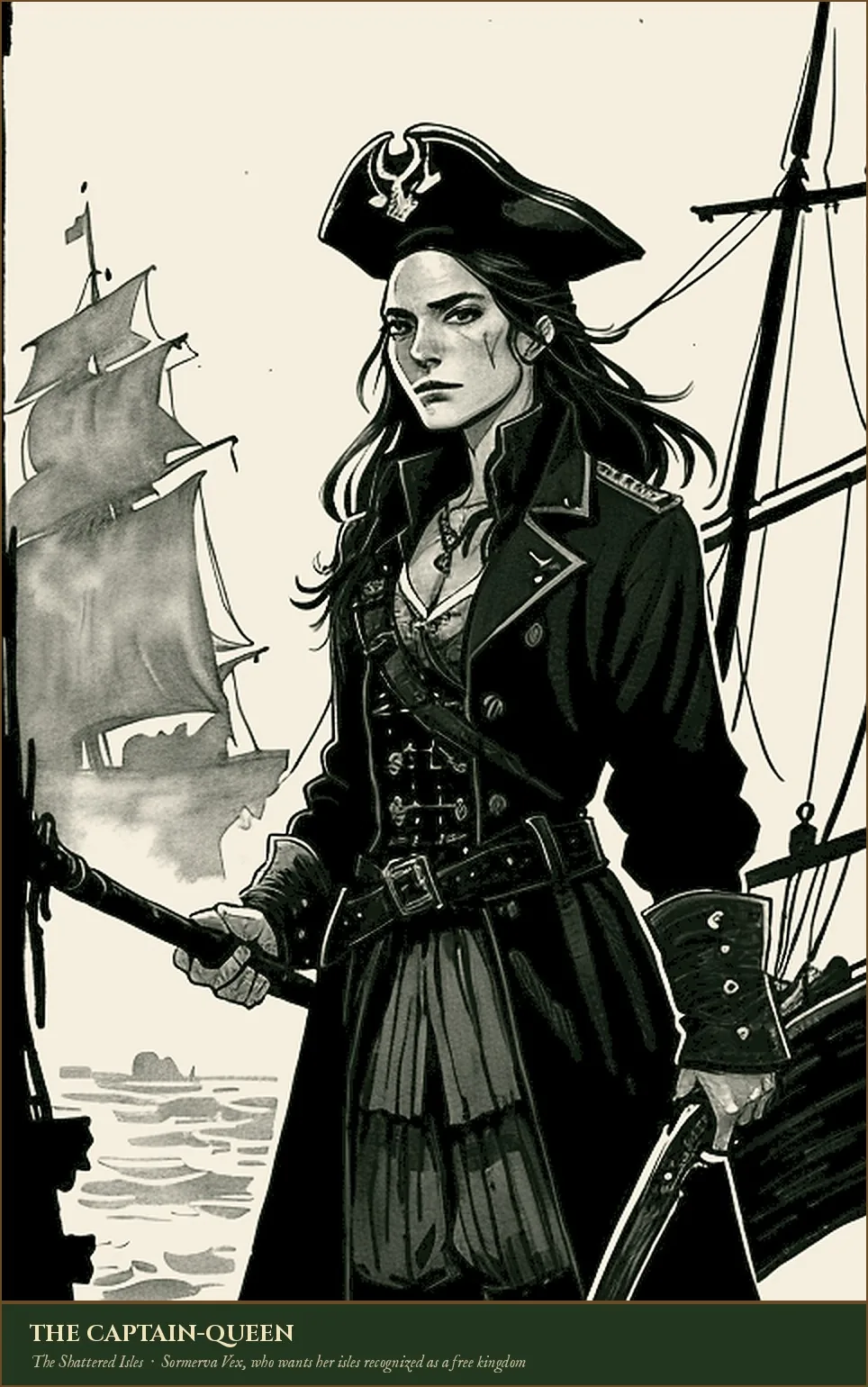
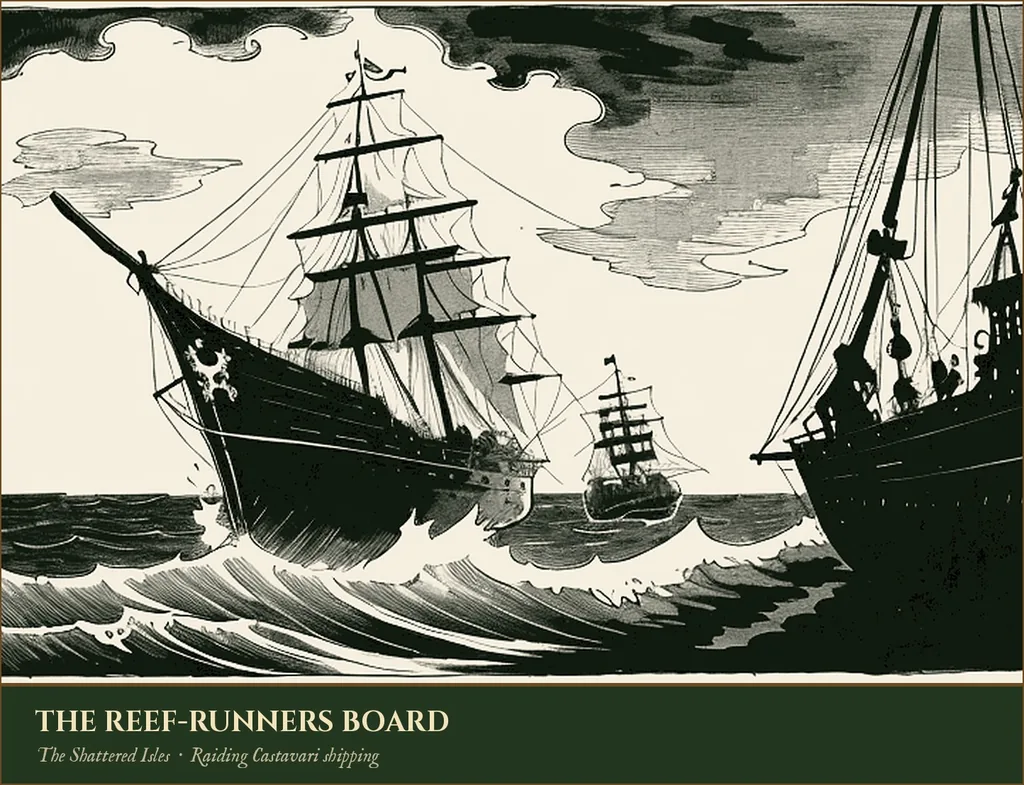
Wreckers CoveHome of the Captain-Queen's crewThe Captain-QueenSormerva Vex, who wants her isles recognized as a free kingdomThe Reef-Runners BoardRaiding Castavari shipping
The Ember Pilgrims
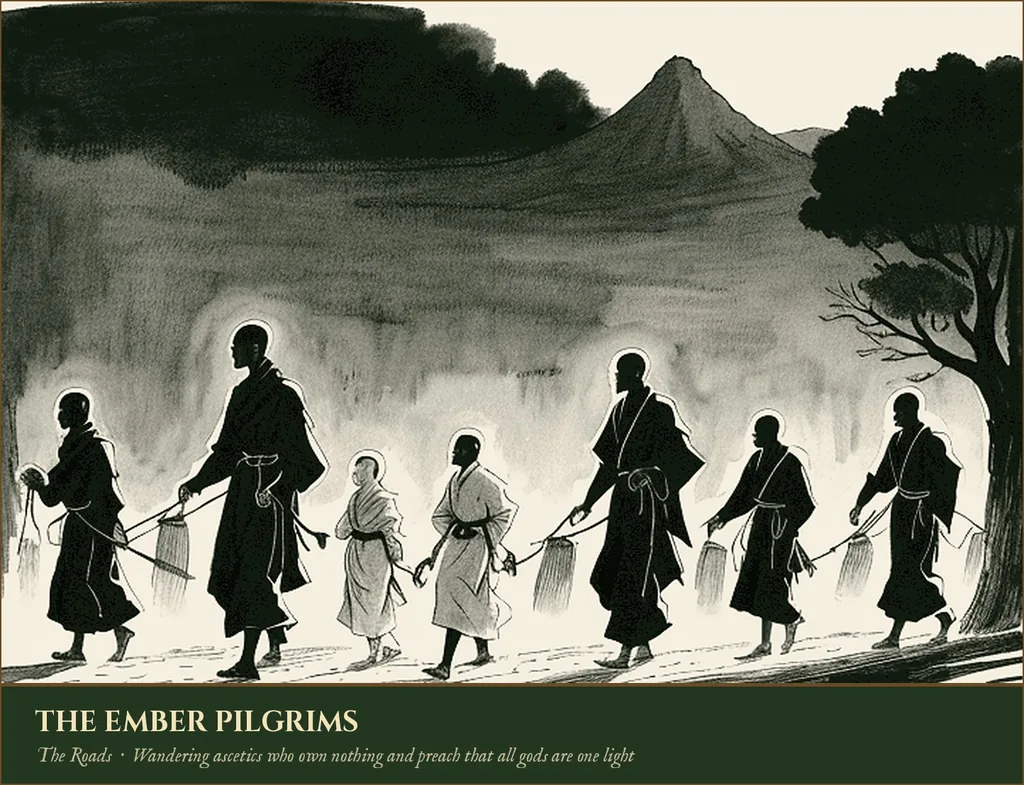
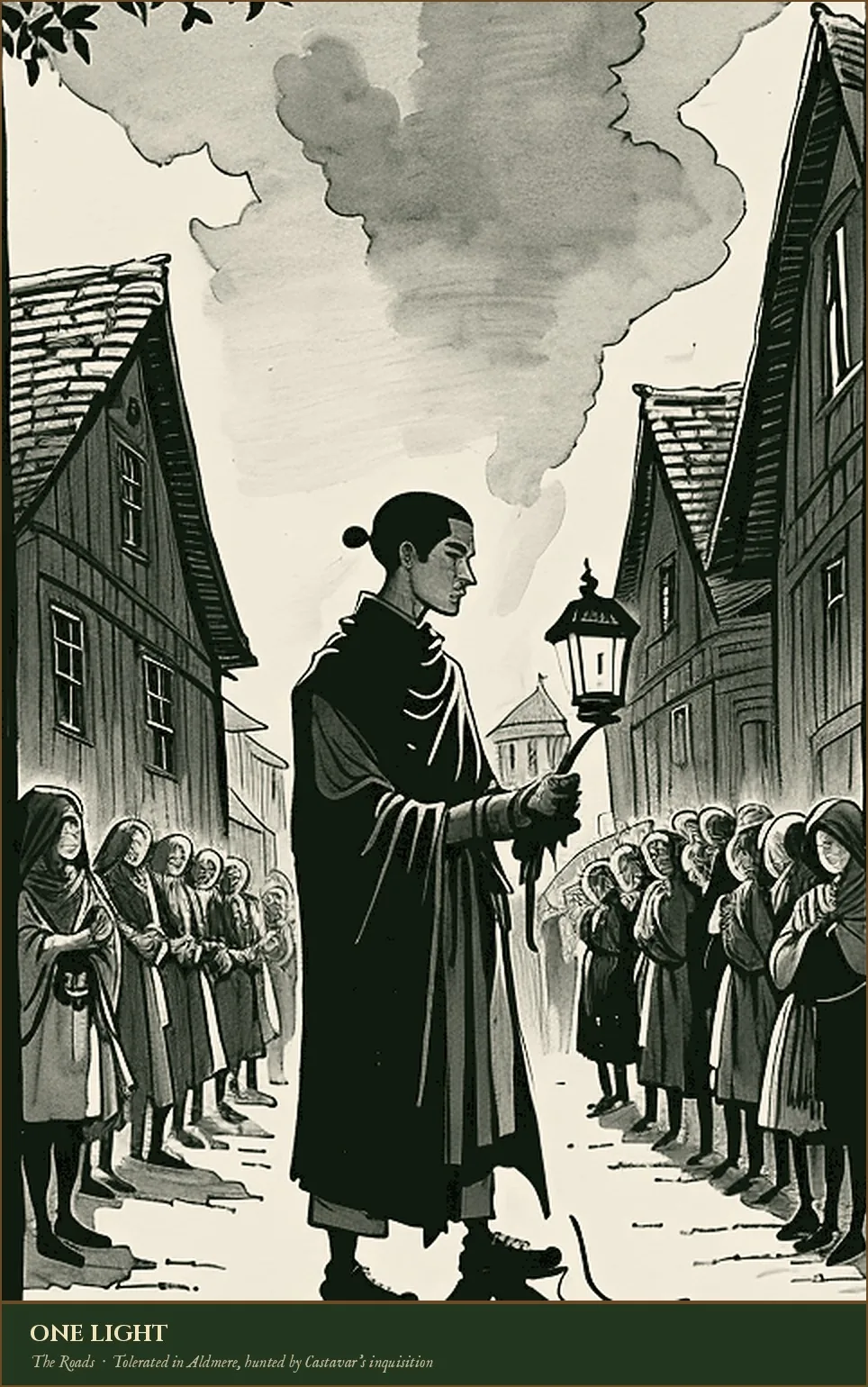
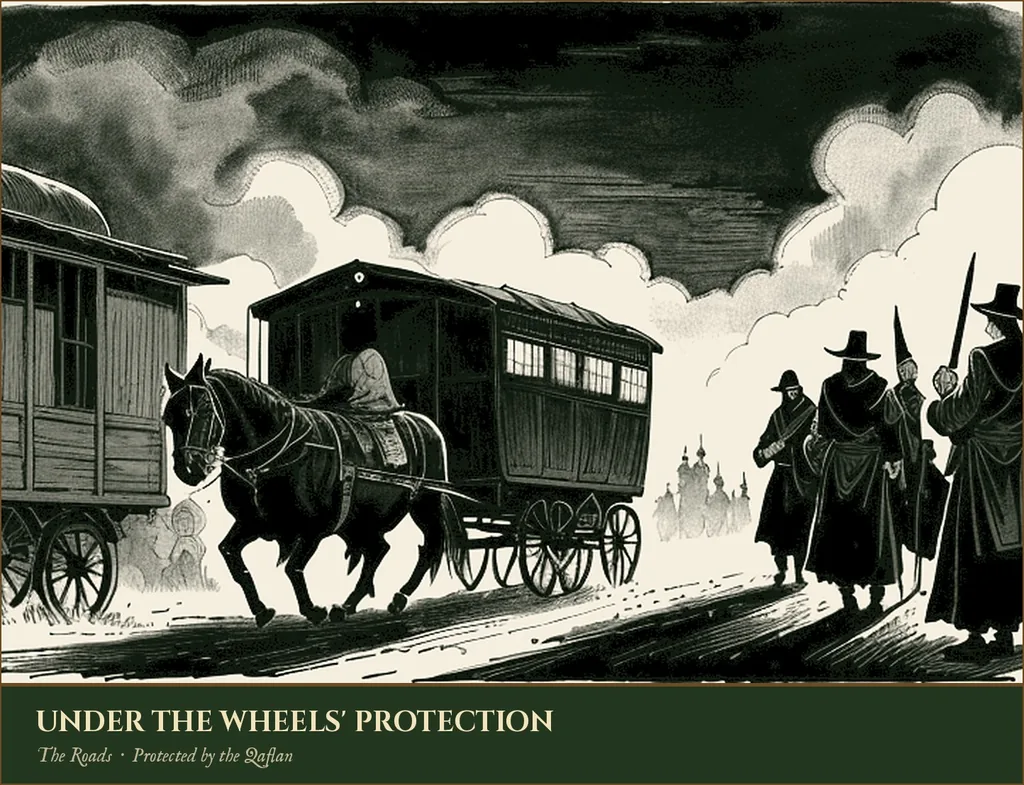
The Ember PilgrimsWandering ascetics who own nothing and preach that all gods are one lightOne LightTolerated in Aldmere, hunted by Castavar's inquisitionUnder the Wheels' ProtectionProtected by the Qaflan
The Register of Tribes
The Karzhan Spine (Mountains, West)
The Dunmorrow Delvers — STABLE. The mountain-miners of the northern Spine. Not one tribe but nine holds, each cut into its own mountain, each under a Thane, meeting in the Deep Moot once in ten years. Harrowdeep (Thane Grurn) is the largest. The others: Ironvein, Coldshaft, Sallowdeep, Marrow's Gate, Hammerhold, the Nine Lamps, Graywater Hold, and Under-Venei, which sits beneath Venei's Throat and charges the Waheli and Aldmere both for the tunnel. The holds quarrel without end, and since the kingdom fell they have never once fought each other. Tesk Deepsong's Restorers are strongest at Hammerhold.
The Stairfolk — FADING. ~2,000. Goatherds and guides of the Stair pass, between Aldmere's Westmarch and Tharax. Neither realm rules them; both use them. They know every path over the Spine that is not a pass, and have sold that knowing to smugglers, Tyrthas hunters and Bound runaways alike. They are dying out, because their young leave for Kemvos and Tharxa. They speak a Tharaxi tongue with Aldmere words in it. Faith: a mountain spirit they call the Watcher, a single stone face high on the Stair that they say turns its head in winter.
The Vargate Clans — STABLE. ~6,000. Three hill-clans of the northern Spine's eastern foothills around the Vargate, between Aldmere and Hrodvald. Half Hrodvald by blood, Aldmere by grain. They raid nobody, sell timber, toll everybody, and marry their daughters into both the Northmere lords and Clan Nugag. Their chieftain, Grerik Coldbrook, is Duke Durift's cousin and Thuba Nugag's brother-in-law, and that is the kind of thing that keeps a small tribe alive. Faith: the Hearthfaith in the valleys, the Old Ones on the ridges, and nobody minds.
The Screefolk — FADING. ~800. The last of a Spine people older than the Dunmorrow, living in cliff-caves on the western face above the Greenwarden. Small, dark and silent. They herd chamois, eat lichen, and paint the caves with ibex in red ochre that the Dunmorrow say is older than the Underkings. The Waheli trade with them and shield them. They have no chieftain, only a Painter, always a woman, who keeps the caves. They are nearly gone. Nobody outside the Spine knows they exist.
The Gap Wardens — CONTESTED. ~1,500. A tribe by trade, not by blood: the mule-drivers, inn-keepers and porters of the Tharaxi Gap, who serve every army that passes and belong to none. Half are Outdwellers of Tharax, half bastards of the Castavari masesben, the rest Qaflan who stopped moving. Tharax puts up with them; Castavar pays them; the Fourth Crusade will decide whether they are still there next year.
The Greenwarden (Forest, West Coast)
The Waheli — STABLE. ~30,000. Not one people but the Circle of Roots and the seven Groves it rules, each around a mother-redwood: Hollowmere, the Edge (Maesra's), Deepshade, the Fallen Grove, Moss Harbor on the coast, the Venei Grove by the pass, and the Old Grove, where Elder Wiroll sits and where no outsider has ever been. The Groves are not alike. Moss Harbor fishes and trades with the Salt Brotherhood; the Edge kills; the Old Grove does neither and is obeyed.
The Bark-Singers — FADING. ~400. A heretic offshoot of the Waheli, cast out a hundred years ago for teaching that the sleeping Builders in the redwoods should be woken. They live in the forest's deepest northern marsh, where the Circle does not go, and sing to the trees at night. The Waheli say the trees have begun to answer, and they are afraid.
The Coastwrights — STABLE. ~3,000. Fishing villages on the rocky coast west of the Greenwarden, suffered by the Waheli because they never enter the trees. They build boats from driftwood only, since cutting is death. They trade with the Salt Brotherhood, Castavar's Tandosa, and Moss Harbor's Waheli. Faith: the Salt-Sworn. They would be Castavari subjects if Castavar could reach them by land. It cannot, except through Aldmere's passes and the Waheli's forest, which is to say not at all.
The Frostmarch And The Pale Waste (North)
The Hrodvald Clanholds — a great power, not a tribe. But its edges fray into tribes:
The Uusung — STABLE. ~5,000 across the Waste. Twenty or so camps, each named for its place: the Long Dark (Lilvuq's), the Whale Bones, the Blue Ice, the Last Fire, the Door. They meet once a year, at the Long Dark's vigil, and otherwise never. They keep reindeer, hunt seal, and speak a tongue no Hrodvald but Statha knows. What lies north of the ice is theirs.
The Nugag Marches — the Deep Cold half of Clan Nugag is a tribe in all but name, and may split from the clan if the Ice-Callers grow.
The Barerk Whalers — RISING. ~4,000. A coast people of the northeast, inside Clan Barerk's lands but not of it: Hrodvald, Kaishoni fisherfolk who fled the sack of Shanyo in 763, and Uusung who came south, all mixed. They whale in open boats, speak a mixed tongue, and worship the sea. Clan Barerk taxes them and cannot rule them. They have begun choosing their own Harpoon-Master. Fevstel watches, uneasy.
The Wolfmarch Outlaws — CONTESTED. ~1,000 and shifting. Not a tribe yet, but becoming one: outlaws, oath-breakers and drolak-refusers cast out of every Hrodvald clan since the Concord of 877, living in the taiga between Durtha and the Grass Sea. They raid the clans that cast them out. They have a chieftain of sorts, Golen No-Clan, who was Kruman's nephew. Selra wants them dead. Kruman, quietly, wants them.
The Heartlands And The Lake (Center)
The Drift — STABLE. ~8,000. Nine barge-towns on the Wenvorm, the Nollen and the Tsanha: Threeoars (Helm Rindlith), Slowwater, the Mill Reach, Seven Ropes, Surmave Float (which lives on the lake itself), Mudbank, Tsanha-Drift, the Lantern, and Ford's End at the Tontanor fords beside Tolmar-Buyor, under Cherüsh protection since 1141. Each Helm is chosen by his town, and a Helms' Moot meets at the Wenvorm mouth every spring. Faith: the river's own, and the Drowned Court on the lake.
The Marsh Reeds — FADING. ~2,000. The reed-cutters and eel-trappers of the Northmere marshes, north of Lake Surmave. Aldmere claims them and has never collected a tax. They live on stilts, speak old Vareth, and keep the Hearthfaith with one hearth more, for the marsh itself. Thalmirn's new dikes are draining them out of the world.
The Tontanor Ghosts — VANISHED (502) / RISING (1141). The settled people of the old Charnazin of Tontanor, scattered when it fell. Their children's children farmed along the Tsanha for six centuries under Aldmere, under Caelvenne, and under nobody. Sarsak Tolmar has called them home to the ruins by name, and some are going. Whether they are Cherüsh, Aldmeri, or a tribe born again is the whole question.
The Grass Sea (Steppe, East)
The Cherüsh Horde — RISING. ~120,000 people, 80,000 riders. A league of tribes, not one, and every rider knows which: the Cherüsh proper (Sarsak's), the Shiygöl (horse-breeders, loyal), the Shusa (the largest, hungry for more, Juryan's), the Angsit (the old olriq's tribe, beaten and bitter), the Nintang (far eastern, half Kaishoni, trading with the Rampart), the Jilmu (raiders, not to be relied on), and the Blue Riders, a brotherhood of the faith under Bagoq who answer to the sky before the Tolmar. When men ask whether the Horde will hold, this is the list they mean.
The Tsanha Bargemen — these are the Drift. Ford's End is now under Cherüsh protection, which has made it either the richest barge-town or the first hostage.
The Saiga Followers — STABLE. ~3,000. A people older than the Cherüsh, who follow the great saiga herds across the whole Grass Sea on foot and have never owned a horse. The horse tribes hold them sacred and a little foolish. They know where the water is in every season. Bagoq asks their counsel. Sarsak has offered them horses; they said no.
The Stone-Sitters of Tontanor — VANISHED / STIRRING. Kin to the Tontanor Ghosts. The ruins have held a hermit or two for six centuries; now they hold a camp.
The East (Kaishon'S Frontier)
The Rampart Squatters — RISING. ~10,000. Along the outside of the Long Rampart, in its shadow, a people has grown that Kaishon will not admit is there: deserters, discharged conscripts, Nintang half-bloods, tribute-caravan drovers, and their children. They farm the wall's ditch, trade through its gates, and are the only people who deal with both the Rampart and the Horde. General Dezau hires them as scouts and denies it. Makok has ordered them cleared three times.
The Tsenkin Hill-Folk — STABLE. ~15,000. Mountain villages above Lake Tsenkin, inside Kaishon's borders, that have never sat an examination, never paid a tax in coin, and keep the Unseen Kin in the open. Kaishon's magistrates call them "the un-measured." They send the archive-city its ginseng, its silk-goat fiber and half its servants, and the ministers pretend they are Kaishoni. They are not.
The Chaiyo Boat-People — STABLE. ~6,000. Families who live on junks in the Chaiyo estuaries, fish the tuna run, and have not set foot on land in generations. Kaishon taxes their catch at the dock and has no other hold on them. They trade with the Salt Brotherhood when the Brotherhood comes east, which is more often than Kokrin knows.
The Verdant Deep (Jungle, Southeast)
The Tzalan — RISING and CONTESTED. ~60,000. Not one people. Sutzam (Ixatl's city, the pyramid cult) rules perhaps twenty thousand; the Nhal River Villages (Chelpan's) another twenty; the rest are the deep-jungle peoples Ixatl is binding or swallowing:
- The Canopy Folk — STABLE. ~5,000. They live in the high branches, never come down, hunt with blowguns, and were the first to follow Ixatl, because he gave them the ground. Kaltzi was born here.
- The Serpent Clans — RISING. ~8,000. Pyramid-dwellers of the southern ruins, older than Sutzam, who kept the Sun-and-Serpent faith when the river villages half forgot it. Ixatl's priests are drawn from them. They think he is their tool.
- The Mud-Eaters — FADING. ~2,000. A scorned people of the Nhal's delta swamps who eat clay with their fish, and whom the jungle fever is said not to touch. Both Kaishon and Zarvand have tried to buy the secret. They have none; they are only the ones who lived.
- The Bitter-Bark Keepers — CONTESTED. ~1,500. The single village that grows and makes the fever cure. Chelpan guards them; Ixatl wants them; every garrison on the river would kill for them.
The Cinder Teeth — STABLE. ~9,000. The Hizkari: five clans of the slopes (the Matron's, the Seep-Keepers under her son Hizikaad, the Swift-Nesters of the cliffs, the Ash-Shepherds, and the Vent-Walkers, who go into the hot tunnels and come out strange). The Iron Matron rules them by being the one they all fear.
The Sunmaw (Desert, South)
The Deep Sands Nomads — STABLE. ~15,000. The oldest people of the Sunmaw, there before the Sarvani Khaasareem and to be there after. Six tents (great clans) that move between the deep oases the Khaasar's maps do not show: the Durkis, the Kumir, the Wind-Eaters, the Salt-Walkers of the Shorooq flats, the Addax Hunters, and the Whisperers, who claim to hear the spirits of the dunes and are the Sunmaw's oracles. Zarvand claims them and has never found them twice in the same place. Mozaaft was born to the Kumir.
The Qaflan — STABLE. ~40,000. Twelve caravan clans, each with a road: the Wheelwrights (the Golden Road), the Salt-Bearers (the Spice Way), the Fur-Road Qaflan (Vargate to Krasvuv), the Tsanha Qaflan (now bargaining with the Cherüsh), the Ember-Carriers (who shelter the Pilgrims), and seven smaller. Zesose the Wheel's Wheel-Breakers are the thirteenth, unacknowledged, and growing.
The Tomb-Watchers — FADING. ~300. A tribe that is a priesthood by birth. They guard the Tomb of the First Khaasar in the desert north of Mazbaaran, claim descent from his bodyguard, and have not left the site in nine centuries. The Khaasareem feed them. Faasheer has said he will stop.
The Baamarsh Converts — RISING. ~2,000. Zarvani of the Baamarsh coast turned to Castavar's Berrode by the missionaries of 690 and those who came after, and kept alive by Castavari gold. Not a tribe by blood, but they have become one: married among themselves, walled in their own quarter, hated by the Rahaasheem, and the first thing that will burn when Faasheer is crowned. Some are already fleeing to the Cinder Teeth.
The Southwest And The Sea (Castavar'S Edges)
The Salt Brotherhood — RISING. ~12,000. Nine crews (fleets), each a tribe, each choosing a captain for the Brotherhood's council: Wreckers Cove (Vex's), the Reef-Runners, the Black Sail, the Drowned Kings (who claim Vexara's line and dispute Vex's), the Tandosa Ghosts (Castavari deserters), the Long Reach (who go east to Chaiyo), the Salt-Wives (a crew captained and manned by women), the Coastwright Cousins, and Two-Fathom's Hold (Chobecho's, the stores fleet, which never fights and always eats).
The Grove Villages — CONTESTED. ~80,000 believers, no tribe yet. The Grove of Lasdara is a faith, not a tribe. But in the deep cork-oak country of southern Castavar there are villages where every family is Grove, every priest is a Masker under the cassock, and the Office of Truth has stopped going. If Castavar breaks, they will be a tribe by the next harvest.
The Upland Shepherds — STABLE. ~5,000. The fine-wool drovers of the Puesdro silver mountains, who walk the old drove-roads with the seasons, pay the Grandees one sheep in ten and the king nothing, and keep a law older than the Berrode's. Every Castavari knows an upland shepherd cannot be arrested on the drove-road. The Office of Truth has never tried it.
The Roads (Everywhere)
The Ember Pilgrims — RISING. ~4,000. Not a tribe, and becoming one: the Pilgrims have begun to have children, and the children have nowhere to be from.
The Tinkers' Wain — STABLE. ~3,000. Wandering smiths and menders, not Qaflan, who mend rather than carry. They travel in painted wagons, speak a cant, marry only each other, and are welcome in every village and trusted in none. They come down, they say, from Dunmorrow exiles. The Dunmorrow deny it and buy their work.
The Lantern Road — RISING. ~1,000. A new thing: players, singers and puppeteers who travel the seven realms telling the same stories in every tongue. Sauld Half-Sung sang with them for a year. They have begun carrying news faster than the Qaflan, and the Quiet Office has noticed.
A round, brown, shrewd grandmother with a hundred grandchildren and the memory of every debt owed to the Qaflan since her own grandmother's time. Wears a headscarf embroidered with the twelve clans' signs. Speaks every trade language on Aethorra with a Qaflan lilt.
Handsome, restless, tattooed with a broken wheel where the whole one should be. Cast out for carrying a Zarvani prince's letters for gold instead of wages. Now runs a rogue caravan on the Spice Way that takes sides for pay.
Helm of the great barge-town Threeoars on the Wenvorm · 50 · drift
Barrel-shaped, sun-brown, tattooed with river-fish from wrist to shoulder, one for every year on the water. Runs a floating town of four hundred souls that has drifted between Aldmere and Caelvenne for thirty years and paid taxes to neither. Smuggles what pays and ferries what doesn't.
Orphan of the Drift, Rindlith's runner · 15 · drift
Skinny, quick, gap-toothed, can swim the Wenvorm in flood and pick a lock underwater. Knows every quay-master on the river by sight and which ones take bribes. Wants to see the sea.
Skin like bark, hair like moss, a voice that sounds as if it comes from somewhere behind him. Has not left the Greenwarden in seventy years. Speaks to trees and, the Waheli insist, is answered.
Green-stained fingertips, bloodroot paint on her cheeks, an arrow-nick through her left ear from a Castavari logger's crossbow. Watches the Venei's Throat road and has killed six trespassers, each with one arrow. Has also, twice, let one live: a lost Aldmere child and a wounded Ember Pilgrim.
Named for the black bloodroot stain on his whole right hand, the mark of the Waheli's executioners. Enjoys his work. Believes the forest would be safer if the Greenwarden's edge were a hundred miles of corpses.
Bow-legged, wide-faced, with a sparse black beard, a broken nose, and a long puckered scar from a rival's saber across his chest. Wears felt and a single Kaishoni silk sash he took from a tribute caravan. Speaks Cherüsh, Kaishoni, and rough Aldmere.
Wide, weathered, gap-toothed, missing the last joint of both little fingers, cut off in mourning for two dead sons. Rides as well as any warrior and runs the Horde's camp, its herds, its marriages, and its grudges. Sarsak consults her on everything and admits it to no one.
Long white hair, a drum, a robe of eagle feathers, and a habit of speaking to the sky mid-sentence. Blessed Sarsak's unification and could unbless it. Believes the Horde should never build a wall because walls are where men go to die.
Sarsak's best young commander and the fastest archer in the Horde; red-lacquered bow, three kills before she could grow her braids. Idolizes Sarsak and thinks his talk of libraries is a joke. Wants to burn Kokrin.
Short, dense as ore, with a beard braided with iron rings and hands scarred white by fifty years at the forge. Descendant of the Underkings and still calls himself one when drunk. Sells starsteel to Zarvand, armor to Castavar, and the same information to both.
Broad, burn-speckled, with one eye lost to a spark and a patch of hammered gold over it. The finest armorer alive; made Grand Master Tirago's plate and its twin for Prince Faasheer and dislikes both men. Sings while she works, an old Underking hymn.
Slight, intense, with jaguar-scars raked deliberately across both cheeks and a crown of sun-quetzal feathers. Speaks in a low steady voice that carries in the pyramid halls. United the jungle villages in six years by faith, marriage, and a few disappearances.
Broad, calm, tattooed with the river's course down his spine, a canoe-man's shoulders. Remembers when the Zarvani spice-forts paid fairly and preferred it. Distrusts Ixatl's fire.
Small, silent, with dart-frog venom under her nails and a serpent tattooed around her wrist. The best blowgun in Sutzam. Has killed three Kaishoni sentries from the canopy and feels nothing yet.
Nobody outside the Teeth knows her name; her own people call her Mother of Fire. Broad, ash-gray-haired, with lava-burn scars glazing her whole left arm and a necklace of obsidian teeth. Has quadrupled the price of naphtha in her lifetime and is now taking Castavari envoys with a straight face.
Soot-black beard, burn-scarred hands, the only man alive who knows where every naphtha seep in the Teeth lies. Wants to sell to Castavar. Wants, more precisely, the Zarvani to feel what it is like to be at someone's mercy.
Elected Captain-Queen of the Shattered Isles · 39 · salt-brotherhood
Tall, sun-black, salt-white hair cut short, a gold hoop in one ear and a hook-scar through the other. Claims descent from the last Captain-King, drowned in 1004. Has taken thirty Castavari ships and hanged no one from any of them, which is her policy and her pride.
Quartermaster of the Brotherhood · 48 · salt-brotherhood
Squat, hairy, cheerful, with a wooden foot and a tally-stick habit. Runs the Brotherhood's shares, stores, and elections. Thinks Vex's kingdom is a fantasy and pirates should stay pirates.
Hunter, sometime guide · age unknown, perhaps 60 · uusung
Wide-faced, fur-hooded, with snow-blindness scars around both eyes and hands that never shake. Has guided Statha the Far-Seer north of the ice and will not say where. Speaks Hrodvald in a whisper.
Bright, curious, the first Uusung in a generation to walk south to Krasvuv. Trades furs, learns words, and asks the Hrodvald too many questions about their gods. Has been told by her grandfather to come home and has not.
Gaunt, barefoot, robed in undyed wool, with a Zarvani accent worn down by twenty years of roads and a brand on his forehead from the Office of Truth that he shows to everyone. Was a Rahaash of the Flame; left when he decided all fires were one. Preaches in Aldmere's market squares, feeds anyone, owns nothing, and has twice talked a mob down with his voice alone.
Shaven-headed, Kaishoni-born, a survivor of the Reach's garrisons who found the Pilgrims on the road and stayed. Quiet where Ash is loud, practical where he is holy: she is the one who finds the food. Has a repeating-crossbow bolt scar in her thigh and a conscript's lamellar plate sewn into her satchel as a reminder.
Songs and Tales
The Cherüsh Horde
The Cherüsh cannot read and have never needed to: everything the Grass Sea keeps is sung to the drum at the tent fire, stitched on the felt that hangs opposite the door, or shouted from the saddle. What a rider sings with the witness ending he swears he saw, and the steppe judges its songs first by who has the right to sing them that way.
Chronicle · witness-song (sung chronicle, to the drum)
The Grass Burned
Ghorsot Zaghisrat“grass burn-PAST”
Danmoy the Guide · 509–c. 530 R.
The steppe's account of Kaishon's Emptying of the West, 505–509: the burned tents, the columns that starved through the rice harvest, the grass fire of 507 that the wind turned back onto the Rampart's own hoardings, and the column of 508 led in a circle. It is the only Kaishoni deed the Grass Sea remembers by name, and it is remembered as a thing the riders watched rather than a battle they won.
Ghorsot zaghistay; zaghum tsol zaghistay.The grass burned, and I saw it; the sky did not burn, and I saw that too.
Its author, and how it lives now
Danmoy the Guide. A Nintang rider, one of the guides who took Kaishon's column of 508 north after the saiga and brought fewer than half of it back; dead before 560.
Sung without the witness ending since the last man who saw 507 died, except by the Nintang, who say they inherited the right; the Blue Riders will not sing the second half of the refrain at all, because it swears to the sky.
Faith · hymn to the drum, sung at the Bloom
The Song of the Promised Horse
Ingkunranuk Yarming“promised-horse-OWNER song”
Yutos the Drummer · c. 860 R.
The chant sung on the last day of the Bloom, when each tribe frees one ingkunra, a horse promised to the sky, that no one may ride or catch again. It tells the Wide Blue's Horse, whose running is the wind and whose hoof-sparks are the stars, and bids the freed horse go and join it. It carries no witness ending anywhere, because nobody has seen the sky up close.
Ingkunra zaghumsha jalcharsur; yir gaq kunmo döklensür.The promised horse will go to the sky; we will never ride it.
Its author, and how it lives now
Yutos the Drummer. A shaman of the Wide Blue remembered only for this song and for the drum he was buried beside; the tribes do not agree which tribe he was born to.
Sung by every tribe at the Bloom and by Bagoq the Elder on the rise above the fords; riders quote its last line to end an argument over a horse nobody owns.
Tales · fire-tale, told to the drum; now also played on the Lantern Road's stage
Shaghis's Wall
Olriqnuk Shaghiski“chief-OWNER stone-wall”
the tribes (no teller named) · after 502 R.
The founder of Tontanor builds a wall on the Grass Sea and is found dead against it, sitting, facing out, his tribes gone. The tale is about Shaghis's grandson, whose clerks counted horses, told of the grandfather, and the steppe tells it as a warning against walls. It is always told without the witness ending: nobody was there.
Olriq shaghiski churunrat. Olriq shakisrat; izültün tsol ogarrat.The chief built a wall. The chief sat; the tribes did not come.
Its author, and how it lives now
the tribes (no teller named). Told at every tent fire since the fall of Tontanor; the Lantern Road's Cherüsh telling was learned from a Nintang rider at the Jade Gate.
The best-known Cherüsh tale off the steppe, played by the Lantern Road in Caelvennois and in Cherüsh with two empty chairs at the side of the stage; on the steppe it is told pointedly within earshot of the stones Sarsak Tolmar is laying where Shaghis sat.
Song · war-song (marching song of the hundreds)
Arrow-Flight Does Not Lie
Zoqin Tsol Chilong“arrow-flight not lie”
Chinkuk of the Shusa · 1141 R.
Made the summer Sarsak Tolmar killed the last rival olriq in single combat among the ruins of Tontanor and bound the four factions into the Horde. Every verse is sung with the witness ending, because the man who made it was there, and it names no tribe as the loser. Its refrain is the horse archers' old saying, and its last line is the people's name for themselves.
Zoqin tsol chilong. Chesh yoygus döklentey. Yir cherüsh.Arrow-flight does not lie. I rode the war-horse, and I was there. We are free.
Its author, and how it lives now
Chinkuk of the Shusa. A living horse archer of the Shusa, of Juryan Redbow's hundred, who rode at Tontanor in 1141; his name means voice.
Sung by every hundred on the march and at Tolmar-Buyor; only riders who were at Tontanor in 1141 may sing the middle line as written, and the Angsit sing the whole song a beat behind everyone else.
The Dunmorrow
The holds keep their craft in a guild-script no outsider reads, write down every number because none may be spoken in the deep, and sing at the forge in a cant taught only to apprentices who have sworn. Their great works are ledgers, forge-songs and one old lament, and a Dunmorrow will tell you the ledgers are the most beautiful.
Faith · forge hymn, sung in time with the hammer
The Old Underking Hymn
Uth Rorgey Gamob“the Underking-OWNER forge-song”
Durn Hammerhold · c. 390 R.
The forge-song of the Kingdom Under the Spine: the mountain is a forge, the Dunmorrow are its smiths, and the Underkings were those who could hear the anvil under the Spine ring. It is sung in the old speech with the cant's forge-words in it, one beat to each hammer-stroke, and it is the nearest thing the ancestor-stone faith has to a creed.
Uth rorguw duwfud uth grurn. Wost duwf uth grurn feldurn.The Underkings heard the anvil. We hear the anvil still.
Its author, and how it lives now
Durn Hammerhold. Remembered by the holds as smith to the first Underking's forge; the hymn is his and the verses have been worn down by eight centuries of hammers.
Tesk Deepsong sings it over every piece she makes, and the Restorers take each hearing as encouragement; the Thanes' smiths still sing it, more quietly, and say it is a hymn and not a program.
Poetry · lament (lay in the old speech)
The Lay of the Falling Hammer
Uth Veknum Scututh Feldurn“the hammer fall still”
Korirk Coldshaft · 555–556 R.; last verse disputed (c. 1139 R.)
A lament for the Kingdom Under the Spine, broken by the joint siege of Aldmere and Castavar, and for Grarg the Proud, whose hammer was thrown into the deepest shaft and is falling still. The lay ends with the hammer falling. The copies the Restorers teach add one more line, which they say was always there.
Uth veknum scututh feldurn. Uth rorg yeld serm.The hammer is falling still. The Underking will return.
Its author, and how it lives now
Korirk Coldshaft. A smith of Coldshaft who was in the holds at the siege of 555; Coldshaft, which speaks least of the nine, claims him as the one time it said a great deal.
Sung at every hold's midwinter feast; the old smiths stop after the first line quoted here, and Hammerhold's young go on. The old smiths date the second line to about 1139 and say so at every feast.
Chronicle · chronicle-ledger in the guild-script
The Roll of the Nine Lamps
Uth Nirn Korgabuw“the nine lamp-PLURAL”
Bikleb of the Nine Lamps · 565–1145 R.
The written roll of every Deep Moot, one page to each: which Thanes sat, which lamps burned, what oil each hold brought, and what was decided, all with the numbers written and never spoken. Because the holds have never fought one another since the kingdom fell, it is a chronicle of six centuries of quarrels that ended in writing. The Dunmorrow read it the way other peoples read epics.
Nirn korgabuw bletinnud.Nine lamps burned.
Its author, and how it lives now
Bikleb of the Nine Lamps. Keeper of the Nine Lamps' council hall at the first Deep Moot after the fall; every keeper since has written in the same hand-size, by rule.
Kept in the council hall of the Nine Lamps and read only there; the title is written but never said, and aloud it is only the Roll. The first page names nine Thanes, and Tesk Deepsong says its foot has eleven marks; the page for 1145 notes that one lamp guttered and leaves the hold's name blank.
Stage · midwinter comedy in the smiths' cant
The Buyer
Uth Krorn“the buyer”
Tirn Graywater · c. 830 R.
An apprentice plays a surface buyer at the Gate-Hall, and two smiths settle his price in the cant in front of him while he admires the plate. The buyer understands none of it; the audience understands all of it; and at the end the buyer pays exactly what he was always going to pay. It is the one Dunmorrow play, and it can only be performed for people who have sworn at a forge.
Uth krorn nuth duwf. Uth gug urm tuthsall.The buyer does not hear. The price is good.
Its author, and how it lives now
Tirn Graywater. A mule-breeder and smith of Graywater Hold, the hold most often seen above ground, who had sold to more outsiders than any Dunmorrow of his day.
Played in every hold at the midwinter feast with the gates shut; the Restorers now play it for the young they teach the cant to, which the old smiths call giving the joke away.
The Qaflan
The Qaflan are the most lettered of the free peoples, because letters are their cargo: they read every script on the continent and carry debts in all of them. Their own works are in Maved, the road-cant, which has no words for fighting, so a Qaflan tale that must speak of violence changes language and everyone listening knows why.
Chronicle · chronicle of the Council of Wheels, in many scripts
The Road's Book
Maved-i Rubesen“road-LINK book”
Ujatakh the Scribe · 1 R.–1146 R.
One entry for every Council of Wheels, written in the Accord Days by whichever elder has the best hand that year, in whatever script that elder learned first, so that the Book runs through a dozen alphabets. It records the Road Terms sworn and sworn again, the clans' debts settled, and every Qaflan cast out and marked with a broken wheel. It holds no account of any war except the roads it closed.
Maved yakhir. Wost gektsi, wost vamus.The road is open. We write; we remember.
Its author, and how it lives now
Ujatakh the Scribe. The Wheelwright who wrote the first page at the first Council of Wheels after the Accord of Surmave; his name is the cant word for word.
Carried to each Council in the Wheelwrights' eldest wagon and read aloud only there; Mother Hamen has not opened it in thirty years and says it agrees with her.
Faith · recitation and oath
The Road's Bargain
Maved-i Vemhaq“road-LINK price”
no author (older than the Reckoning) · before the Reckoning
The Road was once a river that dried up and, having nowhere to go, agreed to carry people instead of water if they would never make it choose a bank. The recitation ends in the words of the Neutrality Oath, which every Qaflan swears and which is the Road's price. It is the whole of the Road Spirit's scripture.
Maved nachen vaul oveme; wost nachen vaul oveme.The road takes no side; we take no side.
Its author, and how it lives now
no author (older than the Reckoning). Spoken by the eldest of each caravan; the Qaflan say the Road set the terms and they only repeat them.
Recited at every crossroads shrine and at each Qaflan's swearing; merchants of every faith mutter its last half when they leave a coin, and the Council of Wheels quotes it whenever Zesose the Wheel is named.
Tales · wagon-tale, told in two tongues
The Captain Who Chose
Myan Nachen Da-oveme“he side PAST-take”
the Ember-Carriers (no teller named) · c. 700 R.
A caravan captain carries a king's army in his wagons for gold, and finds the next morning that every road he takes leads back to the same ford. The teller tells the bargain and the roads in the road-cant and the army in whatever tongue the listeners fear most, because the cant has no words for it. He is still at his crossroads in the Sunmaw, and children are told to look for him.
Myan howith da-oveme. Cobash plia maved otem da-yonern.He took the gold. In the morning every road came back.
Its author, and how it lives now
the Ember-Carriers (no teller named). Told on every road; the Ember-Carriers' telling is counted the best, and theirs is the one taught to children.
Told to every Qaflan child and around every caravan fire; since Zesose was cast out, tellers on the Spice Way leave a pause after the first line that was not there before.
Song · drivers' songs
The Broken Wheel Songs
Nachen Nachen“side side (sides)”
Noriel · 1144–1146 R.
The Wheel-Breakers' songs of the Spice Way, the first Qaflan songs to take a side and boast of it. The verses about the carrying are in the road-cant; the verses about what the gold pays for are in Zarvani, because the cant has no words for them. They are the scandal of every letter-house on the continent.
Wost nachen oveme; howith nervile.We take a side; the gold is good.
Its author, and how it lives now
Noriel. A living driver of Zesose the Wheel's Wheel-Breakers, cast out with them and marked with the broken wheel; his name is the cant word for sing.
Forbidden by the Council of Wheels, which will not let them be sung inside a caravan's circle; young drivers on the Spice Way know every word, and Mother Hamen is said to know them too.
The Tzalan
The Tzalan lost their writing with the First Sun, and the glyphs on the pyramids are now read by a few priests, argued over by everyone, and understood by no one who will say so. What the jungle keeps it keeps in drums that carry from Sutzam to the river in a morning, in songs sung under the afternoon rain, and in dances on the Ball Court.
Chronicle · drum-chronicle of year-names, chanted
The Rain-Count of Sutzam
Bé'yìtzak Ye'chik“come-DONE rain”
Yatziwi · 815–1146 R. (the 1st to the 332nd year of Sutzam)
Each year of Sutzam has a name, given by the Sun-Speaker from the Great Pyramid when the first rain falls, and the priests keep every name in order and chant them all at the Opening of the Rains. Beside each name the chant carries a line or two of what the year held: a flood, a sack of a spice-fort, a Sun-Speaker's death. It is the only Tzalan history older than living memory that is not carved in stone nobody can read.
Bé'yìtzak ye'chik; bé'yìtzak tzàyoka.The rain has come; the year has come.
Its author, and how it lives now
Yatziwi. The first Sun-Speaker of Sutzam, who named the city's first year from the pyramid stair in 815; his name means obsidian.
Chanted whole at the Opening of the Rains and drummed down the Nhal the same day; the river villages say a few names from the Awakening years have been sung differently since Ixatl took the city.
Faith · sermons, preached from the glyphs and memorized by the priests
The Sermons of the Stair
Kóhekak Chopúl“speak-DONE Sun-Speaker”
Sun-Speaker Ixatl · 1142–1146 R.
Ixatl's teaching, preached in the pyramid halls and from the stair: the First Sun built the pyramids for his children, the Sun withdrew when the Serpent drove them into the jungle, and the Sun will return when the pyramids are wholly retaken. The outsiders cutting the jungle are a sickness the Sun will burn out. The Serpent Clans' priests learn each sermon by heart and carry it to the villages.
Lónok xemù. Tamokom yèyetix Lónok.The Sun hears. The Sun will burn the strangers.
Its author, and how it lives now
Sun-Speaker Ixatl. Priest-king of Sutzam since 1142, who preaches from the glyphs of the Great Pyramid's halls and reads more of them than he admits.
Recited in every village Ixatl has bound; Chelpan's river villages hear the sermons and do not repeat them, and his smuggled scholar says the glyphs they are preached from say something else.
Stage · masked dance-drama
The Jaguar's Face
Xuchin Xoba“return scar”
Teyex of the Serpent Clans · c. 600 R.
Why the jaguar has spots: the first Sun-Speaker's nails scarred it, and the dance shows the fight in the dark, the jaguar's flight, and the Sun-Speaker left with nothing but the marks on his hands. It ends with the dancer who plays the Sun-Speaker drawing his nails down his own face, as every Sun-Speaker since has done in earnest.
Nutà'ak xoba chopúl; xuchin xoba.The Sun-Speaker gave the scar; the scar returns.
Its author, and how it lives now
Teyex of the Serpent Clans. A dancer of the southern ruins remembered as the first to wear the jaguar mask; her name means feather.
Danced on feast days on the Ball Court at Sutzam and in the Serpent Clans' ruins; Ixatl danced the last figure himself the year he took the city, and the scars he wears are the ones it calls for.
Song · canoe songs of the rain-season
We Don't Eat Clay
Kax sèkon waki'lol yútz“not eat clay we”
Tzimik of the Nhal · c. 1075 R.
Paddling songs made to be sung under the afternoon rain of satzi, one verse to each bend of the Nhal between the villages and the delta. Their refrain is the river's old jibe at the Mud-Eaters, and the Mud-Eaters sing the same refrain back from the delta, which is the joke and the peace of it. The later verses count the spice-forts the way a trader counts buyers.
Tzimik of the Nhal. A canoe-woman of the river villages who sang the pepper down to the spice-forts in the years they paid fairly; her name means cacao.
Sung on every canoe on the Nhal in the rain-season and answered from the delta; Sutzam's priests do not sing it, which on the river is how you tell whose side a paddler is on.
The Uusung
The Uusung write nothing down, and everything they know is held in speech, some of it in the long voice that is used only for the dead. Their works are lists, tellings, drum-dances and lamp-songs, and a work that is not spoken for three winters is counted as gone.
Chronicle · list of the dead, spoken in the long voice
the eldests of the Long Dark; kept now by Lilvuq of the Long Dark · older than any count; spoken at every Long Dark Vigil
Every one of the Long Dark camp's dead, name after name, back past anyone's memory, spoken on the Names Ground to the Lights so that the dead can find the door. It is the Uusung's only history: a person, a winter and a death at a time, with no dates because the Uusung keep none. The Hrodvald suspect it holds more about the far north than any book.
Natgaqsuu, qaq maq kuqnalak.Grandmother, I do not forget.
Its author, and how it lives now
the eldests of the Long Dark; kept now by Lilvuq of the Long Dark. Each eldest adds the year's dead and hands the whole list to one heir; Lilvuq has spoken it at the Vigil for forty years and taught it to no one but his granddaughter Jaamang.
Spoken once a year at the Vigil; if Lilvuq dies before Jaamang holds the whole of it, no one living knows the Long Dark's names, and every camp knows it.
Faith · telling, spoken at the Vigil after the names
The Lights Walk
Qinaqas Kujallul“the-Lights walk”
Pipanuq of the Door · older than any count
The Uusung teaching that the Northern Lights are the dead walking home along the sky, and that the Uusung are the people who stayed behind to keep the door open for them. Its last part is told once a year and only at the Long Dark: that the Two have been to the Door and come back, and did not go through, because they were not dead and it would have been rude. The telling says nothing more about them, and the camps say that is their own business.
Qutun piilgi kujallul; qil uusung pakmaq.The dead walk home; we keep the Door.
Its author, and how it lives now
Pipanuq of the Door. The eldest of the Door camp whom the camps name as the first to give the telling at the Vigil; nothing is told of her except that her name means breath.
Told by the eldest at the Long Dark each Vigil; Jaamang has asked her grandfather whether the Two are why the Door is kept open, and he has told her to come home.
Stage · drum-dance
The Bear Who Was a Man
Uq Kuqnalakasiv“he forget-PAST”
Jaala of the Whale Bones · remembered as old; no count
A hunter stays too long on the ice and forgets, and becomes a frost bear who is kind to hunters and does not remember why. One dancer is the hunter and then the bear, and the drum slows as he forgets. Every Uusung child is told which bear it is, and no one hunts him.
Uq pigunasiv; uq kuqnalakasiv. Qil maq qugi.He stayed; he forgot. We do not kill him.
Its author, and how it lives now
Jaala of the Whale Bones. A drummer of the Whale Bones camp, remembered as the first to dance the bear in the Rib Houses; his name means sled.
Danced in the Rib Houses through the Long Dark and taught to every child; hunters who have stayed out too long are greeted with its first line when they come in.
Song · lamp-keeping song
The Lamp Song
Taagangva Nirtu“lamp-OWNER song”
Pitaqtat of the Blue Ice · c. 1089 R. (the Great Winter)
Made in the winter the Frostmarch starved, when the seal failed and a camp's life was the oil left in its lamps. The song is sung low over the lamp while the wick is trimmed, one verse for each lamp in the snow-house, and it names the oil as well as the dark. It is the newest song all the camps know.
Mirgaq kiqtut; taagang muutuq. Qil maq kuqnalak.The Long Dark is dark; the lamp burns. We do not forget.
Its author, and how it lives now
Pitaqtat of the Blue Ice. A woman of the Blue Ice who kept her camp's lamps through the winter the south calls the Great Winter; her name means light.
Sung by whoever trims the lamp in every camp through Mirgaq; Pitaqtat's own name was not spoken for three winters after her death, and the song went on being sung without it.
The Waheli
The Waheli have no writing and speak in whispers, so their letters are whatever a warden can say in a hunting-blind without being heard ten paces off. Their works are told, never read, and they are told under the redwoods, where the Waheli believe the trees keep every word.
Faith · whispered litany
The Sleepers' Count
Saeyanae Neifofil“sleepers-OWNER name-PLURAL”
Oryasath of the Old Grove · before the Reckoning (the Waheli count no years)
The mother-redwoods of the seven Groves, named one after another in a fixed order, with the teaching that the oldest trees are the Builders of the Age of Ruins, asleep. It is the Green's one creed: a Waheli who cuts a living tree murders the very old. The Count is whispered at the opening of every sitting of the Circle of Roots.
Siha remeinmanil. Nalyeros flael ieth.The redwoods are sleeping. We do not wake them.
Its author, and how it lives now
Oryasath of the Old Grove. The elder the Old Grove says first set the mother-redwoods in their order; her use-name means whisper, and her true name went into the ground with her name-bark.
Whispered at every sitting inside the mushroom rings, except in the silence moon, Veval, when the Circle does not sit; its second line is the charge the Circle laid against the Bark-Singers.
Chronicle · told history (warden's recitation)
The Shields on the Trees
Limaeyoae Thalhoval“edge-OWNER shield-PLURAL”
Slarni of the Edge · 734 R.
The Venei's Throat massacre as the Waheli tell it: two hundred armed men came through the pass to escort a Castavari logging company to the sleepers, and were invited to stay. Every shield on the trees at the forest's edge has its place in the telling, and a Waheli child can point to where each man stayed. It is the Waheli's only history of an outsider war, and it is told as a children's tale.
Ith-yadar yamalesil; ith-ilnilth yamalesil.The trespassers came; the trespassers stayed.
Its author, and how it lives now
Slarni of the Edge. A warden-hunter of the Edge who, the Edge says, nailed up the first of the two hundred shields; her use-name is the bloodroot the wardens paint with.
Told to every Waheli child at the Edge within sight of the shields, which still hang there; Elder Wiroll keeps them nailed up and has said the telling has room at its end.
Tales · winter tale, whispered in the hollow redwoods
The Marten at the Door
Lidithae Mirwi“winter-OWNER door”
Swinya of Deepshade · old; known to Moss Harbor's trading partners by c. 900 R.
A marten comes to a hollow-tree door every winter and is fed, until the winter it is not. It is the Waheli coat of the tale every people tells, and the Waheli way of telling it is to leave the ending unsaid: the teller whispers the marten's last coming and stops, and the listeners do not answer.
Ith-yadar, ith-saleth. Ith-yadar, ith-saleth. Ith-yadar.It came; it ate. It came; it ate. It came.
Its author, and how it lives now
Swinya of Deepshade. A grandmother of Deepshade whose telling the Groves say is the right one; nothing else of her is remembered.
Told in the snow moon, Thenin, inside the hollowed redwoods; to whisper its last line to someone outside a tale is to tell them they have been fed long enough.
Poetry · night-songs, sung aloud to the trees
The Waking Songs
Sel-nalyeros Saeyan“FUTURE-wake the-sleepers”
Nalyeros · c. 1046 R. and after
The songs the Bark-Singers sing at night in the northern marsh, teaching that the sleeping Builders in the redwoods should be woken. They are the only Waheli works meant to be sung out loud, which is half the heresy. The Waheli say the trees have begun to answer, and they are afraid.
Femend yei; yeith remeinman. Sel-nalyeros saeyan.I sing; the redwood hears. The sleepers will wake.
Its author, and how it lives now
Nalyeros. Founder of the Bark-Singers, cast out of the Circle about a hundred years ago; the name is the one the Circle gave him when it cast him out, and means wake.
Forbidden by the Circle of Roots and never repeated inside the Groves; wardens on the marsh side of Hollowmere know them by ear, because they have listened to them at night for a hundred years.
Tongues of the Free Peoples
Cherüsh
The Cherüsh Horde
Cherüsh
English
Ishor chunurtay.
The Wide Blue hears. (The greeting, with the witness ending: "I know it does.")
Chesh yarbort döklenret.
I rode a horse. (Word order: subject, object, verb.)
Chesh yarbort döklentey.
I rode a horse, and I saw it myself. (The witness ending on its own means "I was there.")
Qay shamont?
Where is the water?
Chesh tsol tüjen.
I don't know.
Qis shusa?
How much?
Yir cherüsh.
We are free. (The Cherüsh name for themselves, in two words. "Are" is left out.)
Yarborttun ghorsotsha jalcharsur.
The horses will go to the grass.
Olriq shaghiski churunrat chotur?
Did the chief build a wall? (A question the Blue Riders ask on purpose.)
Zaghumnuk yarbort
the sky's horse (the owner ending)
Zoqin tsol chilong.
Arrow-flight doesn't lie. (The horse archers' saying.)
Taken into Aldmere's shires; their reeves later became the Moot's burgher-reeves
The Vexaran Islanders
Shattered Isles
415
Kingdom destroyed by Castavar's navy; survivors became the Salt Brotherhood
The Tontanor Charnazin
Grass Sea
502
Fell apart; farmers scattered; now being called back by Sarsak Tolmar
The Marrowmere Wardens
Lake Surmave's north shore
539
Lake-guard tribe drowned in the Great Flood of 539; the Drowned Court claims descent
The Cinder Folk
Cinder Teeth
622
Killed in the eruption; the Hizkari are the remnant who lived on the slopes
The Lasdaran Hill-Kings
Southern Castavar
~700
Last free Grove chieftains; broken by the first Rislon; the Grove Villages remember
The Shanyo Fishers
Kaishon's north coast
763
Sacked by the Barerk raid; survivors fled north and became the Barerk Whalers
The Old Tsenkin
Around Lake Tsenkin
890
Their villages fell into the lake in the earthquake; the Hill-Folk are what stayed above
The Frost-Nugag
Far northwest
1089
A whole clan-branch dead in the Great Winter; Thuba Nugag's grandmother was the last of them
Ride With Them
When the Reckoning turns on 1 January 2027, you will be able to make a character and throw in with a tribe, or strike out alone as a settler in the empty places between the realms.